
Light Requirements
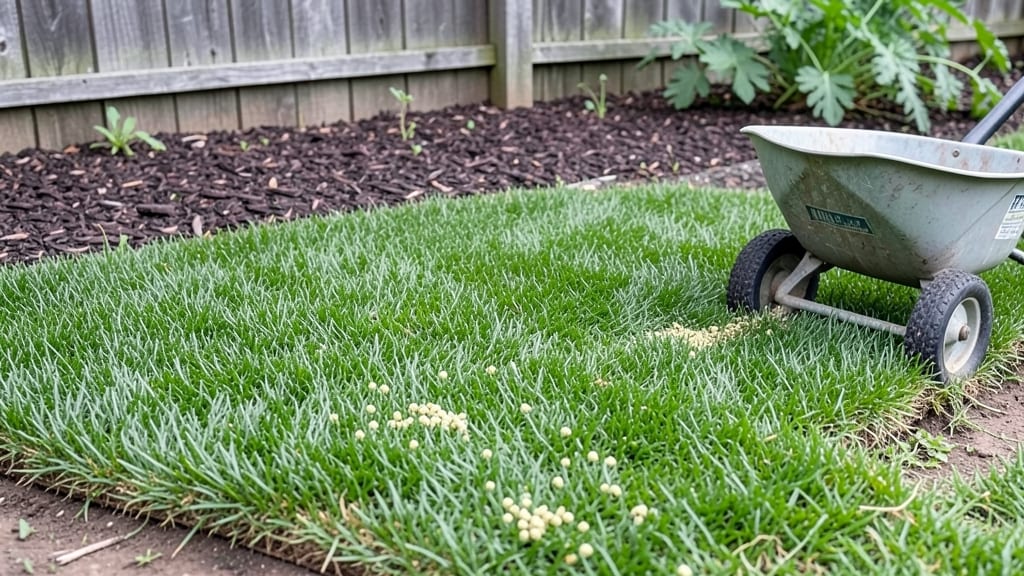
You should fertilize new sod 4-6 weeks after installation when soil temperatures reach 60°F (15°C) and grass shows active growth, typically in early spring or late summer. Use a starter fertilizer high in phosphorus to encourage root development.
Timing your fertilizer application this way gives the grass roots time to establish before adding nutrients.
The 60°F soil temperature threshold signals that microbial activity in the soil ramps up, helping the fertilizer break down efficiently. 🌱 I’ve found that waiting until you see new growth—about 2-3 inches tall—confirms the sod is ready for nutrients.
Early spring and late summer are ideal because they avoid extreme heat or cold, which can stress young grass.
For best results, choose a starter fertilizer with a 5-10-10 or 6-24-12 ratio—the high phosphorus content (the middle number) promotes strong root systems. Avoid lawn fertilizers with high nitrogen early on, as they encourage leaf growth over root development, which new sod doesn’t need yet.
Always water the lawn lightly before and after applying fertilizer to help it absorb properly.
💡 In This Article
- Soil Temperature and Grass Growth Phases for Fertilizing
- Best Fertilizer Types and Application Tips for New Sod
Soil temperature and grass growth phases for fertilizing
Here's what's actually happening below the surface: grass roots need soil temperatures between 55-65°F (13-18°C) to activate their metabolic processes. At these temperatures, soil microbes become active, breaking down organic matter and releasing nutrients that young grass can absorb.
Below 50°F (10°C), root growth slows dramatically—almost like hibernation—while above 75°F (24°C), the grass can experience heat stress, burning the delicate blades. The 60°F (15°C) threshold isn't arbitrary; it's when cellulose production in roots peaks, creating the structural framework for your lawn's future strength.
Grass goes through three critical growth phases after installation: germination (1-2 weeks), establishment (3-4 weeks), and rooting (6-8 weeks). During germination, the sod focuses on sprouting new blades, not roots.
This is why fertilizing too early can lead to "top-heavy" grass that falls over. The establishment phase is when roots begin exploring the soil, but they're still shallow—typically only 1-2 inches deep.
It's not until the rooting phase that roots reach 4-6 inches, making the grass resilient enough to handle fertilizer nutrients without burning. Waiting until 4-6 weeks ensures you're feeding established roots, not just leaves.
Phosphorus plays a starring role in this process because it's the nutrient responsible for energy transfer within plant cells. Without adequate phosphorus, your sod will have stunted roots that look like tangled white threads rather than strong, fibrous networks.
A starter fertilizer with a 5-10-10 or 6-24-12 ratio provides this critical phosphorus boost—look for products labeled "starter" or "root developer."
What most people don't realize is that phosphorus becomes less available in soil as temperatures rise above 70°F (21°C), which is why late summer applications often fail to deliver results. The ideal window is when daytime highs reach 75-85°F (24-29°C) but soil stays cool underground.
You can test soil temperature yourself by using a simple soil thermometer inserted 2-3 inches deep (the root zone). Early spring in most regions hits this sweet spot naturally, while late summer requires checking after sunset when soil cools.
The texture of healthy new sod at this stage should be firm to the touch with blades standing upright—anything mushy or leaning indicates poor root establishment. This is your visual cue that the sod is ready for nutrients. 🌱
Consider regional variations: Northern climates may need to wait until late May or early June when frost risk has passed, while Southern lawns can often fertilize as early as March.
Coastal areas with moderate temperatures might have two ideal windows—spring and fall—whereas inland regions with hot summers may only get one chance in spring. The key is matching your timing to when your specific grass type (cool-season like Kentucky bluegrass or warm-season like Bermuda) naturally enters its growth phase.
One common mistake is assuming "green means ready." New sod can appear vibrant while still having weak roots—think of it like a person looking healthy but actually malnourished.
The real test is gently pulling up a small section: if you see 3-4 inches of white roots holding the sod together, it's ready for fertilizer.
Without this root mass, any nitrogen in the fertilizer will just encourage more top growth, making the sod more susceptible to drought and disease. 💪