
Lawn
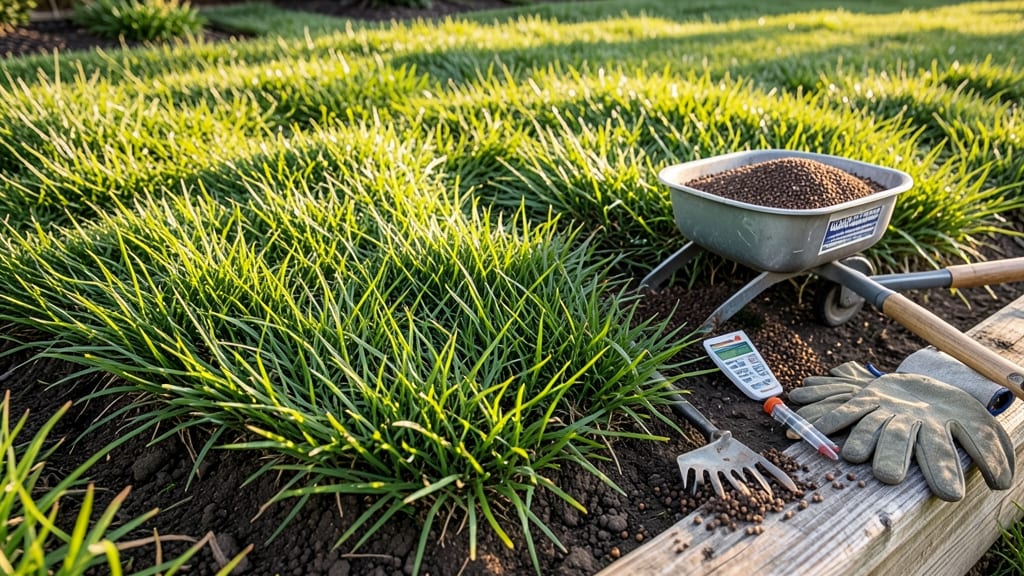
To fertilize your lawn in Texas, schedule applications in early spring (February–March) and late summer (August–September) to match active grass growth periods, and conduct soil testing in fall or winter to assess nutrient needs before applying fertilizer.
Timing matters because Texas's diverse climate zones create distinct grass growth patterns.
In North Texas, cooler winters mean grass stays active longer, while South Texas's warmer winters can lead to earlier spring growth spurts. 🌱 Bermuda grass, for example, thrives in summer heat and needs fertilizer after its first mowing in late spring, whereas St. Augustine prefers cooler seasons and benefits from spring applications.
The key is aligning your schedule with your specific grass type's natural growth cycles rather than following a one-size-fits-all calendar.
Before applying any fertilizer, soil testing reveals what nutrients your lawn truly needs. Texas A&M's soil testing service provides detailed reports showing pH levels and deficiencies, helping you avoid over-fertilizing—especially important in Texas's alkaline soils.
I always recommend testing in fall or winter when grass isn't actively growing, as this gives you time to adjust pH and select the right fertilizer blend before spring applications begin.
💡 In This Article
- Texas Grass Types and Their Fertilization Timing
- Pre-Fertilization Soil Testing and Preparation Tips
Texas grass types and their fertilization timing
Texas's climate creates distinct grass growth patterns that dictate when to fertilize. In North Texas, where winters dip below 40°F, cool-season grasses like Tall Fescue and Ryegrass grow actively from September to May, making early spring (February–March) the ideal time for fertilization.
These grasses enter dormancy in summer heat, so late-season applications won't help. Meanwhile, South Texas's milder winters allow warm-season grasses like Bermuda to start growing as early as January, shifting the first fertilization window to late winter.
The grass type you have determines your entire fertilization schedule. Bermuda grass, dominant in Central and South Texas, needs its first fertilizer application after its first mowing in late spring (April–May), followed by a second dose in late summer (August–September) to prepare for fall growth. St. Augustine, common in East Texas, prefers cooler weather and benefits most from spring (March–April) and fall (October) applications. Buffalo grass, native to North Texas, has a unique pattern: it grows in spring and fall but goes dormant in summer, requiring fertilization in March and October only.
Seasonal dormancy is the key factor most homeowners miss. Warm-season grasses like Bermuda "sleep" during winter, while cool-season grasses slow down in summer heat. Applying fertilizer during dormancy periods wastes money and can harm grass by promoting weak, disease-prone growth.
For example, fertilizing Bermuda in winter won't help because the grass isn't actively absorbing nutrients—it's conserving energy for spring. 🌱 The solution is to match your fertilizer schedule to your grass's natural growth rhythm rather than following a generic calendar.
Texas's climate zones also affect fertilizer types. In North Texas, where soils are often acidic, a low-nitrogen, high-potassium blend helps grasses withstand winter stress. South Texas's alkaline soils typically need more phosphorus to support root development.
The Texas A&M AgriLife Extension recommends testing soil every 2–3 years to adjust your fertilizer blend—this prevents over-application of nutrients that can burn grass or pollute waterways.
Here's how to align your schedule with grass types:
- Bermuda grass: Apply 2 applications—April–May and August–September
- St. Augustine: Apply 2 applications—March–April and October
- Buffalo grass: Apply 2 applications—March and October
- Tall Fescue: Apply 3 applications—September, March, and May
Pro tip: Always water your lawn deeply (1–1.5 inches) after fertilizing to help nutrients reach the roots. Shallow watering leaves fertilizer on the surface, where it can burn grass blades. 💧