
Lawn
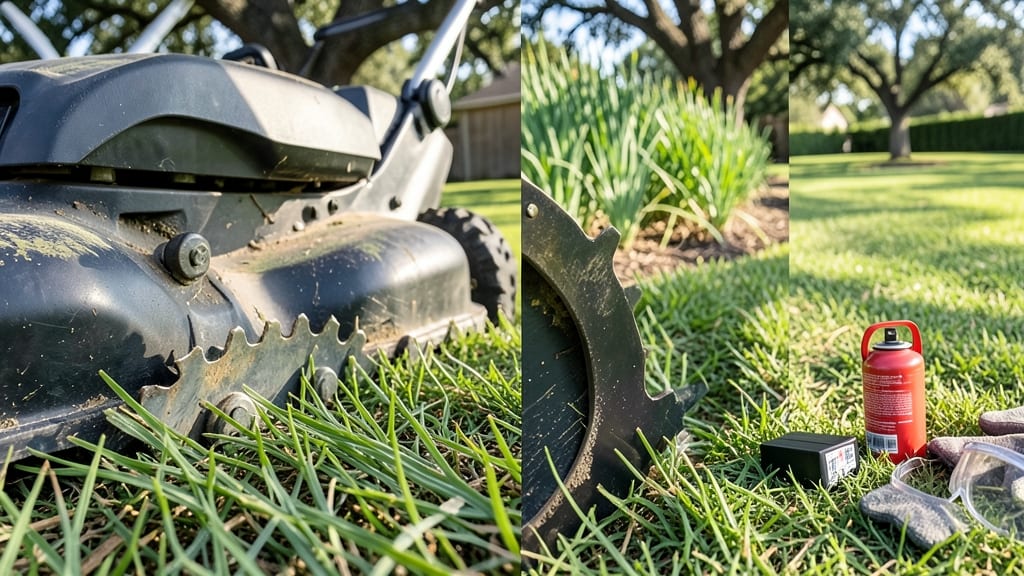
A rotary lawn mower is a machine that uses a spinning metal blade to slice through grass blades, making it perfect for large yards with tough grass varieties like Bermuda or fescue. The blade spins at high speeds, creating centrifugal force that shears grass cleanly at the base while allowing for mulching or bagging.
A rotary lawn mower's spinning blade creates a powerful cutting action that's far more aggressive than reel mowers. 🌿 The centrifugal force generated by the blade's rotation—often 3,000 RPM or higher—allows it to handle thick grass and weeds with ease, which is why it's the go-to choice for most homeowners.
Unlike reel mowers that use scissor-like blades for precision cuts, rotary mowers excel at covering large areas quickly.
What makes rotary mowers so versatile is their ability to adapt to different lawn conditions. Whether you're dealing with dense grass or uneven terrain, the spinning blade ensures consistent results.
The design also makes them more forgiving when it comes to debris—small rocks or twigs won't jam the mechanism like they might in a reel mower.
For homeowners with half-acre lawns or larger, rotary mowers offer the perfect balance of power and efficiency. The trade-off? They tend to be louder and may not produce the same level of precision as reel mowers, but for most people, the convenience and speed outweigh these minor drawbacks.
💡 In This Article
- How Rotary Lawn Mower Blades Work vs Reel Mowers
- Best Rotary Lawn Mowers for Different Lawn Types
How rotary lawn mower blades work vs reel mowers
The heart of a rotary lawn mower is its spinning metal blade, typically made from hardened steel to withstand the forces involved. This blade rotates at 3,000-3,600 RPM, generating centrifugal force that propels the blade outward against the grass.
The cutting action happens when the blade's sharp edges slice through grass blades at their base, creating a clean shear. This high-speed rotation allows the blade to handle thick grass like Bermuda or tough weeds without getting bogged down.
The blade's design is critical—most feature 4-6 curved or serrated edges that create a scythe-like motion. As the blade spins, each edge cuts a small arc, effectively "chopping" the grass rather than cleanly slicing it.
This aggressive action is why rotary mowers excel on large lawns: they can cover up to 10,000 square feet per hour depending on the model.
The trade-off is that this method can sometimes tear grass rather than cut it cleanly, which is why mulching settings are popular—they help recycle grass clippings back into the lawn.
In contrast, reel mowers use a pair of cylindrical blades that rotate against each other like scissors. This creates a precise, clean cut that's gentler on the grass, promoting healthier growth.
Reel mowers are ideal for small, well-maintained lawns with thin grass like Kentucky bluegrass, but they struggle with thick grass or debris.
The physics here are simpler: the blades rely on direct contact and pressure rather than centrifugal force, making them quieter and more eco-friendly but less powerful for heavy-duty tasks.
Another key difference is how each mower handles grass health. Rotary mowers' aggressive cutting can sometimes create jagged edges on grass blades, which may lead to browning if not mulched properly. Reel mowers, however, leave a clean, straight cut that encourages upright growth and reduces stress on the grass.
This is why golf courses often use reel mowers—they produce a professional finish that rotary mowers can't match. For homeowners, the choice often comes down to lawn size and desired finish.
Consider the physics of terrain too. Rotary mowers handle uneven ground better because their blades can pivot slightly to maintain contact with the grass. Reel mowers, with their fixed blades, can struggle on slopes or bumpy lawns, risking uneven cuts or damage to the mechanism.
This is why rotary mowers dominate the market—they're built for real-world conditions where lawns aren't always perfectly flat. 🌿
Finally, think about the energy transfer. Rotary mowers rely on engine power (gas, electric, or battery) to spin the blade, while reel mowers are often manual or require less power.
The centrifugal force in rotary mowers does the heavy lifting, making them capable of cutting through grass that would jam a reel mower's blades. This is why they're the default choice for most homeowners: they combine power with practicality.