
Lawn
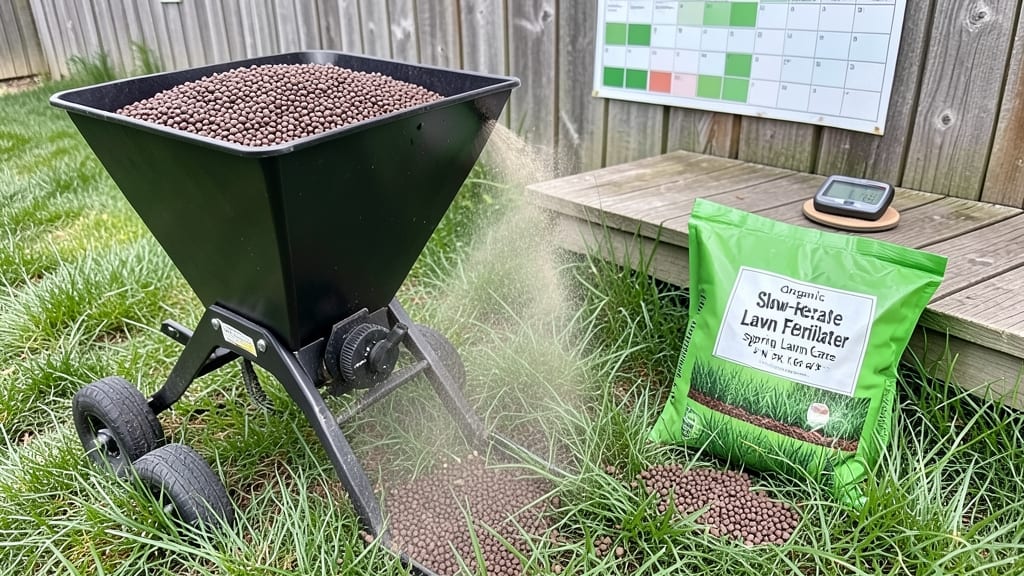
The best time to fertilize lawn grass is in early spring and fall—when soil temperatures rise and roots wake up from dormancy.
Struggling with patchy grass or brown spots? The secret to a lush, vibrant lawn isn’t just watering—it’s knowing when to fertilize for maximum impact. Miss the window, and you’ll end up with weak growth or even fertilizer burn.
Most lawns thrive on a three-step schedule: kickstart growth in spring, support summer recovery, and fortify roots before winter. But timing varies by grass type—cool-season grasses like Kentucky Bluegrass need early spring feeding, while warm-season Bermuda grass responds better to summer applications.
Below, I break down the exact seasonal schedule for your zone, plus how to pick the right fertilizer and avoid common mistakes that waste money and harm your lawn.
Best seasonal timing for fertilizing lawns by climate zone
Timing your lawn fertilization isn’t just about throwing down fertilizer—it’s about syncing with your grass’s natural growth cycles. Cool-season grasses like Kentucky Bluegrass and Fescue thrive in early spring and fall, while warm-season grasses such as Bermuda and Zoysia peak in late spring and summer.
Missing these windows means wasted fertilizer and patchy lawns. Let’s break down the science-backed schedule for each climate zone to maximize your lawn’s potential.
Your local climate dictates when to fertilize. In the Northern U.S. (Zones 3-6), focus on March-April and September-October for cool-season grasses. Meanwhile, Southern regions (Zones 7-10) should prioritize May-June and August-September for warm-season varieties.
Soil temperature is your best guide—fertilize when it hovers between 50°F and 75°F for optimal nutrient absorption. Skipping this step can leave your lawn starving, even if you’re using premium fertilizer.
| Climate Zone | Grass Type | Best Fertilization Times | Key Tips |
|---|---|---|---|
| Northern U.S. (Zones 3-6) | Cool-Season (Kentucky Bluegrass, Fescue) | Early Spring (March-April), Late Fall (September-October) | Apply high-nitrogen fertilizer when soil temps reach 50°F+. |
| Southern U.S. (Zones 7-10) | Warm-Season (Bermuda, Zoysia) | Late Spring (May-June), Early Fall (August-September) | Use slow-release fertilizer to avoid burning in heat. |
| Transition Zones (6-7) | Mix of Cool/Warm (Tall Fescue, Centipede) | Early Spring (March) + Late Summer (July-August) | Monitor soil temps—fertilize when 60°F+. |
| All Zones | New Lawns (Seed/Sod) | First Fertilization 4-6 weeks after planting | Use starter fertilizer with low nitrogen (10-0-10). |
Early spring is your first critical window—apply fertilizer as soon as soil thaws but before weeds take over. For cool-season grasses, aim for March or April when soil temps hit 50°F. This jumpstarts root growth and greens up your lawn before summer stress.
Pro tip: Pair fertilization with a pre-emergent herbicide to block crabgrass and other weeds. Skipping this step often leads to a weed-dominated lawn by summer.
Summer fertilization is tricky—too much nitrogen can burn warm-season grasses or stress cool-season varieties. For Bermuda or Zoysia, apply a light feed in late spring (May-June) and again in early fall (August-September).
Use slow-release fertilizers to avoid overloading your lawn. In hot, dry climates, water deeply after fertilizing to help nutrients penetrate the soil. Neglecting this can leave brown patches even with proper feeding.
Late fall is your second powerhouse window, especially for cool-season grasses. Fertilize in September or October to strengthen roots before winter dormancy. This one feeding can make your lawn 20% more resilient to next year’s heat and drought.
For warm-season grasses, a light fall feeding (if temps stay above 60°F) can extend green-up in spring. Just avoid fertilizing if frost is forecasted—nutrients won’t absorb properly.
Winter is a no-go zone for fertilizing. Grass growth slows dramatically, and cold soil locks out nutrients. Exceptions? Overseeding in late fall (with a light fertilizer) or winterizing in mild climates (Zones 8-10). But heavy feeding in winter can lead to fungal growth or fertilizer runoff.
Instead, focus on aeration and topdressing with compost to prep for spring. This passive approach often yields better results than forced winter feeding.
Don’t forget about soil testing—it’s the secret weapon for perfect timing. A simple $20 soil test reveals your lawn’s pH and nutrient needs, helping you adjust fertilizer types and schedules.
For example, acidic soil (pH < 6.0) may need lime before fertilizing, while alkaline soil (pH > 7.5) benefits from sulfur. Ignoring pH can mean wasted fertilizer or nutrient lockout. Test in early spring and again in fall for the most accurate results.
Regional quirks matter too. In the Pacific Northwest, cool, wet springs delay
How to choose fertilizer based on lawn type and growth stage
Choosing the right fertilizer for your lawn depends on two key factors: your grass type and its current growth stage. Different grasses—like Kentucky Bluegrass, Bermuda, or Fescue—have unique nutritional needs, and over- or under-fertilizing can cause more harm than good.
For example, warm-season grasses like Bermuda thrive with high nitrogen in summer, while cool-season grasses like Fescue need a boost in early spring and fall.
Start by understanding your lawn’s NPK ratio needs. Nitrogen (N) fuels leaf growth, phosphorus (P) strengthens roots, and potassium (K) improves disease resistance. A 30-0-4 ratio might work for seedling grass, while mature lawns often benefit from a 24-4-8 or 16-4-8 blend.
Always check your soil’s pH first—most grasses prefer a range of 6.0 to 7.0. If your soil test shows deficiencies, adjust your fertilizer to include micronutrients like iron or zinc.
For newly seeded lawns, focus on a balanced NPK ratio like 10-10-10 to encourage even root development. Avoid high-nitrogen fertilizers, which can burn tender seedlings. Once established, switch to a higher nitrogen ratio (e.g., 24-4-8) to promote thick, green growth.
If your lawn is recovering from drought, heat, or foot traffic, prioritize phosphorus and potassium to rebuild root strength before adding nitrogen.
Timing matters just as much as the fertilizer type. Apply slow-release fertilizers in early spring to align with root growth, while quick-release options work better for summer recovery. Always water your lawn deeply after fertilizing to help nutrients penetrate the soil.
For cool-season grasses, aim for four applications per year—early spring, late spring, early fall, and late fall—while warm-season grasses need two to three in late spring through summer.
Pro tip: Use a soil test kit ($20–$50) to check nutrient levels before fertilizing. If your soil is already rich in nitrogen, you might only need a light top-dressing of compost or a low-NPK blend.
Over-fertilizing leads to burnt grass, runoff pollution, and wasted money. When in doubt, start with half the recommended dose and monitor your lawn’s response for 7–10 days.
Remember, the best fertilizer for your lawn is the one that matches its current needs