
Fertilization
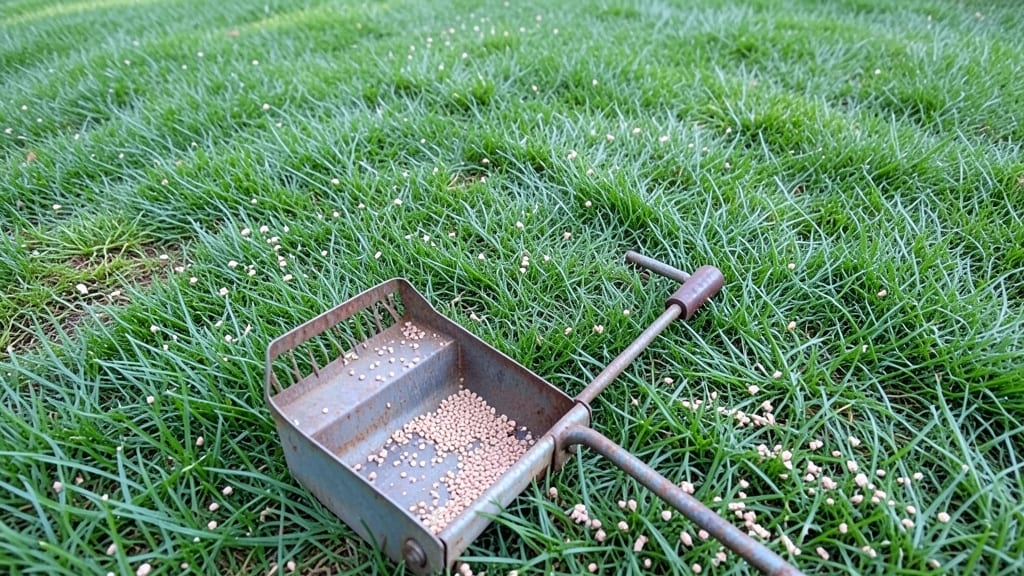
To fertilize your grass, timing depends on your grass type and climate: cool-season grasses need feeding in early spring, late spring, summer, and early fall, while warm-season grasses respond best to late spring, summer, and early fall applications. Always check local frost dates and conduct a soil test first.
Your lawn's health hinges on matching fertilizer applications to its natural growth cycles.
Cool-season grasses like Kentucky bluegrass and fescue wake up early in spring, so that first feeding jumpstarts their growth before summer heat arrives. 🌱 Meanwhile, warm-season grasses such as Bermuda or Zoysia only become active when soil temperatures hit 65°F, which usually occurs in late spring.
The key is observing your grass's color and growth patterns—if it's green and growing, it's ready for fertilizer.
Don't overlook soil testing as your first step. A simple pH test (available at garden centers) reveals whether your lawn needs acidic or alkaline adjustments before applying fertilizer. For instance, fescue thrives in pH 6.0-7.0 ranges, while Bermuda prefers 6.0-7.5.
Many homeowners skip this step and end up wasting money on fertilizers their grass can't even absorb properly.
💡 In This Article
- Seasonal Fertilization Schedules for Cool vs Warm Grasses
- How to Test Soil and Choose the Right Fertilizer Type
Seasonal fertilization schedules for cool vs warm grasses
Cool-season grasses like Kentucky bluegrass and tall fescue follow a four-application schedule because they grow actively from early spring through fall. The first feeding in late winter or early spring (when soil temps reach 50°F) jumpstarts growth after dormancy.
This coincides with the grass's natural surge of energy as days lengthen. 🌱 The second application comes in late spring (May-June) to support rapid growth before summer heat arrives, while the third in early summer maintains vigor during peak stress periods.
The final feeding in early fall strengthens roots for winter survival.
Warm-season grasses such as Bermuda and Zoysia operate on a three-application system because they only grow when soil temperatures exceed 65°F. The first feeding occurs in late spring (May-June) as they emerge from dormancy, with the second in early summer (June-July) to support thicken-up.
The final application in early fall (August-September) helps them store nutrients before dormancy. In southern climates, Zoysia may get a fourth light application in late summer to extend green-up before winter.
Here's what's actually happening biologically: Cool-season grasses produce 70-80% of their annual growth between April and October, making them responsive to frequent, moderate feedings. Warm-season grasses, however, allocate 60% of their growth in just 60 days during peak summer months, requiring more concentrated applications.
The key difference lies in their photosynthesis rates—cool-season grasses photosynthesize efficiently in cooler temps, while warm-season types need warmth to activate their growth hormones.
Regional adjustments matter significantly. In northern zones (USDA zones 3-5), cool-season grasses get their first feeding 4-6 weeks before last frost to prevent winterkill. Southern lawns (zones 7-9) may fertilize warm-season grasses as early as March if soil warms quickly.
Always check your local USDA Plant Hardiness Zone and adjust by 2-4 weeks based on your microclimate—coastal areas may need earlier applications due to milder winters.
What most people don't realize is how soil temperature dictates readiness. Use a soil thermometer to verify 50°F for cool-season grasses or 65°F for warm-season types before applying fertilizer.
In my experience, rushing applications when soil is cold leads to 30-50% nutrient runoff, wasting money and potentially harming local waterways. The root zone (top 6 inches) must be active for absorption to occur efficiently.
Consider these regional examples: In Minnesota (zone 4), Kentucky bluegrass gets fed in April, June, August, and October, while in Florida (zone 9), St. Augustine grass follows a March, June, September schedule.
The southern lawn's third application often includes slow-release nitrogen to extend green-up through winter. This regional flexibility shows why one-size-fits-all schedules rarely work—your local cooperative extension service can provide hyper-localized recommendations.
Pro tip: Observe your grass's color as your best indicator. Cool-season grasses should be dark green before feeding, while warm-season types need to show new growth shoots of 1/4 inch length. If your lawn looks pale or sparse, it's either underfed or overwatered—both conditions require different corrective actions. 🌿