
Watering
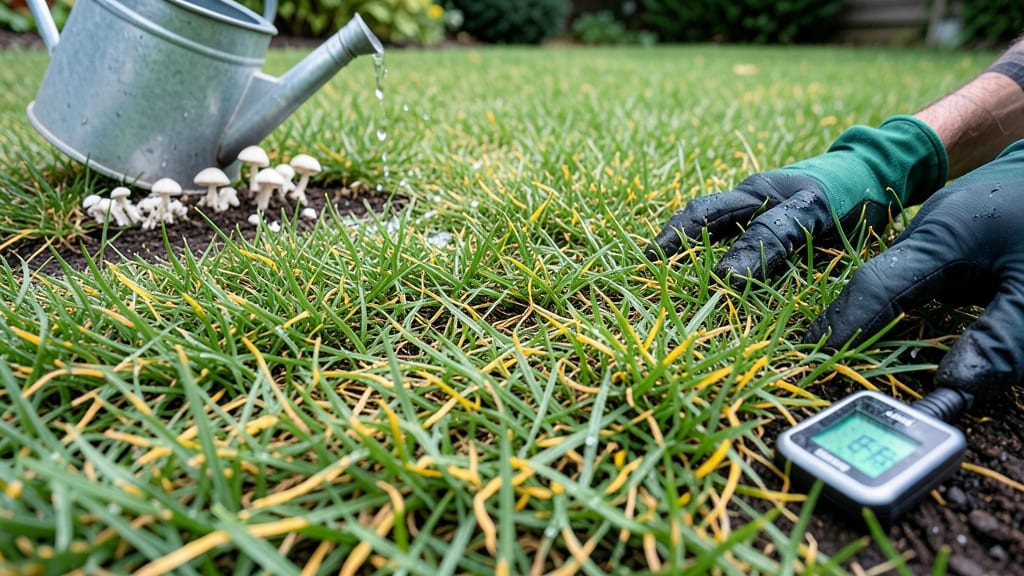
Your lawn might be drowning in water, not thriving. 🌱 I’ve seen overwatered lawns go from lush green to a fungal-infested swamp in just a few weeks—and the signs are harder to spot than you think.
Mushrooms popping up like toadstools, spongy patches that squish underfoot, and grass that looks more sad than healthy? That’s your lawn screaming for help.
Overwatering happens when we treat grass like a desert oasis instead of a resilient plant. Too much water suffocates roots, washes away nutrients, and creates the perfect breeding ground for fungus. The real kicker?
Most people don’t realize they’re overdoing it until the damage is done. A quick check with your finger—if the top 2 inches of soil are damp, hold off on watering.
Fixing an overwatered lawn starts with cutting back on H₂O. Aim for 1 inch per week, including rain, and water deeply but less frequently. Aerate compacted soil to help roots breathe, and mow higher to shade the roots and slow evaporation.
Within a few weeks, you’ll see stronger growth and fewer fungal surprises.
Prevention is easier than cleanup: test your soil’s drainage, adjust your sprinkler schedule, and let that grass grow tall and proud. Trust me, your lawn will thank you—no mushrooms required. Here’s how to turn things around before summer heat makes matters worse.
Root Causes Of Soggy Soil
When your lawn starts showing signs of overwatering, the issue almost always traces back to a few key factors—some you can control, others tied to nature’s quirks. Understanding these causes helps you adjust your watering habits and save your grass from drowning.
Let’s dig into the science behind why your lawn might be getting too wet.
Overwatering is the most obvious culprit, but it’s easier to do than you think. Grass roots need oxygen to breathe—just like humans! When you water too frequently or in large amounts, the soil becomes saturated, pushing out oxygen and suffocating roots. This leads to:
- Shallow root systems: Grass struggles to grow deep roots, making it weak and prone to disease.
- Fungal growth: Excess moisture creates the perfect breeding ground for mushrooms, mold, and other pathogens.
- Nutrient leaching: Water washes away essential nutrients like nitrogen and potassium, starving your lawn.
Actionable fix: Water deeply but infrequently—aim for 1–1.5 inches per week (including rain). Use a rain gauge or tuna can to measure, and water in the early morning to reduce evaporation.
Not all lawns drain water equally. If your soil is clay-heavy, sandy, or compacted (from foot traffic, construction, or heavy machinery), water pools instead of draining. Signs of drainage issues include:
- Puddles lingering for hours after watering.
- Grass turning yellow or brown in low spots.
- Muddy patches that don’t dry out.
Why it happens: Clay soil acts like a sponge—it absorbs water but releases it very slowly. Sandy soil drains too quickly, but compacted soil creates a hardpan layer that blocks water flow.
Actionable fix:
- Test your soil’s drainage: Dig a 6-inch hole, fill it with water, and time how long it takes to drain. If it’s more than 6 hours, you’ve got poor drainage.
- Add organic matter (compost or peat moss) to clay soil to improve aeration.
- Core aerate compacted lawns in fall or spring to break up the hardpan.
Automatic sprinklers, drip systems, or even a misaligned hose can deliver more water than your lawn needs. Common irrigation mistakes include:
- Overlapping sprinkler zones (watering the same spot twice).
- Running systems on a timer without checking weather (e.g., watering during rain).
- Using the wrong sprinkler heads (e.g., misting nozzles that evaporate quickly but soak soil).
- Leaky or broken pipes that waste water underground.
Why it happens: Many systems are set on autopilot and don’t account for actual rainfall or soil type. For example, a rotary sprinkler might deliver 0.5 inches per hour—double what your lawn needs in just 30 minutes.
Actionable fix:
- Audit your system: Walk your lawn with a bucket during watering to measure output per zone.
- Adjust for rainy days—many smart controllers (like Rain Bird or Hunter) have rain sensors.
- Upgrade to soaker hoses or drip irrigation for deep, slow watering.
Not all grass loves the same amount of water. Cool-season grasses (like Kentucky bluegrass or fescue) need more frequent watering than warm-season grasses (like Bermuda or Zoysia). Plus, newly seeded lawns or recovering grass after drought may appear thirsty when they’re actually struggling with root stress.
Why it happens: If you’re watering based on one grass type’s needs but have a mix, some areas will get too much while others dry out. Overwatering also delays dormancy in warm-season grasses, keeping them metabolically active in heat waves—leading to burnout.
Actionable fix:
- Research your grass type’s water needs (e.g., Bermuda needs 0.5–1 inch per week; Kentucky bluegrass needs 1–1.5 inches).
- Avoid light, daily watering—it encourages shallow roots and fungal growth.
- Let warm-season grasses dormant in summer (they’re tougher than you think!).
Pro Tip: 💡 When in doubt, lift a sod piece. If it smells like wet dog or feels slimy, you’re overwatering. Healthy soil should have a earthy scent and crumble easily.
Fixing an Overwatered Lawn Step by Step
Now that you’ve identified the problem, it’s time to take action! Overwatering can feel like a slow-motion disaster, but with the right steps, you can revive your lawn and prevent future issues.
Below are targeted solutions based on the most common causes—plus prevention tips to keep your grass healthy and happy.
If your lawn is already soggy, the first rule is halt all watering until the soil dries out. Overwatering creates anaerobic conditions (lack of oxygen), which smothers roots and encourages fungal growth.
- Check soil moisture by sticking your finger 2–3 inches deep. If it’s damp, wait 24–48 hours before watering again. - Avoid compacting the soil—don’t walk on wet grass, as this worsens drainage issues. - Pro tip: 💡 Use a soil moisture meter ($10–$20) to track when to water.
This prevents guesswork and overdoing it.
Poor drainage is often the root (pun intended) of overwatering problems. Fix it with these long-term solutions:
🔪 Aerate the Soil (Do This First!)
Compacted soil traps water like a sponge. Core aeration (removing small soil plugs) helps roots breathe and water drain.
- When to do it: Early morning or late afternoon to avoid heat stress.
- How often: Once a year for most lawns; twice if you have heavy clay soil.
- DIY option: Rent a core aerator from a hardware store (~$60/day) or hire a pro for large yards.
🌡️ Adjust Your Watering Schedule
Timing matters! Water deeply but infrequently to encourage strong roots.
| Problem | Solution |
|---|---|
| Early morning watering | Switch to late afternoon (4–6 PM) to reduce evaporation and fungal risk. |
| Light, frequent sprinkling | Water 1–1.5 inches per week (including rain) in 1–2 long sessions. |
| Automatic timers | Manually override if rain is forecasted or adjust for seasonal changes. |
🎯 Redirect Water Away from Problem Areas
If certain spots stay soggy, grade the yard slightly (1–2 inches lower) to improve runoff.
- Use a shovel or sod cutter to create a gentle slope (¼ inch per foot) away from foundations or low spots.
- Pro tip: ✨ Add sand or compost to heavy clay areas to improve drainage over time.
Overwatering creates the perfect petri dish for fungus. Here’s how to banish unwanted guests:
⏰ Let the Soil Dry Out
- Mushrooms? They thrive in damp conditions—reduce watering and rake them up (wear gloves!).
- Grayish lawn patches? Likely dollar spot or brown patch fungus. Wait until the grass is dry before treating.
💪 Apply Fungicide (If Needed)
For persistent fungal issues, use a broad-spectrum fungicide (like propiconazole or myclobutanil).
- Best time to apply: Early morning with a light mist (avoid overspray on plants).
- Prevention: Apply preventative fungicide in spring/fall if your lawn is prone to fungus.
🌿 Boost Lawn Health Naturally
A strong lawn resists fungus. Feed it right!
- Overseed thin or dead patches with disease-resistant grass seed.
- Use compost or slow-release fertilizer to strengthen roots (avoid nitrogen-heavy fertilizers, which encourage weak, fungus-prone growth).
Once your lawn recovers, lock in those gains with these habits:
✅ Upgrade your sprinkler system – Misaligned heads waste water.
Check for overspray on sidewalks or uneven coverage. ✅ Install a rain sensor – Automatically shuts off sprinklers during rain (saves water + prevents overwatering). ✅ Test your soil – Know your lawn’s pH and nutrient needs (ideal pH: 6.0–7.0 for most grasses). ✅ Mow high – 3–4 inches tall grass shades soil, reducing evaporation and weed growth. ✅ Mulch clippings – Return grass clippings to the lawn (they decompose into free fertilizer!).
Final Thought: 🌱 Overwatering is reversible—just pause, assess, and adjust. With better drainage, smarter watering, and a little TLC, your lawn will bounce back stronger than ever. And next time, your grass will thank you with deep roots and vibrant green!
Frequently asked questions
Why does my lawn get mushrooms after watering?
Mushrooms appear because excess moisture creates the perfect environment for fungal spores to grow. When soil stays soggy for days, these spores—already present in your lawn—spawn and multiply. Reduce watering to 1 inch per week and let the soil dry between sessions to starve them out.
Can I still water my lawn if the soil is already wet?
Absolutely not! Wet soil can’t absorb more water, leading to runoff and even worse drainage issues. Stick your finger 2-3 inches deep—if it’s damp, wait 24-48 hours before watering again. This simple check prevents most overwatering problems.
How do I know if my lawn needs aeration?
If water pools on your lawn for hours after watering or if it feels spongy underfoot, aeration is likely needed. Clay soil or heavy foot traffic often causes compaction. Rent a core aerator or hire a pro—this creates channels for water and air to reach the roots.
Will stopping watering immediately fix an overwatered lawn?
No, but it’s the first critical step! Overwatered lawns need time to recover—roots suffocate when soil stays waterlogged. Combine this with aeration and proper drainage fixes. Within 2-4 weeks, you’ll see improved color and fewer fungal issues.
What’s the difference between overwatered and underwatered grass?
Overwatered grass looks yellowish-green, feels spongy, and may have mushrooms or mold. Underwatered grass turns brown or straw-colored and pulls away from the soil when lifted. The key difference? Overwatered soil smells musty, while dry soil crumbles easily.