
Lawn
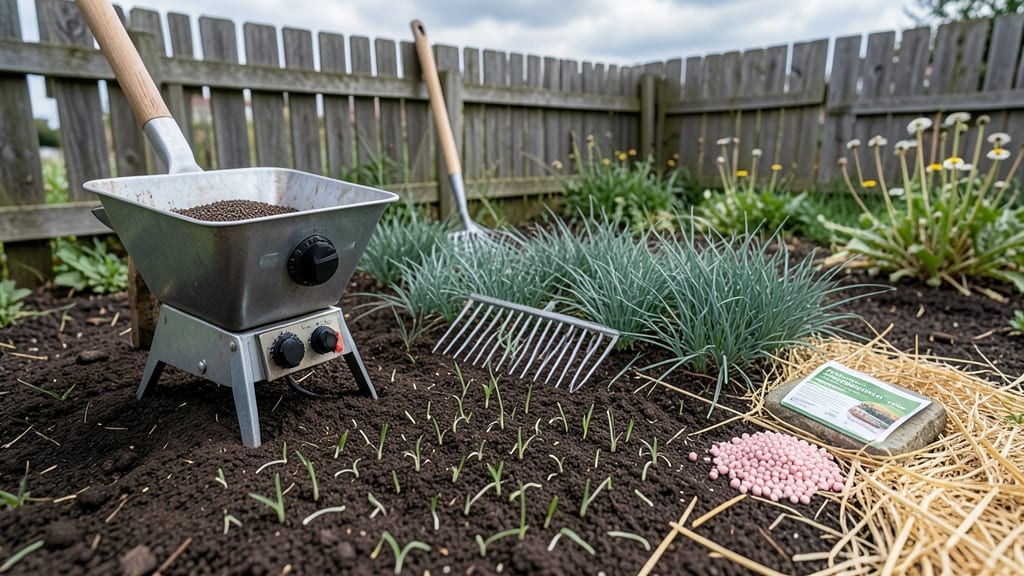
Seeding a new lawn in fall gives your grass a head start before winter—cool-season grasses thrive when soil stays warm but air cools, creating perfect growing conditions most other times can't match.
I've seeded lawns in both spring and fall, and the difference in root depth and springtime greenness is night-and-day. The key is timing: aim for 6-8 weeks before your first hard frost, when soil temps hover around 60-70°F—warm enough for germination but cool enough to prevent drought stress.
Start with a soil test to check pH (ideal: 6.0-7.0 for most grasses) and amend if needed—fall's mild weather lets you work the soil without baking it or compacting it like spring can.
Choose tall fescue, Kentucky bluegrass, or perennial ryegrass for durability, then scatter seed evenly with a broadcast spreader. Lightly rake to ensure good seed-to-soil contact, then keep the area moist (not soggy) for the first 2-3 weeks—this is where most new lawns fail or succeed.
What you end up with is a dense, drought-resistant lawn that greens up earlier in spring and stays lush longer into fall. The roots grow deep while temperatures are mild, so by next summer, your grass will outcompete weeds naturally.
Even in dry spells, the established root system holds up better than spring-seeded lawns that struggle to establish before summer heat hits.
For regions with mild winters, you can even extend seeding into early winter—just adjust your frost date. Northern gardeners should seed by mid-October, while Southern gardeners can push it to November. The biggest mistake?
Waiting too late or overseeding too heavily—stick to 5-8 lbs of seed per 1,000 sq ft for best results. Now let's get that seed in the ground before the temperatures drop!
📚 In This Guide
- What you need
- Instructions
- Tips and common mistakes
- Wrapping up and next steps
What you need
- ● Seed: Choose a cool-season grass mix (e.g., Kentucky Bluegrass, Fescue, or Ryegrass). Quantity: 4–8 lbs per 1,000 sq ft (check seed bag for exact coverage).
- ● Soil Test Kit: Test your soil’s pH and nutrient levels (ideal pH: 6.0–7.0 for cool-season grasses).
- ● Lime or Sulfur: Adjust pH if needed (apply 2–4 lbs of lime per 1,000 sq ft for acidic soil or 1–2 lbs of sulfur for alkaline soil).
- ● Fertilizer: Use a starter fertilizer (high in phosphorus, e.g., 10-20-10) at ½ lb per 100 sq ft.
- ● Lawn Rake or Seed Spreader: A bow rake (for small areas) or broadcast spreader (for large areas) ensures even seed distribution.
- ○ Topsoil or Compost: ¼–½ inch layer to improve soil quality and seed contact (optional but recommended for poor soil).
- ● Water Source & Hose Nozzle: A gentle rain nozzle for even watering (avoid splashing seeds).
- ● Soil Amendments: Add peat moss or compost to improve drainage or fertility.
- ● Erosion Control Blanket: Use on slopes to hold seeds in place while germinating.
- ● Lawn Roller: Lightly roll the soil after seeding to ensure seed-to-soil contact (use a 100–200 lb roller).
- ● Organic Mulch: Straw (¼ inch thick) to retain moisture and protect seeds from birds.
- ● Weed Barrier Fabric: Prevents weeds from competing with new grass (lay before seeding).
Step-by-Step instructions for establishing a fall-seeded lawn
Fall is the ideal window for cool-season grasses—here’s how to create a thick, resilient lawn that outpaces spring planting.
Prepare the Soil for Optimal Seed Contact
Start by removing all existing vegetation using a sod cutter or by smothering with black plastic for 2-4 weeks before seeding. This ensures your new grass has no competition. Once cleared, till the soil to 4-6 inches deep to loosen compacted layers and improve aeration. You’ll see a fine, crumbly texture—this is your signal the soil is ready.
Rake the area again to create a smooth, level surface with a fine-tooth rake. The goal is to expose seed-sized soil particles without disturbing deeper layers. Test your work by walking across the area—if your footprints hold their shape, the soil is too firm. Keep raking until the surface feels soft and ready to receive seed.
Apply Soil Amendments for Strong Root Development
Spread 1-2 inches of compost evenly across the prepared soil, then lightly rake it in to a depth of 1-2 inches. This adds organic matter that improves moisture retention and nutrient availability. For sandy soils, mix in 1-2 pounds of peat moss per 100 square feet to help retain water and create a better seedbed.
Next, apply a starter fertilizer with a high phosphorus content (P)—look for a ratio like 5-10-10 or 10-20-20. This promotes strong root development before top growth appears. Use a broadcast spreader for even coverage, following the package rate for your grass type. Water lightly afterward to settle the fertilizer into the soil without washing it away.
Seed at the Correct Rate and Depth
Use a drop or broadcast spreader to distribute seeds evenly across the prepared area. For most cool-season grasses, the recommended rate is 8-12 pounds per 1,000 square feet. Walk in a crisscross pattern to ensure full coverage—you should see seeds spaced ½ inch apart when finished. If you’re seeding multiple varieties, apply them in separate passes to avoid mixing.
Lightly rake the seeded area with a fine-tooth rake to press seeds into the soil to a depth of ¼ inch. This ensures good soil contact while keeping them close enough to the surface for quick germination. Covering seeds too deeply delays sprouting, while leaving them exposed risks drying out or being washed away by rain.
Maintain Consistent Moisture Until Germination
Water immediately after seeding to moisten the soil to a depth of 1-2 inches. Use a gentle sprinkler or soaker hose to apply ¼ inch of water daily for the first 2 weeks, keeping the soil surface consistently damp but not soggy. You’ll know moisture is right when the top ½ inch of soil feels cool and slightly moist to the touch.
Once germination begins—typically 7-21 days depending on grass type and weather—reduce watering to ½ inch per week, allowing the soil to dry slightly between waterings. This encourages deeper root growth. Avoid walking on the lawn until the grass reaches 3 inches tall, as this can damage tender seedlings and create bare patches.
Monitor and Adjust for Thick, Even Growth
After 4-6 weeks, when the grass reaches 3-4 inches tall, apply a light nitrogen fertilizer to promote top growth. Use a slow-release formula to avoid burning young plants. Mow the lawn for the first time when the grass reaches 3-4 inches, setting your mower blade to 3 inches to encourage a deeper root system and prevent scalping.
Continue mowing weekly, removing no more than one-third of the blade height at a time. This maintains a healthy lawn while preventing stress. Watch for signs of thinning or bare spots—these often indicate compaction or uneven watering. If needed, overseed these areas in early fall with the same grass type to fill gaps and strengthen the lawn.
Tips & tricks for perfect fall-lawn establishment
Fall seeding success comes down to these critical details that most guides skip—don't overlook them.
Soil Prep Precision: In Step 1, when tilling to 4-6 inches, focus on breaking up compacted layers without bringing up buried debris. I use a garden fork first to loosen the top 2 inches, then finish with a tiller—this prevents clumping that can smother seeds. After raking, run your hand over the surface: if it feels like fine sandpaper, you've achieved the ideal texture for seed contact.
Layering Amendments Correctly: The 1-2 inches of compost in Step 2 should be worked into the top 1-2 inches of soil, not just spread on top. For sandy soils, mix the 1-2 pounds of peat moss per 100 square feet into the top 3 inches—this creates a moisture sponge effect. I've seen many lawns fail because the amendments stayed on the surface and washed away during watering.
Seed Placement Visual: When seeding at 8-12 pounds per 1,000 square feet in Step 3, imagine a checkerboard pattern where seeds are spaced about ½ inch apart. To verify coverage, toss a handful of seeds onto a small section—if you can see bare soil between them, you need to apply more. Lightly raking after seeding helps press seeds into that perfect ¼-inch depth without burying them completely.
Watering Consistency Check: The ¼ inch of daily water for 2 weeks in Step 4 requires a simple test: place a straight-edged container in the seeded area and fill it with water. After 20 minutes, if the water level drops by ¼ inch, you're applying the right amount. Early morning watering (before 9am) prevents evaporation and fungal growth. I've had to reseed entire sections because of uneven watering—don't let that happen to you.
Pro Tips for Seed New Lawn In Fall
- Fall seeding success comes down to these critical details that most guides skip—don't overlook them.
- Soil Prep Precision: In Step 1, when tilling to 4-6 inches, focus on breaking up compacted layers without bringing up buried debris.
- Layering Amendments Correctly: The 1-2 inches of compost in Step 2 should be worked into the top 1-2 inches of soil, not just spread on top.
Frequently asked questions
Got questions about seeding a new lawn in the fall? You’re not alone! Here are some of the most common concerns—and straightforward answers—to help you get started with confidence.
Why is fall the best time to seed a new lawn?
Fall offers perfect conditions for cool-season grasses like fescue and ryegrass: cooler air, warmer soil, and steady rainfall help seeds germinate faster and establish deeper roots before winter. Fewer weeds and pests also mean less competition for your new grass.
How long does it take for grass seed to grow in the fall?
Most cool-season grasses sprout within 7–21 days in ideal fall conditions (50–70°F soil temps). Full coverage may take 3–6 weeks, but don’t rush—slow growth = stronger roots. Check your seed packet for specific timelines!
Can I seed a lawn in the fall without renting equipment?
Skip the tiller by using a broadfork or even a sturdy shovel to loosen soil. For larger areas, rent a core aerator (or borrow one) to improve seed-to-soil contact. A handheld seed spreader works too—just go slow for even coverage.
What if my lawn has weeds or bare spots after seeding?
Don’t panic! Lightly rake weeds before seeding, and use a pre-emergent herbicide in early spring (not fall) to prevent new weeds. For bare spots, spot-treat with grass seed and a thin layer of compost. Patience is key—your lawn will fill in over time.
Is it too late to seed if frost arrives early?
Seed 4–6 weeks before your area’s first frost date for best results. If frost hits unexpectedly, cover seeds with a lightweight straw mulch (¼ inch thick) to protect them until spring. Choose winter-hardy varieties like tall fescue for extra resilience.
Wrapping up and next steps
Fall is the perfect time to seed a new lawn—cool-season grasses thrive in these mild temperatures, giving you a head start on a lush, green yard.
By following the right steps—prepping soil, choosing quality seed, and maintaining consistency—you’ll set your lawn up for success. Don’t wait! Grab your tools, roll up your sleeves, and enjoy the satisfaction of a beautiful, healthy lawn next spring.
Ready to get started? Mark your calendar for early fall (before the first frost) and begin prepping your soil this weekend. Your future lawn will thank you! 🌱