
Lawn
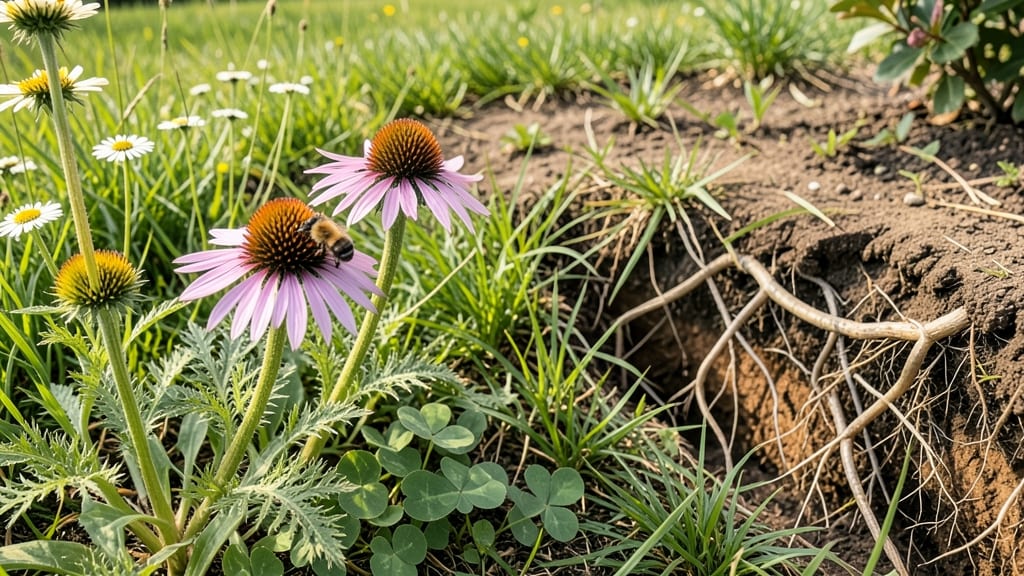
Real lawns have native biodiversity, creating thriving ecosystems by supporting pollinators, filtering runoff naturally, and building soil health without pesticides or artificial fertilizers.
Real lawns with native grasses act like miniature ecosystems—unlike monoculture turf, they host diverse plant species that attract bees, butterflies, and birds. 🌿 The deep root systems also improve water retention, reducing erosion and chemical pollution in stormwater runoff.
I've seen firsthand how these lawns stay green through droughts while supporting local wildlife that traditional grass simply can't match.
What makes this especially powerful is the self-sustaining nature of native grasses. They require fewer resources because they're adapted to local climates, meaning less mowing, watering, and maintenance. Plus, their varied heights and textures create microhabitats for insects and microorganisms that keep the whole system balanced.
It's not just about looking green—it's about building a lawn that works with nature instead of against it.
💡 In This Article
- How Native Grass Lawns Boost Local Ecosystems
- Best Native Grass Species for Biodiversity-Friendly Lawns
How native grass lawns boost local ecosystems
Native grass lawns create thriving ecosystems by mimicking natural prairie landscapes. Unlike monoculture turf like Kentucky bluegrass, which relies on synthetic fertilizers to thrive, native grasses like buffalo grass or fine fescue have evolved with local soil and climate, forming deep root networks that reach 6-12 feet underground.
These roots stabilize soil, prevent erosion, and create microhabitats for beneficial fungi and bacteria that break down organic matter—something shallow-rooted turf simply can't match. 🌱
The real magic happens above ground too. Native grasses flower at different times, providing continuous nectar for bees, butterflies, and hummingbirds. For example, little bluestem produces seed heads that feed goldfinches in winter, while switchgrass blooms in late summer when most lawns are barren.
Studies show native lawns can support 30-50% more pollinator species than traditional turf, directly combating the global decline in insect populations.
Water retention is another game-changer. Native grasses absorb 2-3 times more rainfall than monoculture lawns because their extensive roots act like natural sponges. This reduces runoff that carries pesticides and fertilizers into waterways—a major problem with conventional lawns.
In drought-prone areas, I've seen native lawns stay green while neighboring turf turns brown, proving their resilience without artificial irrigation. 💧
Pest resistance works differently too. Native grasses develop natural defenses against local insects and diseases, eliminating the need for chemical treatments. For instance, side-oats grama produces toxins that deter grubs, while its dense growth smothers weeds.
This reduces the chemical cocktail that harms beneficial insects and soil organisms, creating a closed-loop system where every element supports the next.
Even the soil benefits dramatically. Native grasses improve soil organic matter by 1.5-2 times more than turf because their diverse root structures create channels for air and water while feeding microbial life.
This boosts nutrient cycling, meaning fewer synthetic inputs are needed. The result? A lawn that's not just green but actively healing its environment—something no chemical-dependent turf can achieve. 🌍
What's often overlooked is how native lawns reduce maintenance demands. Their deep roots make them drought-tolerant, and their varied growth patterns mean less frequent mowing. This saves time, money, and energy while keeping the ecosystem intact. It's a win-win: less work for you, more life for your local environment.