
Lawn
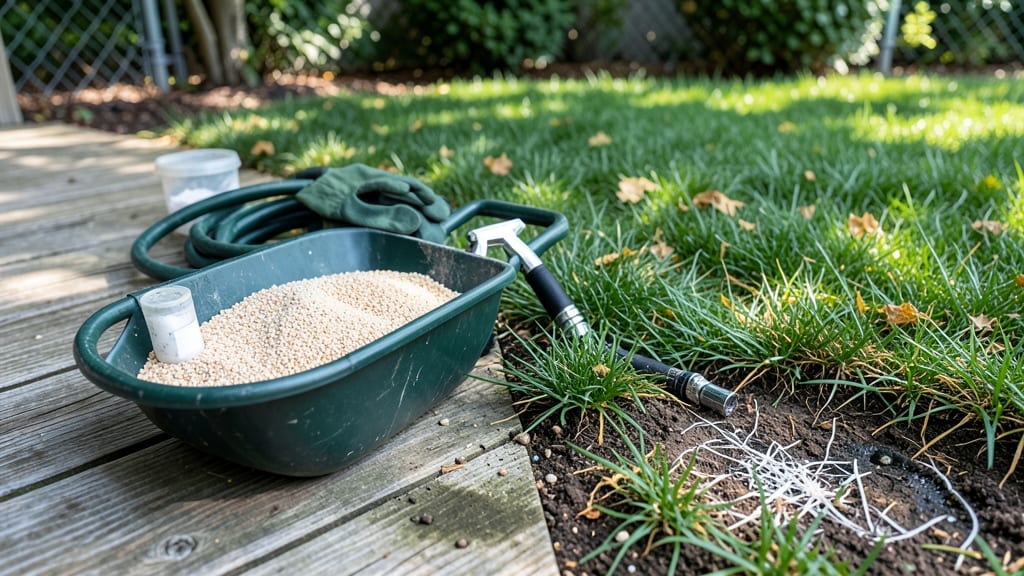
Neutralizing dog urine on lawns requires immediate dilution with water, followed by a vinegar or baking soda solution to balance pH. Complete breakdown takes 1-4 weeks, depending on grass type and frequency of urination, but proper treatment prevents long-term damage like yellow patches or dead spots.
Dog urine contains high concentrations of ammonia and nitrogen, which create a harsh alkaline environment that literally burns grass blades and roots. 💧 The pH spike disrupts soil microbes that help break down organic matter, leaving behind dead patches if not addressed quickly.
Unlike synthetic fertilizers, urine's nitrogen isn't balanced with phosphorus or potassium, so grass struggles to recover without intervention. I've seen even hardy grasses like Bermuda grass show permanent damage when urine sits for more than 24 hours—timing really is everything when dealing with these spots.
For best results, start by diluting fresh urine with water immediately after your dog goes. This reduces the concentration before it penetrates the soil. Then follow up with a natural acidifier like white vinegar or baking soda to restore the pH balance.
Commercial enzyme cleaners designed specifically for pet urine can also help break down the compounds faster, though they often cost more upfront. The key is consistency—repeating the process every few days for concentrated spots until the grass fully regrows.
💡 In This Article
- Why Dog Urine Burns Grass and How pH Affects Recovery
- Step-by-Step Dog Urine Neutralization Guide for Lawns
Why dog urine burns grass and how pH affects recovery
Dog urine contains ammonia (NH₃) and nitrogen (N) concentrations that can reach 10,000-20,000 parts per million (ppm)—far higher than most commercial fertilizers (typically 10-20 ppm). When urine hits grass, the ammonia immediately converts to ammonium (NH₄⁺), creating a pH spike from neutral (7.0) to 8.5-9.0 within minutes.
This alkaline environment disrupts the grass's cellular structure, causing blades to yellow and roots to weaken. The damage isn't just superficial—it disrupts the soil microbiome, which relies on balanced pH to decompose organic matter and recycle nutrients.
The severity depends on grass type: Bermuda grass and Kentucky Bluegrass are more resilient due to their deep root systems, while fescue and ryegrass are far more sensitive.
For example, a single urine spot on fescue can leave a dead patch for 3-6 weeks if untreated, whereas Bermuda grass might recover in 1-2 weeks with proper care.
The key difference lies in root depth—shallow-rooted grasses like fescue can't access moisture from deeper soil layers when the surface is damaged. 🌱
Soil microbes play a critical role in recovery. Healthy lawns have 10,000-100,000 microbial species per gram of soil, including bacteria and fungi that break down nitrogen compounds. When urine disrupts the pH, these microbes become less active, slowing decomposition and nutrient cycling.
This is why neutralizers like vinegar (acetic acid) or baking soda (sodium bicarbonate) work—they restore the pH to 6.0-7.0, creating an optimal environment for microbes to resume their work.
Without this balance, the nitrogen in urine becomes a double-edged sword: too much too fast burns the grass, while too little leaves it starved of nutrients.
Here’s what happens chemically: Ammonia (NH₃) in urine reacts with water to form ammonium hydroxide (NH₄OH), which raises the pH. Over time, soil bacteria convert ammonium to nitrate (NO₃⁻), a form grass can absorb—but only if the pH is stable.
The process takes 7-14 days under ideal conditions, which is why immediate action is critical. For example, a 1-inch-deep urine spot can penetrate 2-3 inches into soil within 24 hours, making surface treatments less effective if delayed. 🔬
Grass recovery also depends on soil composition. Sandy soils drain quickly, reducing damage but also washing away nutrients faster, while clay soils hold moisture and compounds longer, prolonging the problem.
Testing your soil’s cation exchange capacity (CEC) can reveal how well it buffers pH changes—high CEC soils (like those with organic matter) recover faster than low CEC soils.
For instance, a lawn with 3-5% organic matter might recover in 2 weeks, while one with 1% or less could take 4-6 weeks.
One common misconception is that all dog urine is equally damaging. Male dogs, for example, produce urine with 20-30% higher nitrogen content than females due to their larger bladder capacity and diet. This means male urine spots require 20-30% more dilution to achieve the same pH balance.
Additionally, diet matters: dogs fed high-protein, low-carb diets produce urine with 15-20% more ammonia than those on balanced diets, making their spots more aggressive. 🐕