
Mower
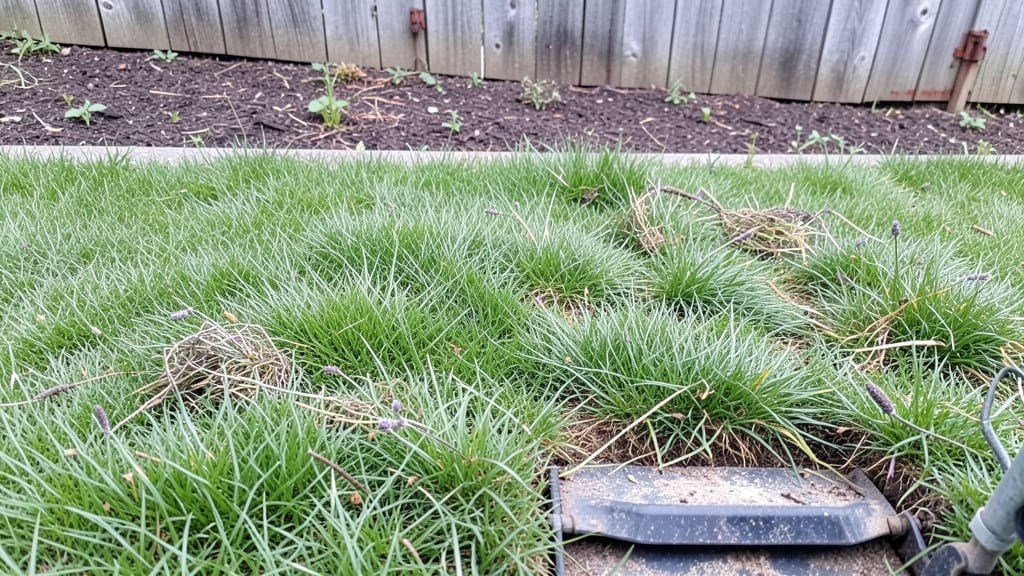
Mowing your lawn once a month creates rapid grass growth that actually weakens the roots, thickens thatch layers, and makes your lawn more vulnerable to pests and disease. Lawn care experts recommend mowing every 1-2 weeks instead, adjusting blade height by 1/3 each time to maintain healthy growth patterns and prevent stress.
Monthly mowing tricks your grass into growing too fast, which stretches the blades and starves the roots of energy they need to stay strong. 🌱 This leads to a thick layer of thatch—dead grass and roots—that blocks water and nutrients from reaching the soil below, creating the perfect conditions for weeds and pests.
I've seen lawns go from lush to struggling in just a few months when owners skip regular maintenance, especially during peak growing seasons.
What's interesting is how different grass types react—cool-season grasses like fescue handle less frequent cuts better than warm-season types like Bermuda, which thrive with more regular trimming.
The key is mimicking natural growth patterns: shorter cuts in summer and slightly taller in cooler months to protect the roots from temperature stress.
💡 In This Article
- How Monthly Mowing Damages Grass Roots and Soil
- Corrective Mowing Schedule for Reviving Overgrown Lawns
How monthly mowing damages grass roots and soil
When you mow once a month, your grass enters survival mode—it stretches upward in a process called etiolation, where blades grow tall and thin to reach sunlight.
This rapid vertical growth diverts all the grass's energy into extending its stem, leaving the roots starved for nutrients and water. 🌱 The roots, which normally spread horizontally to create a dense network, instead become shallow and sparse, making the lawn more vulnerable to drought and foot traffic.
This unnatural growth pattern also triggers a buildup of thatch, that spongy layer of dead grass, roots, and stems between the green blades and soil. Normally, thatch stays at a healthy ½-inch thickness, but monthly mowing can push it to 1-inch or more.
Thick thatch blocks water, air, and nutrients from reaching the soil, creating a suffocating barrier. Warm-season grasses like Bermuda or Zoysia produce more thatch than cool-season types like Kentucky Bluegrass, which is why they need more frequent mowing to prevent this problem.
The real damage happens below ground. Grass roots rely on a balance of photosynthesis (energy from sunlight) and nutrient absorption from the soil. When blades grow too long, the lower leaves get shaded and die off, reducing the grass's ability to photosynthesize.
This forces the roots to work harder just to stay alive, weakening their structure. Over time, the soil beneath becomes compacted as the thick thatch layer prevents proper aeration, further limiting root growth and making the lawn more susceptible to pests and fungal diseases.
Here's what happens when you compare monthly mowing to the recommended 1-2 week schedule: Regular cuts encourage deeper root systems because the grass doesn't have to stretch as much.
For example, cool-season grasses like fescue can handle slightly taller cuts (3-4 inches) in spring and fall, while warm-season types thrive at 1-2 inches during summer heat.
The key is never removing more than ⅓ of the blade height at once—this rule prevents shock and maintains the grass's natural growth rhythm.
What most people don't realize is how this affects the lawn's overall health. Overgrown grass creates a perfect microclimate for pests like chinch bugs and grubs, which thrive in thick thatch. The excess shade from tall blades also encourages moss growth, which further competes with your grass for nutrients.
In extreme cases, the lawn can develop brown patches where the roots simply give up, leaving bare soil that invites weeds. The good news? Corrective mowing can reverse some of this damage if you act quickly.
Consider this: A lawn mowed monthly in summer can lose up to 40% of its root mass compared to one mowed weekly. The roots of properly maintained grass can extend 6-12 inches deep, while neglected lawns often have roots no deeper than 2-3 inches.
This shallow root system means your grass can't access water stored deeper in the soil during droughts, leading to wilting even with regular watering. 💧
The science behind this involves plant hormones called gibberellins, which regulate growth. When grass is mowed too infrequently, these hormones trigger excessive elongation, while root growth hormones (auxins) get sidelined. The result?
A lawn that looks lush on top but is actually struggling to survive beneath the surface. This is why experts stress that mowing frequency should match your grass type and local climate—what works for Kentucky Bluegrass in the Pacific Northwest won't suit Bermuda grass in the Deep South.