
Lawn
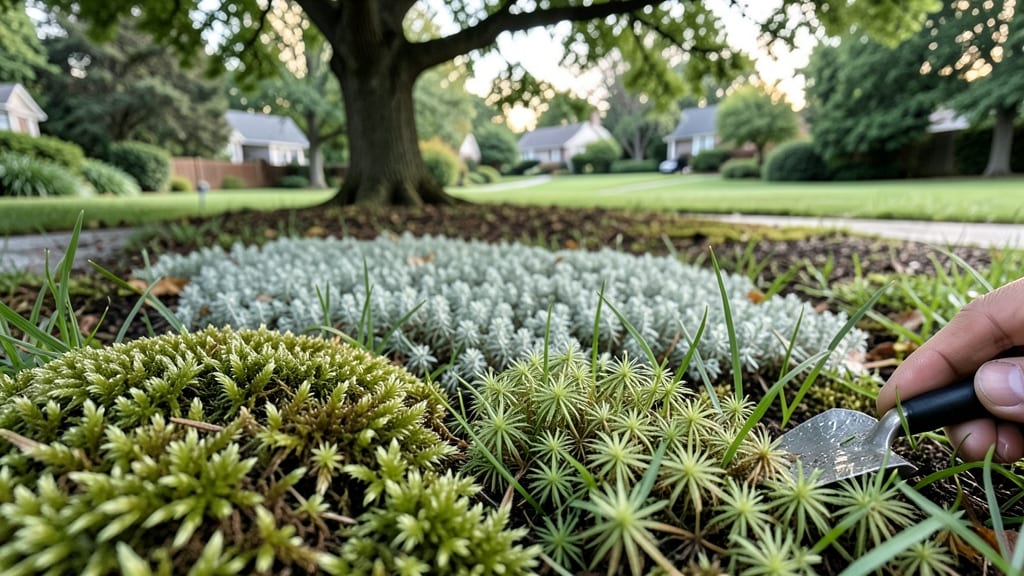
That stubborn moss creeping into your lawn isn't just unsightly—it's stealing nutrients from your grass. 🌱 I've battled it for years, and vinegar-and-salt spot treatments are the fastest way to send it packing without harsh chemicals.
The key is timing: apply on a dry, sunny day when moss is most vulnerable. This method works because moss thrives in shady, acidic conditions—vinegar lowers pH temporarily while salt disrupts its growth cycle. You'll see results in 3-5 days, with moss turning brown and crumbling away.
Just mix equal parts white vinegar and water, add a tablespoon of salt per gallon, and spray directly on moss patches. The real magic happens when you combine this with better lawn care: aerate compacted soil, improve drainage, and overseed with shade-tolerant grass varieties.
Your lawn will thicken up, outcompeting moss naturally over time. Perfect for problem areas under trees or in shady corners where grass struggles. Here's how to do it right—no more moss, just lush green grass.
Hidden Causes Behind Lawn Moss
Moss thrives in lawns not by accident but because specific conditions create the perfect environment for it. Understanding these triggers is the first step to reclaiming your grass. Let’s break down the key reasons moss takes over—and why your lawn might be a buffet for it.
Moss loves waterlogged soil because it thrives in consistently moist conditions. Unlike grass, which needs well-draining soil to avoid root rot, moss actively competes for oxygen in compacted or clay-heavy ground. Here’s why it happens:- Clay or silt soil: These particles pack tightly, trapping water and suffocating grass roots while moss spreads unchecked.
- Low-lying areas: Water pools in depressions, creating soggy zones where grass struggles to grow.
- Improper grading: If your yard slopes toward the house or driveway, water pools near foundations, drowning grass and inviting moss.
Actionable fix: Test your soil’s drainage by digging a 12-inch hole, filling it with water, and timing how long it takes to drain. If it’s slower than 6 hours, you’ve got a drainage issue. Aerate annually and consider sand or organic matter amendments to improve porosity.
Grass needs 4–6 hours of direct sunlight daily to photosynthesize and outcompete moss. In shady areas, grass weakens while moss—a non-vascular plant—thrives with minimal light. Common culprits:- Tree canopies: Dense foliage blocks sunlight, especially under evergreens or large deciduous trees.
- Structures or fences: Buildings, decks, or tall fences cast permanent shadows.
- North-facing slopes: These areas receive the least sunlight year-round.
Actionable fix: If shade is unavoidable, choose shade-tolerant grass varieties like fine fescue or creeping red fescue. For extreme shade, consider replacing grass with clover or moss-resistant ground covers.
Moss prefers acidic soil (pH 4.5–6.0), while most lawn grasses thrive in neutral to slightly alkaline soil (pH 6.0–7.5). If your soil is too acidic:- Grass struggles to uptake nutrients, weakening its competitive edge.
- Moss spores germinate easily in low-pH conditions, colonizing bare spots.
- Common in regions with pine trees or peat-based soils, which naturally acidify the ground.
Actionable fix: Test your soil’s pH with a DIY kit (available at garden centers). If it’s below 6.0, apply lime (calcium carbonate) in early fall or spring to raise pH gradually. Avoid quick fixes like wood ash, which can create uneven pH levels.
Moss doesn’t need much to survive—just water and minimal nutrients. Meanwhile, grass demands a steady supply of:- Nitrogen (N): Essential for lush green growth; deficiency turns grass yellowish-brown.
- Phosphorus (P): Supports root development; lack of it leads to weak, sparse turf.
- Potassium (K): Boosts disease resistance; deficiency makes grass vulnerable to stress.
When grass is malnourished, moss fills the gaps like a weed in a cracked sidewalk. Over- or under-fertilizing can also disrupt the soil microbiome, tipping the balance in moss’s favor.
Actionable fix: Conduct a soil test to identify deficiencies. Apply a balanced fertilizer (10-10-10 or 20-5-10) in early spring and late summer. For organic options, use composted manure or bone meal.
Heavy foot traffic, pets, or machinery compacts soil, reducing oxygen and water infiltration. Compacted soil:- Smothers grass roots, preventing them from spreading and competing with moss.
- Creates a dense mat that moss can latch onto, as it doesn’t need deep roots.
- Traps moisture at the surface, ideal for moss spores.
Actionable fix: Aerate your lawn in early fall or spring using a core aerator (rent or buy). This pulls out small soil plugs, allowing air, water, and nutrients to penetrate. Follow up with overseeding to thicken grass.
Bare patches or thinning grass create perfect entry points for moss. Causes include:- Disease or pest damage (e.g., fungal infections, grubs, or chinch bugs).
- Improper mowing (cutting too short or unevenly).
- Drought stress or winter kill leaving gaps.
- Poor seed germination due to incorrect planting time or depth.
Moss spreads via spores, which land on bare soil and germinate within days. A thin lawn is like an all-you-can-eat buffet for moss.
Actionable fix: Overseed bare spots with high-quality grass seed matched to your climate. Use a starter fertilizer to encourage root growth, and water lightly but frequently (1/4 inch daily) until new grass is 2–3 inches tall.
Fixing Your Lawn’s Green Overgrowth
Moss in your lawn isn’t just an eyesore—it’s a sign that something’s off with your grass. The good news? With the right approach, you can restore a lush, healthy lawn while keeping moss at bay for good.
Below, we’ve broken down practical, step-by-step solutions tailored to the most common causes of moss growth. Plus, we’ll share prevention tips to stop it from creeping back.
---
Moss thrives in shady, damp spots where grass struggles to grow. If your lawn has patches of thick moss under trees or along fences, it’s time to outcompete it with sunlight-loving grass.
#### 🌱 Step 1: Thin Out Overgrown Trees or Shrubs - Use sharp pruning shears to trim back branches that block sunlight. - Pro Tip: 💡 Avoid heavy pruning in late summer—focus on early spring or fall to minimize stress on plants.
#### 🌿 Step 2: Overseed with Shade-Tolerant Grass - Choose fine fescue, Kentucky bluegrass, or tall fescue—these varieties handle low light better than others. - How to Overseed: 1. 🔪 Mow low (1–1.5 inches) and rake to loosen soil.
2. 🌱 Spread grass seed evenly (follow package rates). 3. 💦 Water lightly daily until germination (about 2–3 weeks).
#### 🌡️ Step 3: Improve Soil Drainage - Moss loves soggy soil. If water pools after rain: - ✨ Aerate your lawn in fall (rent a core aerator or hire a pro). - 🏗️ Level low spots with compost or topsoil.
---
Compacted soil cuts off grass roots, leaving moss to take over. If your lawn feels spongy underfoot, it’s time to revive the roots.
#### 👨🍳 Step 1: Aerate Deeply - Rent a core aerator (or use a manual spike aerator in small areas). - Best Time: Early fall or spring when grass is actively growing. - Pro Tip: 🔥 Don’t skip this step—compacted soil is a moss magnet!
#### 🌱 Step 2: Top-Dress with Compost - Spread a ¼-inch layer of compost over the lawn after aerating. - Why? Compost improves soil structure, holds moisture better, and feeds microbes that crowd out moss.
#### 💪 Step 3: Fertilize Smartly - Use a slow-release, nitrogen-rich fertilizer (like 20-0-5) in early fall. - Avoid over-fertilizing—too much can burn grass and invite weeds.
---
Moss loves acidic soil (pH < 6.0), while grass prefers neutral to slightly acidic (6.0–7.0). If your lawn is a moss buffet, it’s time to adjust the pH.
#### 📊 Step 1: Test Your Soil - Buy a DIY soil test kit (or send a sample to a local extension office). - Quick Fix: If pH is below 6.0, add lime (pelletized is easiest).
#### 🧪 Step 2: Apply Lime Correctly - Spread lime evenly (follow package instructions—usually 10–20 lbs per 1,000 sq ft). - Water lightly afterward to help it sink in. - Pro Tip: 🌡️ Wait until fall—applying lime in summer can stress grass.
#### 🎯 Step 3: Re-Test in 3–6 Months - Moss should recede as grass reclaims its space. If it persists, reapply lime or consider iron sulfate (a natural moss killer).
---
Moss spreads like wildfire in constantly damp lawns. If your grass stays soggy, it’s inviting moss to move in.
#### 💦 Step 1: Water Less, But Deeply - Morning is best (avoid evening watering to prevent fungal issues). - Goal: 1–1.5 inches per week (including rain). - Pro Tip: 🔥 Use a rain gauge or tuna can to measure—eyeballing leads to overwatering!
#### 🏗️ Step 2: Fix Drainage Issues - If water pools in spots: - Dig small trenches (6 inches deep) and fill with gravel. - Install a French drain for severe cases.
#### 🌿 Step 3: Choose Drought-Tolerant Grass - Switch to Buffalo grass, Zoysia, or Bermuda if your area gets heavy rain. - Bonus: These grasses stay green with less watering!
---
If moss has taken over, targeted treatments can speed up removal while protecting grass.
#### 🧴 Option 1: Vinegar & Salt Spot Treatment (Fast Act) - Mix: - 1 gallon white vinegar (5% acetic acid) - 1 cup salt (non-iodized) - 1 tbsp dish soap (helps it stick) - Apply: Spray directly on moss (avoid grass—it’ll burn too). - Wait 24 hours, then rake out dead moss and overseed.
#### 🌱 Option 2: Iron Sulfate (Safe & Effective) - Spread iron sulfate granules (follow label rates). - Water in lightly—it kills moss in 7–14 days without harming grass. - Pro Tip: ✨ Best for large areas—vinegar is better for small spots.
#### 🌿 Option 3: Corn Gluten Meal (Preventative) - Spread 20 lbs per 1,000 sq ft in early spring. - Why? It blocks moss spores while feeding grass.
---
Once you’ve kicked moss to the curb, keep it from coming back with these habits:
✅ Mow high (3–4 inches) to shade out moss and strengthen grass roots. ✅ Rake & remove moss before it spreads spores. ✅ Aerate & overseed every 1–2 years to keep grass thick. ✅ Test soil pH annually—lime or sulfur as needed. ✅ Water deeply but less frequently—moss hates dry spells!
--- Final Thought: 🌟 Moss doesn’t stand a chance when grass is healthy, soil is balanced, and sunlight reaches the ground. Pick the fixes that match your lawn’s biggest issues, and you’ll be back to a thick, green carpet in no time!
Frequently asked questions
Why does moss grow in my lawn even when I water it regularly?
Moss thrives in consistently moist conditions, but it doesn’t need as much water as grass. Overwatering can actually create the perfect environment for moss by keeping the soil soggy. The key is to water deeply but less frequently—aim for 1-1.5 inches per week—and ensure your lawn has proper drainage to prevent water pooling.
Will rake moss out of my lawn permanently remove it?
Raking removes the visible moss, but spores remain in the soil and will regrow if conditions are right. For permanent removal, combine raking with soil improvements like aeration, overseeding with grass, and adjusting pH if needed. The vinegar-and-salt treatment mentioned in the article helps kill remaining spores while you work on long-term fixes.
Is moss harmful to my grass or lawn?
Moss itself isn’t harmful, but it’s a sign your lawn isn’t healthy. It competes with grass for nutrients and space, and its thick mat can smother grass roots. The real issue is what’s causing the moss—usually shade, poor drainage, acidic soil, or compacted soil. Fixing these underlying problems will naturally reduce moss while strengthening your grass.
Can I use household vinegar to kill moss without damaging my grass?
Only if you apply it directly to the moss and avoid spraying grass. The vinegar-and-salt solution works best for spot treatments—mix 1 gallon white vinegar + 1 cup salt + 1 tbsp dish soap, spray on moss patches, and wait 24 hours before raking. For large areas, iron sulfate is safer as it targets moss without harming grass.
How often should I test my soil pH if moss keeps coming back?
Test your soil pH annually if moss is a recurring problem. Most lawn grasses prefer a pH of 6.0-7.5, while moss thrives below 6.0. If your soil is too acidic, apply lime in early fall. For alkaline soil (above 7.5), use sulfur or aluminum sulfate in spring. Regular testing helps you adjust treatments as needed.