
Lawn
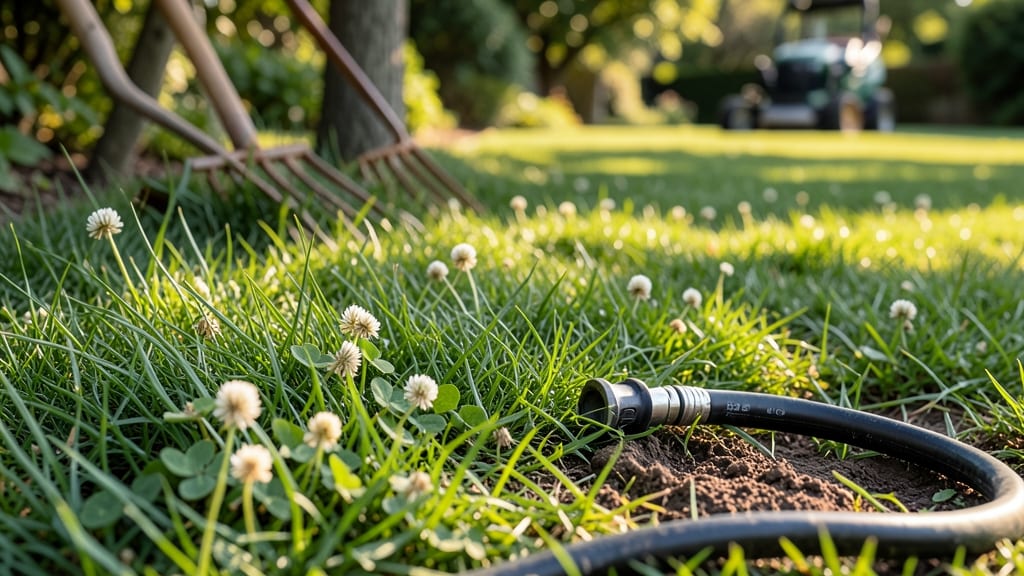
Creating a lovely lawn care that stays lush year-round doesn’t require endless work—just the right approach. ✨ I’ve spent years perfecting a low-effort system that keeps my grass vibrant with minimal mowing, watering, and fuss.
The secret? Healthy soil, smart timing, and a few key habits that save time while boosting results.
Start with soil that drains well and stays moist but not soggy. Test your lawn’s pH—most grasses thrive between 6.0 and 7.0—and adjust with lime or sulfur if needed.
Overwatering is the #1 mistake; deep watering 1-2 times per week (early morning) encourages deep roots, while frequent light watering creates weak, shallow grass. A sharp mower set to 3-4 inches keeps grass healthy and reduces weeds.
Fertilize 3-4 times per year (spring, summer, fall) with a slow-release formula to feed roots gradually. Spot-treat weeds early with vinegar or pre-emergent in spring, and aerate once a year to prevent compaction.
The payoff? Thick grass that crowds out weeds, stays green through droughts, and needs half the maintenance of a high-stress lawn.
This method works for cool-season grasses (like Kentucky bluegrass) and warm-season types (like Bermuda). Skip the perfectionism—focus on consistency over intensity, and your lawn will reward you with effortless beauty. Ready to transform your yard?
📚 In This Guide
- What you need
- Instructions
- Tips and common mistakes
- Wrapping up and next steps
What you need
- ● Lawnmower: Electric or gas-powered (choose based on yard size—16"–21" cutting width for most homes).
- ● Sharp mower blades: Always replace or sharpen when dull (check every 20–30 hours of use).
- ● String trimmer/edger: Battery-powered or gas (20"–36" cutting width for precision).
- ● Rake: Bow rake (for debris) + leaf rake (for autumn cleanup).
- ● Garden hose or sprinkler system: Adjustable nozzle for even watering (💡 Pro tip: Check for leaks before spring!).
- ● Lawn fertilizer: Slow-release granular (16-4-8 or 20-5-10 NPK ratio)—apply 4 lbs per 1,000 sq ft.
- ● Soil tester kit: pH strips or digital meter to check soil health (ideal range: 6.0–7.0).
- ● Compost or organic mulch: 2–3 inches for top-dressing bare spots.
- ○ Weed killer (optional): Selective herbicide (e.g., 2,4-D) for broadleaf weeds—follow label rates.
- ● Gloves & knee pads: Durable work gloves + gel knee pads for comfort.
- ● Lawn aerator: Manual or mechanical (rent or buy for spring/fall deep tine aeration).
- ● Seed spreader: Broadcast or drop-type for even grass seed distribution (5–10 lbs per 1,000 sq ft).
- ● Dethatcher: Spring-only tool to remove thatch buildup (use if layer exceeds ½ inch).
- ● Smart irrigation controller: Wi-Fi enabled to automate watering schedules.
- ● Post-emergent weed killer: For stubborn weeds (e.g., crabgrass, clover).
- ● Lawn roller: 100–150 lb for seeding new areas (helps seed-to-soil contact).
Instructions for year-round green lawn care with minimal effort
Here's the system I've used for decades to keep lawns lush without backbreaking work.
⏰ Step 1: Schedule Seasonal Maintenance Tasks
Start by dividing your lawn care into four seasonal phases: spring awakening, summer vigor, fall transition, and winter dormancy. Each phase has 2-3 key tasks that take less than 3 hours total. Spring focuses on cleaning and feeding—remove debris, aerate compacted areas, and apply a slow-release nitrogen fertilizer when daytime temps reach 55°F consistently. You'll know it's time when dandelions start popping up.
Summer shifts to watering strategy and mowing height. Set your mower to 3-4 inches—taller grass shades roots, reducing evaporation. Water deeply 2-3 times per week (early morning) until soil is 6 inches damp, not just surface-wet. Fall is all about seeding and soil prep: Overseed thin patches in late September when soil temps drop below 65°F—this prevents fungal issues. Winter means reducing foot traffic and leaving clippings as natural mulch.
🌱 Step 2: Master the Mowing Technique
Never cut more than one-third of the grass blade at a time—this prevents shock and promotes deep root growth. I always mow when grass reaches 3.5 inches and never let it go below 2.5 inches in summer. Sharpen blades annually (dull mowers tear grass instead of cleanly cutting) and alternate mowing patterns each week to prevent soil compaction ruts.
Collect clippings only if your lawn has fungal issues (like brown patches) or you're overseeding—otherwise, leave them. Those clippings return 25% of lawn nutrients naturally. You'll notice a difference in soil texture within a month of consistent clipping return.
☀️ Step 3: Implement Smart Watering Practices
Water between 6-10 AM to reduce evaporation and fungal growth. Use a rain gauge (or tuna can) to measure 1 inch per week—including rainfall. If you get 1.5 inches of rain, skip watering that week. For drought periods, water deeply every 4-5 days instead of daily shallow sessions. You'll know you're doing it right when soil 6 inches down stays moist but not soggy.
Consider installing a soaker hose system along sidewalks—these deliver water directly to roots without runoff. Run it for 20-30 minutes twice weekly during summer. Avoid sprinklers that create wet leaf blades (they promote disease).
🪴 Step 4: Soil Health Through Aeration and Topdressing
Aerate your lawn once every 2 years in early fall when soil is 60-70°F. Use a core aerator that pulls 3/8-inch diameter plugs—these holes let air, water, and nutrients penetrate. After aerating, spread ¼ inch of compost over the entire area and lightly rake it in. This boosts microbial activity and improves drainage instantly.
For high-traffic areas, topdress annually with a sand/compost mix (50/50 ratio). Walk over the area after applying to help it settle. You'll see thicker grass within 4-6 weeks as roots access nutrients more easily.
✂️ Step 5: Seasonal Adjustments for Year-Round Success
Spring: Apply pre-emergent herbicide in March before crabgrass seeds germinate (check your region's frost dates). Summer: Switch to iron supplements in June for that deep green boost without nitrogen burn. Fall: Overseed with cool-season grass in October when soil temps drop below 60°F. Winter: Reduce mowing frequency—just keep grass at 3 inches to prevent smothering.
I keep a lawn care calendar with local frost dates and rainfall averages to adjust timing. The key is consistency over intensity—small, regular efforts beat occasional heavy work. Within 3 months, you'll have a lawn that requires half the maintenance of neighbors' while looking fuller and greener.
Tips & tricks for perfect year-round lawn maintenance
These proven strategies will help you maintain a vibrant lawn with minimal effort—just like the pros do.
Seasonal Timing is Everything: The 55°F threshold in spring isn't just arbitrary—it's when soil microbes become active enough to break down fertilizer. Use a soil thermometer to confirm temps before applying nitrogen. In fall, wait until soil drops below 65°F before overseeding; cooler temps prevent fungal growth and give new grass time to establish roots before winter. I've seen lawns fail when people seed too early—patience pays off!
Mowing Height Matters More Than You Think: That 3-4 inch range isn't just about looks—it's about shade. Taller grass blocks 30% more sunlight, reducing evaporation and keeping roots cooler. I always check height with a ruler after mowing: if blades are shorter than 3 inches in summer, I know I've cut too much. For high-traffic areas, consider raising the mower to 4 inches—it makes a noticeable difference in recovery time after heavy use.
Watering Efficiency Secrets: The 6-10 AM window isn't just about avoiding evaporation—it's about fungal prevention. Morning dew naturally dries by midday, preventing thatch buildup. For the 1 inch weekly measurement, place your rain gauge in the shadiest part of the lawn where grass is tallest—this gives you the most accurate reading. I've had neighbors swear their sprinklers were working until I showed them how their sunny patches were getting only 0.5 inches while shady areas got 1.5!
Soil Prep Makes All the Difference: When aerating, focus on the most compacted areas first—they're usually along walkways or where kids play. After spreading that ¼ inch of compost, I like to use a stiff broom to work it into the holes rather than raking, which helps it settle more evenly. For high-traffic spots, the sand/compost mix should be about the thickness of a quarter—any thicker and it can suffocate the grass. I've seen lawns transform completely after just one proper aeration and topdressing session.
Pro Tips for Lovely Lawn Care
- These proven strategies will help you maintain a vibrant lawn with minimal effort—just like the pros do.
- Seasonal Timing is Everything: The 55°F threshold in spring isn't just arbitrary—it's when soil microbes become activ...
- Mowing Height Matters More Than You Think: That 3-4 inch range isn't just about looks—it's about shade. Taller grass ...
Frequently asked questions
Got questions about keeping your lawn lush and low-maintenance? You’re not alone!
Here are answers to the most common queries about lovely lawn care—from seasonal tips to quick fixes. Let’s dive in!
How often should I water my lawn for optimal health?
Water deeply 2–3 times per week, early in the morning (4–8 AM). Aim for 1–1.5 inches per week, including rainfall. Overwatering leads to shallow roots, while underwatering stresses grass. Adjust in winter—reduce to once a week unless it’s a drought.
When is the best time to fertilize for year-round green?
Apply slow-release fertilizer in early spring and fall (September–October). Skip summer—heat stresses grass, making nutrients less effective. For cool-season grasses (like fescue), a light winter feeding (December–January) can prevent browning. Always follow label rates!
Can I overseed without killing my existing lawn?
Start by mowing short (1–1.5 inches), then aerate to loosen soil. Spread high-quality seed (like fine fescue or ryegrass) and top with a thin layer of compost. Water lightly 2x daily for 2 weeks. Avoid overseeding in peak heat—spring or fall is ideal.
How do I get rid of weeds naturally without harsh chemicals?
Try these lovely lawn care tricks:
- Hand-pull weeds (especially dandelions) after rain when soil is soft.
- Apply corn gluten meal (pre-emergent) in early spring—it’s organic and blocks weed seeds.
- Boost grass density with proper mowing/fertilizing—thick turf crowds out weeds.
- Use a vinegar spray (1 gallon vinegar + 1 oz dish soap) for spot treatment (test on a small area first!).
Why is my lawn turning brown in summer, even with water?
Brown patches often mean heat stress, compacted soil, or fungal issues. Try this:
- Adjust mower height to 3–4 inches to shade roots.
- Aerate to improve airflow and water absorption.
- Water deeply at dawn to reduce evaporation.
- If fungal (like brown patch), apply baking soda (1 tbsp/gallon water) or a fungicide.
Pro tip: If brown spots persist, test soil pH—aim for 6.0–7.0 for most grasses.
Wrapping up and next steps
A lush, low-maintenance lawn is well within reach—no green thumb required! 🌿 By choosing the right grass type, mastering simple upkeep, and leveraging smart tools, you can enjoy vibrant greenery year-round without the exhaustion. Remember: consistency is key, but even small efforts add up to big results.
Ready to transform your yard? Start with one small step this weekend—whether it’s mowing, aerating, or just watering deeply. Your future self (and your neighbors!) will thank you. Happy gardening! 🌱