
Lawn
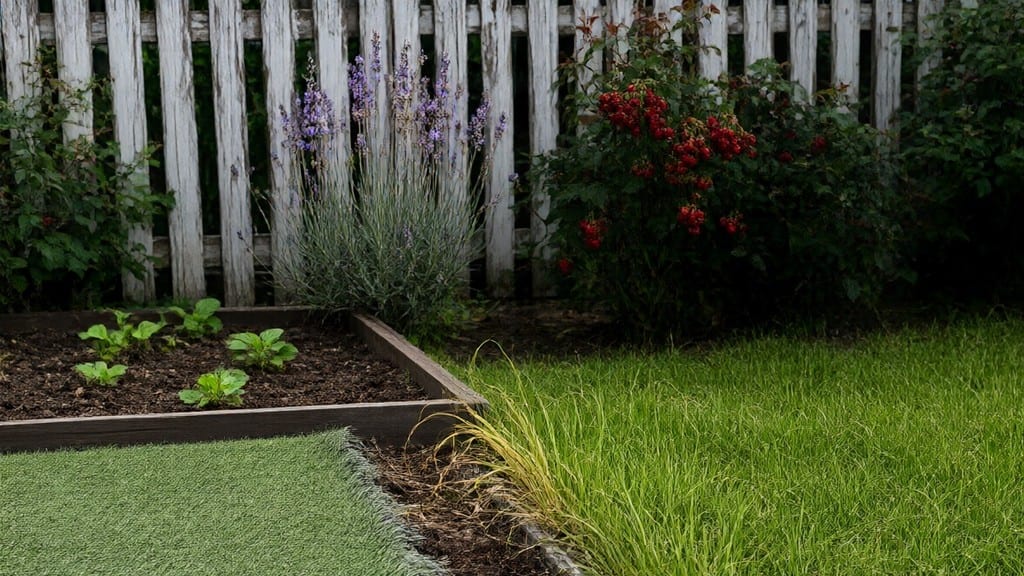
Turf is significantly hotter than natural grass because its synthetic fibers absorb and retain solar heat without the cooling effects of evaporation. Unlike organic grass, which releases moisture to lower surface temperatures, artificial turf can reach temperatures up to 30°F warmer in direct sunlight.
This heat difference comes down to two key factors: material science and moisture dynamics. Artificial turf is made from polyethylene or polypropylene fibers, which lack the moisture-wicking properties of natural grass blades. When sunlight hits, these synthetic materials convert light energy into heat with little way to dissipate it.
Meanwhile, natural grass cools itself through evapotranspiration, where water evaporating from leaves pulls heat away from the surface. The result? A turf field can feel like walking on a hot sidewalk, while real grass stays closer to air temperature. 🔥
For homeowners, this means summer heat becomes a real comfort issue—especially for kids playing barefoot or pets running across hot surfaces. The temperature gap widens on clear days with dry conditions, where turf can reach dangerous levels for sensitive skin.
Understanding this science helps explain why some backyards feel like saunas after just a few hours of sun.
💡 In This Article
- How Artificial Turf Traps Heat vs Natural Grass
- Cooling Solutions for Hot Turf Surfaces
How artificial turf traps heat vs natural grass
Here's what's actually happening at the molecular level: artificial turf is primarily made from polyethylene or polypropylene fibers, which have a thermal conductivity of about 0.12-0.15 W/m·K. That means these materials absorb sunlight and convert it directly into heat energy with minimal dissipation.
Natural grass blades, in contrast, have a thermal conductivity closer to 0.17-0.22 W/m·K but contain 70-80% water by weight when healthy, creating a natural cooling mechanism through evaporation.
The key difference lies in what scientists call the albedo effect—how much light a surface reflects versus absorbs. Natural grass reflects about 20-25% of sunlight, while artificial turf reflects only 5-10%, meaning it absorbs far more heat energy.
When you combine this with the lack of moisture in synthetic turf, the surface becomes a heat sink that can reach 120-160°F on sunny days, compared to natural grass which typically stays between 85-100°F.
This is why you can burn your feet on turf but not on grass—it's not just about temperature, but how long that heat lingers.
Natural grass cools itself through evapotranspiration, where water moves from soil to atmosphere through plant tissues. This process requires energy—specifically, the latent heat of vaporization (about 540 calories per gram of water)—which pulls heat away from the surface.
Artificial turf has no plants to perform this cooling, and its tightly woven fiber structure traps heat near the surface. Even when sprinkled, water evaporates quickly without penetrating deep enough to create the same cooling effect as natural grass roots.
Surface texture plays a surprising role too. Natural grass blades have a rough, porous structure that allows air circulation at the micro-level, while artificial turf fibers are smooth and tightly packed.
This creates what's called a boundary layer effect—a thin layer of still air that traps heat near the surface. On turf, this layer can be 0.5-1.0 mm thick, acting like an insulating blanket.
In contrast, grass blades disrupt this layer, allowing convective cooling where warm air rises and cooler air replaces it.
Consider this real-world comparison: during a 90°F summer day, a turf field might measure 145°F at surface level, while natural grass stays around 95°F. The difference becomes even more dramatic when you account for humidity—low humidity means less moisture is available for evaporation, making turf feel even hotter.
This is why athletic fields often use cooling systems during games, while parks with natural grass remain playable without intervention. The science shows it's not just about heat absorption, but how different surfaces manage that heat over time. 🌡️
What most people don't realize is how this heat affects surrounding areas. Turf's high surface temperatures can create microclimates that raise air temperatures by 2-5°F in the immediate vicinity, contributing to what's called the urban heat island effect in residential areas.
This isn't just theoretical—studies show that neighborhoods with large turf areas can experience measurable increases in local temperatures during heatwaves, affecting everything from energy costs to heat-related illnesses.