
Lawn
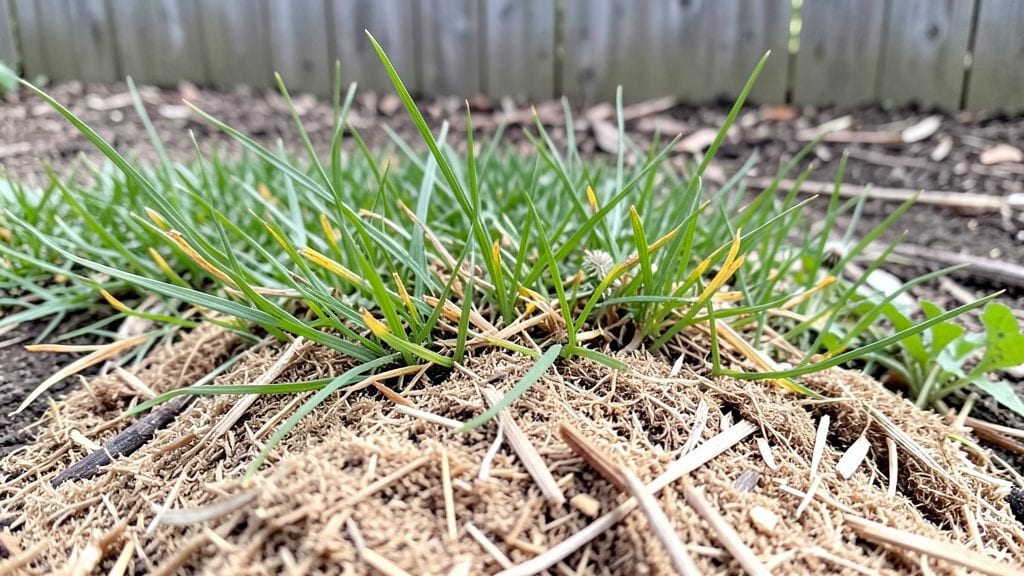
Sawdust is not good for grass because it steals nitrogen from the soil while breaking down, suffocates grass roots, and turns the soil too acidic over time, which can weaken your lawn's health. Instead, try compost or mulch for better results.
Sawdust might seem like a free, natural option for improving your lawn, but its high carbon content creates an imbalance that starves grass of essential nitrogen. 🌱 When it decomposes, it also lowers soil pH, making it harder for roots to absorb nutrients.
I've seen lawns turn patchy and yellow after using sawdust—it's not worth the risk when better alternatives exist. The key is choosing amendments that feed your grass rather than depleting it.
For example, compost adds both nutrients and organic matter, while wood chips break down slowly without harming your lawn. Both options improve soil structure and support healthy root growth. Always test your soil first to understand what it truly needs—your grass will thank you for the thoughtful approach.
💡 In This Article
- How Sawdust Affects Soil Chemistry and Grass Growth
- Best Organic Lawn Soil Amendments Instead of Sawdust
How sawdust affects soil chemistry and grass growth
Here's what's actually happening when you spread sawdust on grass: it creates a massive carbon-to-nitrogen (C:N) imbalance in your soil. Fresh sawdust has a C:N ratio of about 500:1 to 800:1, meaning it contains way more carbon than nitrogen.
Grass, however, needs a balanced ratio around 20:1 to 30:1 to thrive. As microbes try to break down this sawdust, they gobble up all available nitrogen in the soil to do their job—leaving your grass starving for this essential nutrient. 🌱
The decomposition process also releases organic acids that lower soil pH over time. While grass can tolerate a range of pH levels (typically 6.0 to 7.5), sawdust can push soil into the 4.5 to 5.5 range—making nutrients like phosphorus and potassium less available to roots.
This acidic shift isn't just temporary; it persists until the sawdust fully decomposes, which can take 1 to 3 years depending on moisture and temperature conditions. Imagine your lawn's roots struggling to access nutrients through a filter that keeps getting more acidic.
What most people don't realize is how sawdust physically smothers grass roots. The fine particles create a dense, compacted layer that blocks oxygen and water from reaching the root zone.
Grass roots need about 15-20% air space in the soil to breathe properly—sawdust reduces this to nearly 5-10% in affected areas. This suffocation leads to shallow root systems that can't support healthy growth, making your lawn more vulnerable to drought and disease.
The texture change is dramatic: instead of loose, crumbly soil, you get something closer to damp cardboard.
Long-term, sawdust creates another hidden problem: soil compaction. As it breaks down, it forms a dense mat that prevents natural soil aeration. Compacted soil has 30-50% less pore space than healthy soil, which means water runs off instead of soaking in and roots can't expand properly.
This is why lawns treated with sawdust often develop that characteristic spongy feel when walked on—it's not just moisture, it's the sawdust layer compressing underfoot. The science behind this involves how organic matter breaks down into humus; sawdust skips this beneficial stage entirely.
Consider these key factors when evaluating alternatives: most organic amendments have C:N ratios between 20:1 and 40:1, meaning they add nitrogen rather than stealing it. For example, compost typically has a 20:1 ratio and improves soil structure without the acidic byproducts.
The difference in soil chemistry is night-and-day—compost adds beneficial microbes while sawdust creates an environment where only certain fungi can thrive, often at the expense of your grass. 💫
What's particularly frustrating is how sawdust's effects compound over time. That "free mulch" you spread last spring might seem harmless, but by next summer, you could be dealing with nitrogen-deficient grass that's also struggling with poor drainage.
The root suffocation doesn't just stop at the surface—it affects the entire root zone down to 4-6 inches, where most grass roots are trying to establish. This is why professional lawn care experts almost unanimously recommend against using sawdust on grass.