
Lawn
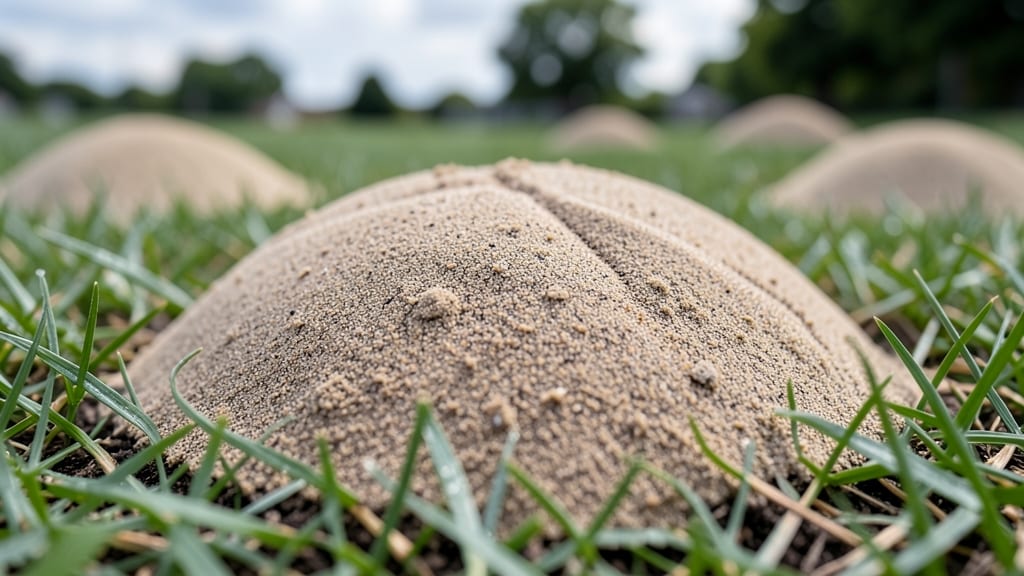
Those mysterious insect mounds in the lawn aren’t just unsightly—they’re a sign of underground activity that can damage roots and even threaten your home’s foundation. 🌱 I’ve spent years dealing with everything from fire ant colonies to mole cricket tunnels, and the key to fixing it starts with knowing exactly what you’re up against.
The first step is identifying the culprit: fire ants create small, crumbly mounds, while mole crickets leave smooth, golf-ball-sized tunnels. Termites rarely build visible mounds but leave behind hollow-sounding wood and frass (their sawdust-like droppings).
Once you know who’s moving in, you can choose the right approach—whether that’s organic nematodes for grubs or targeted baits for ants. What’s amazing is how quickly natural solutions work once you understand the problem.
A single application of beneficial nematodes can eliminate grubs in 2-4 weeks, while diatomaceous earth smothers ants without harming grass. The secret is timing: treat in early spring or late summer when insects are most vulnerable.
You’ll end up with a lawn that stays healthy year-round, without the chemical residue or the risk of harming pets and kids. Let’s get those mounds gone for good—naturally.
Root Causes of Lawn Mounds
Those mysterious mounds popping up in your lawn aren’t random—they’re a deliberate design by insects creating their homes. Understanding why they build these structures helps you target solutions without harming your grass. Here’s a breakdown of the key culprits and their motivations:
Termites, often mistaken for ants, are the most common mound builders in lawns—especially in warmer climates. Their mounds serve a critical purpose:
- Temperature regulation: Termite mounds are engineered to maintain a consistent internal temperature (around 86–95°F), even in extreme outdoor conditions. The mound’s design—with air vents and insulating materials—creates a microclimate perfect for their colony.
- Humidity control: The structure traps moisture, preventing dehydration in dry soil. Termites mix saliva, dirt, and plant fibers to create a waterproof barrier.
- Protection from predators: The thick, hard exterior deters ants, birds, and other threats while providing easy escape routes for workers.
💡 Pro Tip: Subterranean termite mounds often appear as smooth, dome-shaped hills (3–12 inches tall) with tiny holes. If you spot these, act fast—termites can destroy wooden structures while silently feasting on your lawn’s roots.
While most ants don’t build mounds, harvester ants and fire ants are notorious for creating large, visible nests. Their mounds aren’t just random—they’re strategic survival tools:
- Ventilation systems: Fire ant mounds have multiple chambers connected by tunnels, with the top acting as a natural air conditioner. Workers regulate airflow to keep the nest cool.
- Food storage: Harvester ants line their tunnels with seeds and plant material, creating a pantry for lean times. Their mounds often have a crater-like entrance for easy access.
- Queen protection: The deepest chambers house the queen and her eggs, shielded from temperature swings and predators.
⚠️ Warning: Fire ant mounds (with their volcano-shaped appearance) can deliver painful stings. If disturbed, they’ll swarm aggressively, making removal a careful process.
Though they don’t create traditional "mounds," carpenter bees and mud daubers burrow into soil or soft wood, leaving behind tunnel-like excavations that resemble small hills when packed with debris. Their "nests" solve:
- Structural stability: Carpenter bees tunnel into dead wood or compacted soil, creating a snug fit to protect their larvae from collapse.
- Moisture resistance: Mud daubers use saliva to waterproof their nests, preventing rot in humid conditions.
- Predator evasion: Hidden entrances (often in lawn edges or under decks) make their nests hard to spot until it’s too late.
🔨 Actionable Insight: If you see sawdust-like frass near holes in wood or soil, you’re likely dealing with carpenter bees. Seal entry points with caulk to deter them.
Insects don’t build mounds just because—your lawn’s environment often invites them. Key factors include:
| Factor | Why It Attracts Insects | How to Fix It |
|---|---|---|
| Compacted soil | Heavy foot traffic or machinery compresses soil, making it easier for termites/ants to dig deeper and create mounds. | Use a core aerator to loosen soil in spring/fall. |
| Moisture imbalances | Overwatering or poor drainage creates ideal humidity for termite and ant colonies. | Improve drainage with sand or gravel; water deeply but infrequently. |
| Decaying wood/debris | Termites and carpenter bees are drawn to rotting wood or mulch piles near your lawn. | Remove wood chips, stumps, or dead branches from the yard. |
| Lack of predators | Few birds, toads, or beneficial insects mean no natural pest control. | Install a birdhouse or plant native wildflowers to attract predators. |
🌡️ Climate Note: Southern lawns see more termite activity due to year-round warmth, while northern regions may struggle with fire ants in summer. Adjust your approach based on your zone!
Quick Fixes for Lawn Mounds
Unwanted insect mounds can turn your lawn into a bumpy mess, but the good news is that you don’t need harsh chemicals to tackle the problem. Below, we’ve mapped out practical, eco-friendly solutions tailored to the most common causes—whether it’s fire ants, termites, or other burrowing pests.
Each fix is designed to eliminate the issue without harming your grass while keeping your yard safe for pets and kids.
1. Fire Ant Mounds: Smother, Drown, or Trap
Fire ants are aggressive mound-builders, but you can outsmart them with these non-toxic methods:
- 🍳 Boiling Water or Vinegar Bomb Mix 1 part white vinegar with 1 part water, pour into a spray bottle, and drench the mound until it’s fully saturated. For larger mounds, use boiling water (wear gloves!).
This kills ants on contact and disrupts their colony. Pro Tip: Repeat every 3–5 days for 2 weeks to ensure the entire colony is gone. 🌡️
- 👨🍳 Diatomaceous Earth Barrier Sprinkle food-grade diatomaceous earth (DE) around the perimeter of the lawn (not directly on the mound). This microscopic powder dehydrates ants as they crawl through it. Reapply after rain.
- 🥘 Bait Traps (Natural & Effective) DIY a bait station using:
- 1 tbsp borax
- 1 cup sugar
- 1 cup water Mix, soak cotton balls, and place them inside the mound’s tunnels (ants will carry it back to the colony). Warning: Keep pets/kids away until ants are gone.
2. Termite Mounds: Starve & Disrupt
Termites create sandy, crumbly mounds that weaken grass roots. Since they thrive underground, starvation and physical disruption work best:
- 🔪 Dig & Remove (Early Stage) If the mound is small, dig it out completely (wear a mask—termite dust is irritating!). Remove all visible tunnels and dispose of debris in a sealed bag. 🪒
- ⏰ Nematode Treatment (Biological Control) Release beneficial nematodes (Steinernema carpocapsae) into the soil. These microscopic worms hunt termites without harming plants. Apply in the evening (they need moisture) and water lightly afterward.
- 🌱 Soil Moisture Adjustment Termites love damp soil. Improve drainage by:
- Aerating compacted areas.
- Adding compost or sand to heavy clay soil.
- Avoiding overwatering—keep lawns moderately moist (not soggy).
3. General Insect Mounds: Physical & Preventative
For unknown mounds or mixed infestations, try these universal fixes:
- 🏗️ Sand or Mulch Smothering Cover the mound with 2–3 inches of coarse sand or mulch. This cuts off oxygen and forces insects to relocate. Remove after 7–10 days and repeat if needed.
- 🌿 Lawn Health Boost Healthy grass = fewer pests. Strengthen your lawn with:
- Regular mowing (keep grass at 2.5–3.5 inches).
- Aeration (twice a year) to reduce soil compaction.
- Natural fertilizers (compost tea or fish emulsion) to deter burrowing pests.
- 🎯 Prevention: Early Detection & Barriers
- Inspect monthly for new mounds (especially after rain).
- Apply a cornmeal barrier around the lawn’s edge—ants and termites hate the texture.
- Plant pest-repelling ground covers like clover or thyme near high-risk areas.
To keep your lawn mound-free, adopt these habits:
- 💡 Test soil pH (aim for 6.0–7.0—extreme pH attracts pests).
- 🚫 Avoid chemical pesticides (they kill beneficial insects and harm grass).
- 🌧️ Water deeply but infrequently (shallow watering encourages pests).
- 🔍 Monitor after heavy rains (pests become active when soil is soft).
By combining targeted treatments with preventative care, you can eliminate insect mounds naturally while keeping your lawn lush and thriving. No more bumps—just a smooth, green carpet underfoot! 🌿💚
Frequently asked questions
Why do insect mounds appear in patches rather than spread evenly across the lawn?
Insects build mounds in specific areas because those spots provide their ideal conditions. Termites prefer moist, shaded soil near wood sources, while fire ants choose sunny patches with compacted dirt. The uneven distribution also reflects their colony's need for protection—mounds act as climate-controlled shelters, so they cluster where the environment naturally supports their survival.
Are those small holes around the mound actually part of the insect's nest?
Yes! Those tiny holes are the insect's ventilation system. Fire ants create multiple chambers with small openings to regulate airflow, while termite mounds have hidden tunnels that connect to the surface. For carpenter bees, the holes are their nesting tubes—each one leads to a burrow where they raise their young.
Can I just rake over the mound to get rid of it?
Raking alone won't eliminate the problem—it only temporarily covers the mound. The insects will simply rebuild underground. For fire ants, you need to disrupt their colony by pouring boiling water or using diatomaceous earth. For termites, you must remove the entire mound and treat the soil with nematodes or improve drainage to make the area less attractive.
Will my pets be safe after treating insect mounds with natural methods?
Yes, natural treatments are pet-safe once fully applied. Diatomaceous earth and nematodes break down quickly and won't harm animals. However, avoid letting pets near the treatment area until it's completely dry (usually 24 hours for DE). Always check with your vet first if your pet has sensitive skin or respiratory issues.
How do I know if my lawn mounds are from insects vs. gophers or moles?
Look for these clues: Insect mounds are smaller (1–12 inches tall) with fine particles, while gopher mounds are larger (6+ inches) with fresh dirt and molehills are loose, cone-shaped piles. Insect mounds also have tiny holes or tunnels, while gopher/mole activity shows surface disturbances without clear nest structures. Listen for scratching sounds at night—gophers make more noise than insects.