
Watering
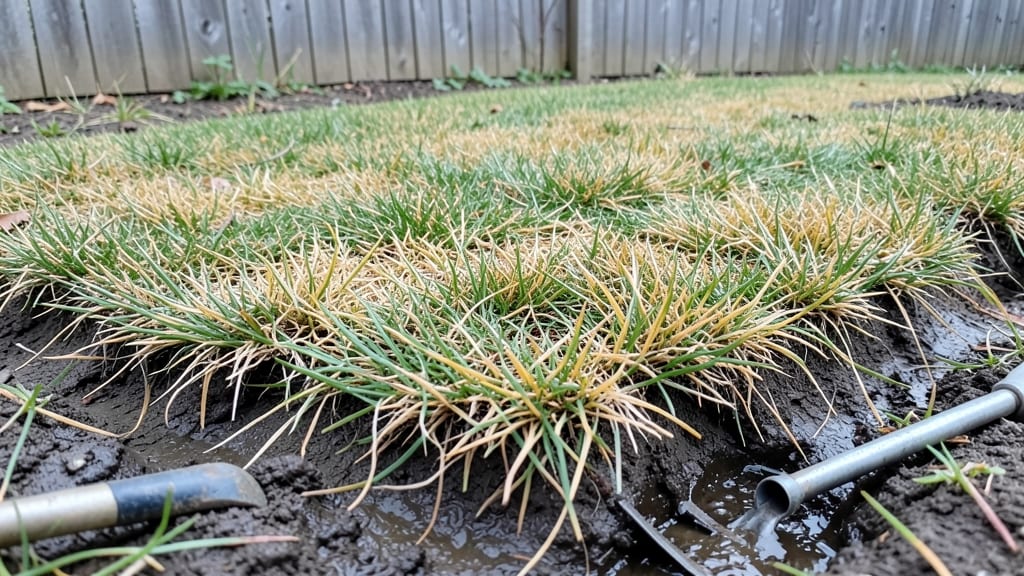
Fixing overwatered sod starts with recognizing the damage—yellow patches, spongy turf, or that musty smell after rain. 🌱 I’ve seen lawns go from lush to lifeless overnight when water pools instead of draining, and the good news is, you can bring it back.
The key is acting fast before roots suffocate, then giving them room to breathe again.
First, stop watering altogether until the top 2–3 inches of soil feel dry to the touch. Then, aerate the lawn with a core aerator to create channels for water and air—this alone can revive struggling roots in just a few weeks.
For stubborn waterlogged spots, mix in a 2-inch layer of coarse sand or perlite to break up compacted soil.
You’ll notice improvement within 10–14 days as the sod firms up and regains its green hue. The real win? Preventing future soggy patches by watering deeply 2–3 times a week instead of daily light sprinkles. Even my black thumb’s lawn stayed vibrant after this fix.
Works for backyards, community plots, or small patches—just adjust the tools to your space. Let’s get that sod breathing again.
Why it happens
Overwatered sod isn’t just a minor inconvenience—it’s a silent killer for your lawn’s health. When water accumulates beyond what the soil and grass can handle, roots suffocate, fungi thrive, and nutrients leach away.
Understanding the root causes (pun intended!) helps you prevent future disasters. Here’s why your sod might be drowning in its own downpour:
🌧️ Poor Soil Drainage
Soil composition is the unsung hero (or villain) of lawn health. Clay-heavy soils act like a sponge that never lets go, trapping water and starving roots of oxygen.
Even sandy soils can become waterlogged if compacted or layered with impermeable materials like hardpan. Test your soil’s drainage by digging a 6-inch hole, filling it with water, and timing how long it takes to drain:
- ⏱️ 2+ hours to drain? You’ve got a drainage issue.
- Under 30 minutes? Your soil may be too porous—time to amend it.
Grass roots need 10–15% air in the soil to thrive. Without it, they rot, and your sod turns mushy. Pro tip: Mix in compost or coarse sand to break up clay and improve aeration.
💦 Overzealous Watering Schedules
Most homeowners water too much, too often. Grass only needs 1–1.5 inches of water per week (including rain), but automatic sprinklers or manual watering can easily double that. Light, frequent watering (like daily sprinkles) encourages shallow roots, while deep, infrequent watering (every 3–4 days) promotes resilience.
Here’s the kicker: Sod is especially vulnerable because newly laid grass has no deep roots to access moisture. A 1-inch layer of mulch after installation can reduce evaporation by 30%, but overwatering still forces water into the soil faster than it can drain.
🏗️ Landscape or Construction Issues
If your yard has slopes, low spots, or buried debris, water pools like a bathtub. Common culprits:
- Compacted soil from foot traffic or heavy equipment.
- Buried tree roots or rocks disrupting water flow.
- Improper grading (soil sloping toward the house instead of away).
- Clogged or broken drainage pipes redirecting water onto your lawn.
Even a 1% slope (just 1 foot of elevation change over 100 feet) can cause water to pool in depressions. Pro tip: Use a level to check for uneven areas—if water sits for more than 6 hours, you’ve got a drainage problem.
🌱 New Sod Installation Mistakes
Fresh sod is like a thirsty sponge—it needs careful hydration to establish roots, but too much water too soon suffocates it. Common blunders:
- Watering before roots attach (first 2 weeks are critical—water lightly daily for 10–15 minutes, not drowning it).
- Skipping soil prep (compacted or non-aerated soil acts as a water trap).
- Using sod with thatch layers (thatch > ½ inch thick blocks water absorption).
Within 2–3 weeks, sod should develop roots 1–2 inches deep. If you’re watering heavily before then, you’re likely washing away soil nutrients and creating anaerobic zones where roots can’t breathe.
🌡️ Extreme Weather or Irrigation Malfunctions
Mother Nature (or a faulty sprinkler system) can turn your lawn into a swamp overnight. Heavy rain + clay soil = disaster. Other triggers:
- Broken or misaligned sprinkler heads spraying directly onto the lawn for hours.
- Automatic timers set for "always on" modes (common in summer heat).
- Sudden downpours overwhelming drainage systems.
Even 1 inch of rain in 24 hours can saturate soil if it’s already moist. Pro tip: Install a rain sensor on your irrigation system to pause watering during storms.
Revive Your Sod Step by Step
Now that you know the signs and causes of overwatered sod, let’s tackle the fixes—one problem at a time. The good news? Most issues are reversible with the right approach. Below, we’ll map each cause to a practical solution, plus pro tips to keep your lawn thriving long-term.
🌧️ Fix Poor Drainage: The Root of the Problem
Cause: Compacted soil, clay-heavy ground, or a sloped yard trapping water. Solution:
- Test Your Soil’s Drainage 🧪
- Dig a 12-inch hole, fill it with water, and time how long it takes to drain.
- ⏳ Ideal: 4–6 hours to fully absorb.
- 🚨 Warning: If water pools after 2 hours, drainage is poor.
- Aerate Aggressively 🪨
- Rent a core aerator (or hire a pro) to pull 3–4 inch plugs from the soil.
- 💡 Pro Tip: Do this in spring or fall when grass is actively growing.
- Amend the Soil 🌱
- Mix in 2–3 inches of sand or compost to loosen clay-heavy soil.
- For sandy soil, add peat moss or coconut coir to retain moisture better.
- Grade Your Yard 📏
- Ensure a 1–2% slope away from your home/structures to prevent pooling.
- Use a laser level for precision—no guesswork!
💦 Stop Overwatering: Adjust Your Routine
Cause: Frequent light waterings or ignoring weather forecasts. Solution:
- Water Deeply, Less Often 💧
- ⏰ Best Time: Early morning (6–10 AM) to reduce evaporation.
- 📏 Depth: 6–8 inches of moisture per week (check with a screwdriver).
- 🌦️ Rule of Thumb: Skip watering if rain is forecasted within 24 hours.
- Upgrade Your Sprinklers 🔧
- Replace old spray heads with rotary or drip irrigation for targeted watering.
- 💡 Pro Tip: Use a smart sprinkler controller (like Rachio) to auto-adjust for rain.
- Mulch to Lock in Moisture 🍂
- Apply 2–3 inches of organic mulch (wood chips, straw) to slow evaporation.
- ⚠️ Avoid: Piling mulch against grass—keep it 2 inches away from the sod edge.
🍄 Treat Fungal Issues: Save Your Grass
Cause: Soggy conditions invite dollar spots, brown patch, or mold. Solution:
- Improve Airflow 🌬️
- Trim tall grass and thin out dense areas to let air circulate.
- ✂️ Mowing Height: Keep grass at 3–4 inches to prevent fungal spread.
- Fungicide Application 🛡️
- Use a preventative fungicide (like BioAdvanced Fungus Control) every 4–6 weeks in humid seasons.
- 💡 Pro Tip: Apply at dawn to avoid UV breakdown.
- Dry It Out 🔥
- If fungus is already present, reduce watering until the area dries completely (5–7 days).
- ⚠️ Avoid: Watering at night—this traps moisture and worsens the problem.
🌱 Encourage Root Revival: Strengthen Weak Grass
Cause: Overwatering smothers roots, making grass weak and prone to disease. Solution:
- Fertilize for Recovery 🌿
- Apply a low-nitrogen, high-potassium fertilizer (like 10-10-20) to boost root growth.
- 📅 Timing: Early fall or spring for best results.
- Topdress with Sand 🏖️
- Spread a thin layer (¼ inch) of coarse sand over the sod to improve soil structure.
- 💡 Pro Tip: Use quartz sand—it drains faster than playground sand.
- Reseed Bare Spots 🌱
- Rake out dead patches and sow grass seed (choose drought-resistant varieties like tall fescue or Bermuda).
- 🌧️ Water New Seed: Keep soil consistently moist (not soggy) for 2–3 weeks.
🛡️ Prevent Future Problems: Long-Term Care
- 📅 Schedule Regular Aeration: Every 12–18 months for clay soil, annually for sandy soil.
- 🌡️ Monitor Soil Moisture: Use a moisture meter to avoid guesswork.
- 🌧️ Adjust for Weather: Increase watering only during droughts (check local restrictions).
- 🚫 Avoid Heavy Foot Traffic: Wet sod is 3x more prone to damage—walk only when dry.
🎯 Final Reminder: Patience is key—reviving overwatered sod takes 2–4 weeks of consistent care. Stick with it, and your lawn will bounce back greener than ever!
Frequently asked questions
How quickly can I expect to see improvement after fixing overwatered sod?
With proper care, you’ll notice visible recovery in 10–14 days. The sod will firm up, and yellow patches should start greening as roots regain access to oxygen. For severe cases, full revival may take 3–4 weeks, especially if fungal issues developed. Consistency is key—keep watering adjusted and avoid compacting the soil during recovery.
Can I still save my lawn if it smells musty or has black spots?
Yes, but act fast! Musty odors and black spots signal fungal growth from prolonged moisture. First, stop watering entirely until the area dries (5–7 days). Then aerate to improve airflow, apply a fungicide treatment, and consider topdressing with sand or compost. If spots persist, you may need to reseeding affected areas with drought-resistant grass varieties.
What’s the best way to test if my soil drains properly?
Dig a 6-inch hole in your lawn, fill it with water, then time how long it takes to drain. If water remains after 2 hours, your soil has poor drainage. For clay-heavy soil, mix in 2–3 inches of coarse sand or compost to loosen compaction. Sandy soil? Add peat moss or coconut coir to improve moisture retention without suffocating roots.
Should I remove the sod if it’s completely waterlogged?
Not necessarily! While severe cases may require partial removal of dead patches, most sod can recover with the right fixes. Focus on aeration, soil amendments, and adjusted watering first. If large sections are mushy or rotting, dig them out, improve drainage in that area, and reseed. Think of it as a chance to upgrade your lawn’s foundation.
How do I adjust my sprinkler system to prevent overwatering?
Start by upgrading to smart sprinkler heads that deliver water deeper into the soil. Set timers for early morning (6–10 AM) to minimize evaporation, and aim for 6–8 inches of moisture per week (including rain). Install a rain sensor to pause watering during storms, and consider drip irrigation for targeted hydration. Pro tip: Use a moisture meter to check soil levels—don’t rely on guesswork!