
Fertilization
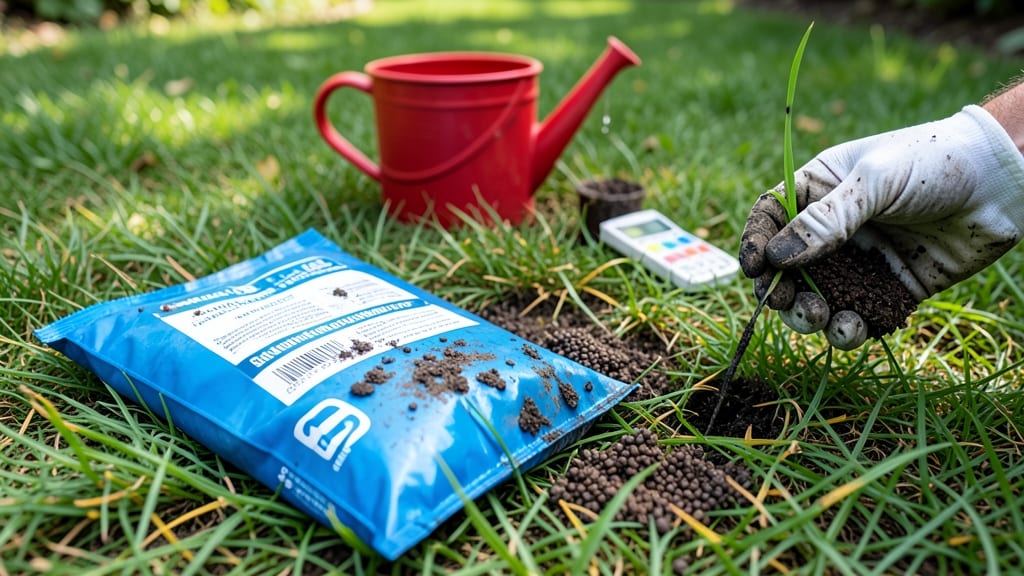
Over-fertilizing lawns creates major environmental damage by washing excess nitrogen and phosphorus into rivers and lakes, which fuels toxic algae growth, suffocates aquatic life, and creates oxygen-starved dead zones. This pollution also poisons soil health and releases harmful airborne chemicals.
This happens when synthetic fertilizers—packed with nitrogen and phosphorus—get carried away by rain or irrigation, turning into a toxic cocktail for ecosystems. 🌊 The process starts with runoff: instead of feeding plants, the excess nutrients dissolve into groundwater, then flow into lakes and oceans.
There, they trigger explosive algae growth called blooms, which block sunlight and rob water of oxygen when they decompose, creating "dead zones" where fish and other marine life can't survive.
What's worse is how this pollution cascades: contaminated waterways spread harmful bacteria, while soil becomes chemically imbalanced, killing off beneficial microbes that help plants grow. Even the air suffers, as volatile organic compounds from fertilizers contribute to smog and respiratory issues.
The Gulf of Mexico's dead zone—now larger than New Jersey—is a prime example of how widespread this problem has become.
💡 In This Article
- How Excess Fertilizer Harms Water Ecosystems
- Sustainable Lawn Care Alternatives to Reduce Fertilizer Pollution
How excess fertilizer harms water ecosystems
When you apply more fertilizer than your lawn can absorb, the excess nutrients—primarily nitrogen (N) and phosphorus (P)—become environmental pollutants. These chemicals don't magically disappear; instead, they dissolve in water and get carried away during rainfall or irrigation.
A single application of 1 pound of nitrogen per 1,000 sq ft can produce enough runoff to create a measurable ecological impact in nearby waterways. 🌊 The process begins when rainwater percolates through the soil, dissolving these nutrients and transporting them into groundwater or surface runoff that flows into lakes, rivers, and eventually oceans.
The real damage happens when these nutrients reach aquatic ecosystems. Nitrogen and phosphorus act like fast food for algae—providing the perfect conditions for explosive growth of harmful algal blooms (HABs).
These blooms can produce toxins that kill fish and other wildlife, while also creating thick mats that block sunlight from reaching underwater plants. When the algae eventually die and decompose, bacteria consume oxygen to break them down, creating oxygen-depleted zones called hypoxic dead zones.
The Gulf of Mexico's dead zone, now covering 5,400 square miles annually, is a direct result of agricultural and lawn fertilizer runoff from the Mississippi River basin.
This chain reaction doesn't stop with aquatic life. Contaminated waterways spread harmful bacteria like E. coli and Cyanobacteria, which can make humans and pets sick if they come into contact with the water.
The economic impact is staggering too—dead zones cost the U.S. fishing industry alone $82 million annually in lost revenue. Even drinking water supplies can become contaminated when nutrient runoff triggers the formation of harmful byproducts like nitrates, which can cause serious health issues in infants and pregnant women.
What makes this problem particularly insidious is how it disrupts entire food chains. Fish that rely on oxygen-rich water may die off, affecting birds, mammals, and other predators that depend on them. The imbalance continues when certain algae species outcompete native plants, altering the entire ecosystem structure.
For example, in Lake Erie, toxic algal blooms have become so severe that they've forced cities to shut down water treatment plants, affecting millions of residents. The ripple effects of over-fertilization extend far beyond the lawn, creating a cascading environmental crisis that takes decades to reverse.
Here's the chemical breakdown: Nitrogen in fertilizers often exists as ammonium (NH₄⁺) or nitrate (NO₃⁻), while phosphorus is typically in the form of phosphate (PO₄³⁻). When these compounds reach water, they trigger a process called eutrophication, where nutrient overload causes excessive plant growth.
The decomposition of this organic matter consumes dissolved oxygen, creating the deadly conditions that define dead zones. In some cases, the algal blooms themselves produce toxins like microcystin, which can contaminate drinking water supplies and pose serious health risks to humans.
The most alarming aspect is how quickly this damage accumulates. Studies show that just 20 pounds of nitrogen per acre applied annually can double the risk of harmful algal blooms in nearby water bodies.
This is why environmental regulations often limit fertilizer applications to 1 pound of nitrogen per 1,000 sq ft per year—a threshold many homeowners unknowingly exceed.
The problem is compounded by the fact that most synthetic fertilizers are only 10-30% nitrogen, meaning a significant portion gets wasted and ends up in our waterways instead of feeding plants.