
Lawn
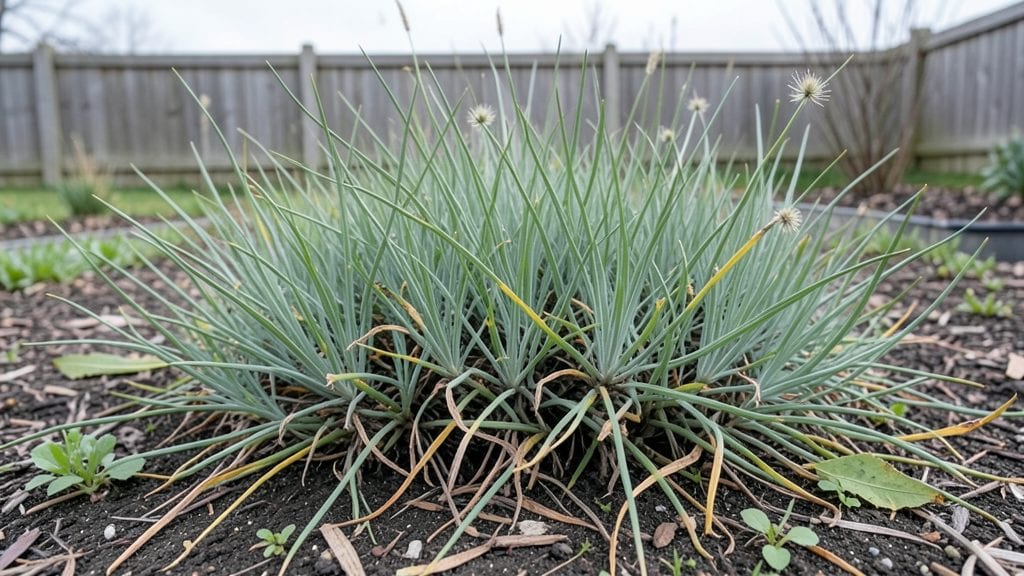
Understanding couch grass meaning reveals two very different plants: Elymus repens (the invasive quackgrass weed with aggressive rhizomes) and Elymus farctus (the ornamental sea couch grass prized in landscaping). Recognizing which type you're dealing with is key to deciding whether to eradicate or cultivate it.
When you hear "couch grass," you're actually dealing with two completely different plants that share only a name. 🌱 The invasive Elymus repens spreads rapidly through underground stems called rhizomes, making it a lawn nuisance that can choke out desirable plants.
On the other hand, Elymus farctus grows upright with arching seed heads, creating a textured, drought-tolerant addition to coastal gardens and erosion control projects. The confusion often arises because both belong to the same grass family but serve entirely opposite purposes in landscaping.
Here's the practical takeaway: if you're dealing with a sprawling, aggressive grass in your lawn, it's almost certainly the weed variety that needs removal.
But if you're looking at a clump-forming grass with decorative seed heads in a garden setting, you might actually have the ornamental type that many landscape designers intentionally plant for its hardiness and aesthetic appeal.
💡 In This Article
- Botanical Differences Between Weed and Ornamental Couch Grass
- How to Identify and Manage Couch Grass in Landscapes
Botanical differences between weed and ornamental couch grass
The key distinction between these plants lies in their root systems. Elymus repens (quackgrass) spreads aggressively through rhizomes—horizontal underground stems that can grow up to 6 feet long and 1 foot deep. These rhizomes produce new shoots every 6-8 inches, creating dense mats that smother other plants.
The leaves are rough-textured, rolled in the bud, and typically 3-15 inches long with a blue-green hue, often appearing slightly glossy.
In stark contrast, Elymus farctus (sea couch grass) grows in upright clumps with arching seed heads that resemble miniature wheat stalks. Its leaves are flat or slightly folded, measuring 1-3 feet tall, with a silvery-blue or gray-green color that gives it a distinctive coastal appearance.
Unlike quackgrass, it lacks aggressive rhizomes—instead, it spreads slowly through seed dispersal and shallow root systems that stabilize soil rather than invade it. The seed heads develop in late summer, adding ornamental value that quackgrass completely lacks.
The ecological impact explains why one is considered a weed while the other is cultivated. Quackgrass thrives in disturbed soils, outcompeting native grasses with its rapid spread and deep root penetration. It can reduce lawn quality by 50-70% within 2-3 years if unchecked.
Meanwhile, sea couch grass is valued for its drought tolerance and ability to grow in salty, sandy soils, making it ideal for coastal gardens where few other plants survive. Its non-invasive growth habit prevents it from becoming a nuisance.
Another telling difference is their response to environmental stress. Quackgrass thrives in compacted or nutrient-poor soils, often appearing in lawns after construction or heavy foot traffic. Sea couch grass, however, prefers well-drained, slightly acidic soils with full sun exposure—conditions that quackgrass cannot tolerate.
This explains why you'll find the ornamental variety in landscaping projects while the weed dominates urban lawns and agricultural fields.
Here's what most people overlook: the seed head structure is your best identifier. Quackgrass produces open, feathery seed clusters that spread easily, while sea couch grass develops compact, spiky seed heads that remain upright.
The ornamental variety also has a slightly sweet scent when crushed, whereas quackgrass has no noticeable aroma. This sensory difference, combined with the growth patterns, makes identification straightforward once you know what to look for.
Understanding these botanical differences isn't just academic—it directly impacts how you manage these plants. Quackgrass requires mechanical removal (digging) or herbicide treatment due to its persistence, while sea couch grass can be pruned and divided like any ornamental grass.
The choice between eradication and cultivation hinges entirely on which species you're dealing with.
What's fascinating is how these two plants demonstrate nature's duality: one a relentless survivor, the other a deliberate choice for beauty and function. Recognizing these differences transforms confusion into clarity—and turns your lawn or garden into a space you can intentionally shape rather than react to.