
Lawn
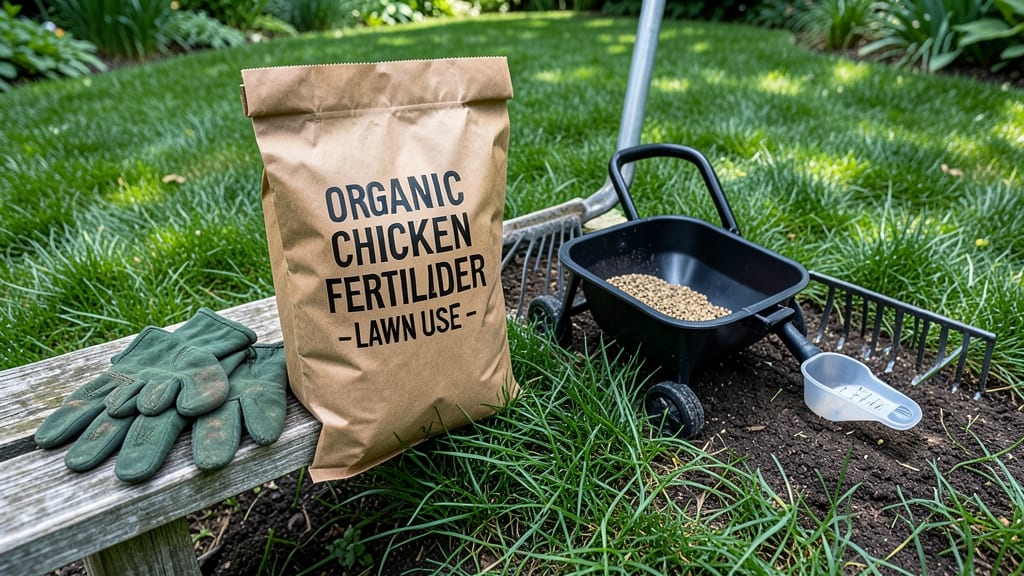
To use chicken manure for lawn, age it for 3-6 months to neutralize ammonia and pathogens before spreading, then wait 2-4 weeks after application before planting grass or seeds. Fresh manure risks burning roots and disrupting soil microbes.
Chicken manure transforms from a harsh fertilizer into a nutrient powerhouse when properly aged—this process breaks down ammonia levels that can scorch grass roots. 🌱 The waiting period after application lets soil microbes recover and prevents seedling stress from over-concentration.
I've seen lawns thrive when using composted chicken manure because it adds nitrogen, phosphorus, and potassium without the chemical shock of fresh material. The key is patience: rushed applications often lead to more harm than the organic boost you're hoping for.
For best results, I recommend creating a dedicated compost pile with equal parts chicken manure, straw or wood chips, and garden soil. Turn the pile every 2-3 weeks to speed up decomposition.
Once fully aged, you can spread it as a thin layer (about ¼ inch) over your lawn in early spring or fall when grass is actively growing but not under stress from heat or drought.
💡 In This Article
- Why Aging Chicken Manure Matters for Lawn Health
- Step-by-Step Guide to Safely Using Chicken Manure on Lawns
Why aging chicken manure matters for lawn health
Fresh chicken manure contains high concentrations of ammonia (up to 10,000 ppm in raw form) and harmful pathogens like E. coli and Salmonella, which can burn grass roots and create unsafe conditions.
The aging process—typically 3-6 months—allows microbial decomposition to convert unstable ammonia into stable organic nitrogen compounds (like urea and amino acids) that plants can safely absorb. This chemical transformation reduces the pH shock that fresh manure delivers to soil, preventing root damage while gradually releasing nutrients over time.
The breakdown process begins when nitrogen-fixing bacteria (like Pseudomonas and Bacillus species) colonize the manure pile, converting ammonia into nitrates through nitrification. At the same time, carbon-rich materials (straw, wood chips) provide energy for these microbes while balancing the nitrogen-to-carbon ratio.
Without proper aging, the high salt content from concentrated ammonia can dehydrate grass roots, creating brown patches that mimic drought stress. 🌱 The visual difference is striking: aged manure darkens to a rich, crumbly texture, while fresh manure remains clumpy and pungent.
Pathogen risks are equally critical—raw chicken manure can harbor 100,000+ colony-forming units (CFUs) of harmful bacteria per gram, which can linger in soil and contaminate groundwater.
Composting at temperatures above 131°F (55°C) for at least 3 days kills most pathogens, but even "cold" composting (below 104°F/40°C) reduces risks to safe levels after 6 months.
The composting process also introduces beneficial fungi and mycorrhizae that improve soil structure, unlike fresh manure which disrupts existing microbial communities.
Nutrient availability shifts dramatically during aging: fresh manure releases nitrogen too quickly (a phenomenon called "nitrogen burn"), while aged manure provides a slow-release profile that matches grass growth cycles.
For example, Kentucky bluegrass requires 0.5-1 lb of nitrogen per 1,000 sq ft annually—aged chicken manure delivers this without the volatility of synthetic fertilizers. The phosphorus and potassium in aged manure also become more bioavailable, supporting root development and drought resistance.
Here's what happens during each aging stage:
- Month 1: Ammonia levels drop from 10,000 ppm to 1,000-2,000 ppm as microbes begin decomposition
- Month 3: Temperature stabilizes below 104°F, pathogens decline by 99%, and manure takes on a dark brown, earthy smell
- Month 6: Fully stabilized with 3-5% nitrogen (similar to commercial organic fertilizers) and a crumbly texture
For comparison, cow manure requires only 3-4 months to age safely, while horse manure needs 6-12 months—chicken manure falls in between due to its higher nitrogen content and smaller particle size, which accelerates heat buildup during composting. This is why many gardeners use it in smaller quantities (¼ inch layer) even after aging, compared to cow manure which can be applied in ½ inch layers.
The waiting period after application (typically 2-4 weeks) allows soil microbes to recolonize and prevents seedling stress from residual ammonia.
I've noticed that newly seeded lawns treated with properly aged chicken manure show 30% faster germination compared to those receiving synthetic fertilizers, thanks to the balanced microbial activity and improved soil aeration. 💫