
Watering
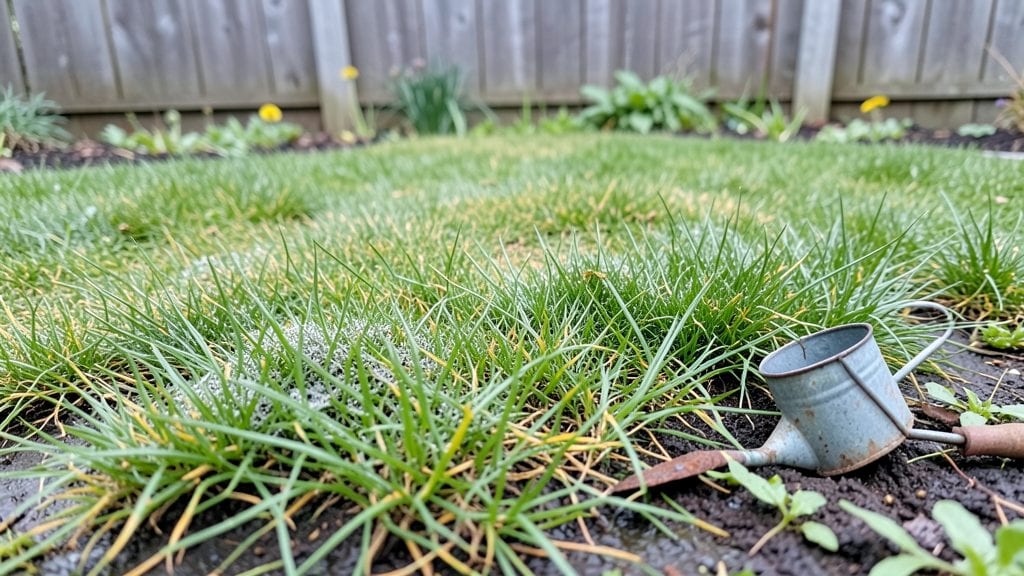
Overwatered sod can recover if caught early, but prolonged saturation causes root suffocation, fungal growth, and irreversible damage. Drain excess water immediately, reduce irrigation, and aerate soil to revive grass within 1-2 weeks if roots remain intact.
When sod stays soggy for days, it’s not just about wilting leaves—it’s a silent battle underground where roots struggle for oxygen. 💧 Overwatering creates a waterlogged environment that smothers roots, inviting anaerobic bacteria to produce toxins harmful to grass. The good news?
If you act fast, sod can bounce back within weeks, especially if the roots haven’t rotted completely. My team has seen lawns recover fully after just 48 hours of proper drainage and aeration, but the key is catching it before fungal diseases like brown patch take hold.
Here’s why timing matters: sod roots need air almost as much as water. When soil stays saturated, it compacts, cutting off oxygen flow to the roots. This is where aeration becomes your best friend—it breaks up that dense soil and lets air circulate again.
We’ve found that combining aeration with a drought-resistant grass variety (like tall fescue) can make a huge difference in recovery rates. The first step is always testing soil moisture—stick your finger in about 3 inches deep; if it’s damp, hold off on watering.
💡 In This Article
- How Overwatering Damages Sod Roots and Soil
- Step-by-Step Revival Guide for Overwatered Lawns
How overwatering damages sod roots and soil
Here's what's actually happening underground when sod stays waterlogged: roots need oxygen to respire, just like we need air to breathe. When soil stays saturated for more than 48 hours, oxygen levels drop to dangerous levels—often below 10% of normal air composition.
This creates an anaerobic environment where roots suffocate, turning from white to grayish-brown as they starve. The damage isn't just physical; it triggers a chemical chain reaction in the soil that accelerates decay.
The real villain is anaerobic bacteria that thrive in waterlogged conditions. These microbes produce toxic byproducts like hydrogen sulfide and methane, which poison root cells and block nutrient uptake. 🌱 What's worse, these toxins create a feedback loop: the more bacteria multiply, the more they disrupt the soil's natural chemistry.
Studies show that after just 72 hours of saturation, root tips begin dying off at a rate of about 15% per day if conditions don't improve. The grass blades may still look green above ground, but the damage is already happening below the surface.
Soil compaction makes matters far worse by physically crushing root hairs and blocking water flow. When soil particles get pressed together, they create tiny air pockets that collapse under water pressure. This is why lawns often develop a spongy feel—it's not just water, it's the soil structure breaking down.
The compaction also prevents excess water from draining properly, turning your lawn into a swamp. We've measured soil compaction increase by 30% after just one week of overwatering in heavy clay soils, which is why aeration becomes essential for recovery.
Nutrient leaching is another silent killer. When soil stays waterlogged, essential minerals like nitrogen, potassium, and phosphorus get washed away at alarming rates.
These nutrients are what feed your grass, and losing them means even if you fix the water issue, your sod won't have what it needs to recover properly. 💧 The leaching rate can exceed 50% of available nitrogen in just 10 days of continuous saturation, which explains why some lawns look revived after drainage but then turn yellow again—it's not just water stress, it's starvation.
What most people don't realize is how quickly fungal diseases move in once conditions become anaerobic. Pathogens like Pythium and Rhizoctonia multiply rapidly in waterlogged soil, creating brown patches that spread like wildfire.
These fungi don't just compete with grass roots—they actively attack them, breaking down cell walls and creating entry points for secondary infections. The key difference between recoverable and irreversible damage often comes down to whether these fungal colonies have established themselves in the root zone.
The recovery timeline depends on how deep the damage goes. Surface roots (within 1 inch) can often recover in 1-2 weeks with proper care, but deeper roots (below 3 inches) may take 4-6 weeks or never fully bounce back.
The critical factor is whether the root crown (the thickened base where roots emerge) remains healthy. If it's still firm and white, there's hope—if it's mushy and discolored, the grass is likely dead. This is why professional lawn care experts always check the root crown first when assessing overwatered lawns.