
Lawn
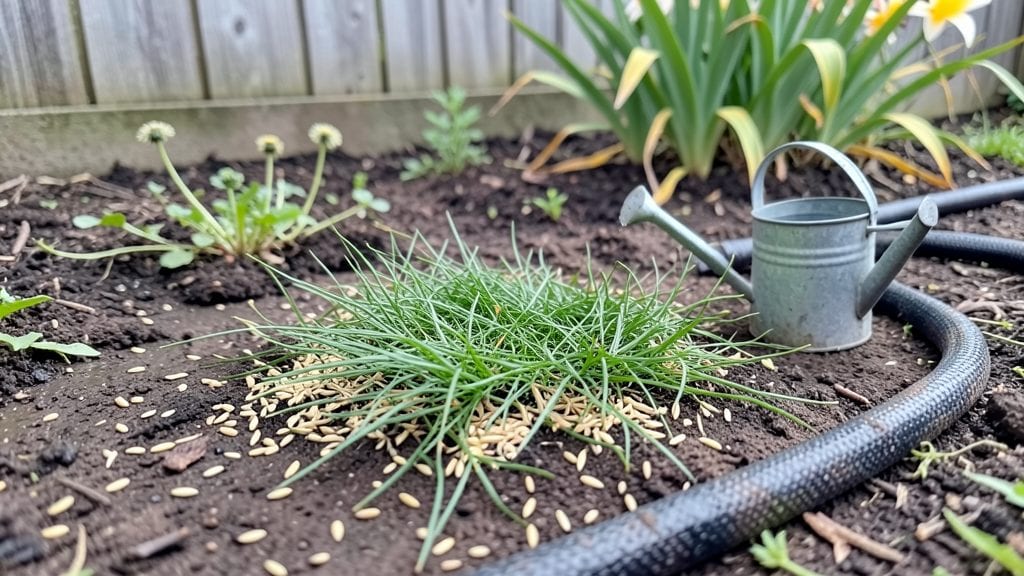
Overwatering grass seed is a common mistake that can kill your lawn before it even starts, leading to seed rot, fungal infections, and failed sprouting. The key is maintaining evenly moist—not waterlogged—soil by applying light watering sessions 2-3 times daily for 10-15 minutes until germination occurs, then shifting to deeper, less frequent watering.
Overwatering creates a suffocating environment where seeds can't breathe—literally.
When soil stays soggy, oxygen gets cut off, causing seeds to suffocate and rot before they even sprout. 🌱 I've seen this happen when people assume "more water is always better," but grass seeds need just enough moisture to drink without drowning.
The right balance keeps the soil damp like a wrung-out sponge, not a swamp.
What makes this tricky is that different seeds and climates need slightly different care. For instance, cool-season grasses like fescue handle moisture better than warm-season Bermuda grass, which dries out faster.
Always check soil moisture by pressing your finger an inch deep—if it feels damp but not wet, you're in the safe zone.
💡 In This Article
- How Overwatering Damages Grass Seed Germination
- Perfect Watering Schedule for New Grass Seed
How overwatering damages grass seed germination
When soil stays saturated for more than 24 hours, grass seeds enter a state of oxygen starvation. Seeds require oxygen to activate enzymes that break down stored nutrients—like starches and proteins—into energy for sprouting.
In waterlogged conditions, these enzymes can't function properly, causing the seed's metabolic processes to shut down. The seed essentially suffocates before germination even begins. This is why you might see seeds that look plump and healthy but never break through the soil surface.
Overwatering also creates the perfect breeding ground for fungal pathogens like Pythium and Rhizoctonia, which thrive in anaerobic (oxygen-deprived) soil. These fungi produce toxins that weaken seed viability and attack young seedlings at their root collars, causing them to rot or develop brown, water-soaked patches.
The key factor is soil temperature—warm, saturated soil (above 70°F) accelerates fungal growth exponentially. I've seen entire seed trays ruined in just 48 hours when left in a humid, overwatered environment.
The physical structure of saturated soil also plays a role. Water displaces air pockets between soil particles, making it harder for roots to penetrate. Grass seed roots need contact with oxygen to develop properly—without it, they grow weak and stunted.
Even if seeds sprout, the resulting grass will be thin, patchy, and vulnerable to disease. Think of it like trying to breathe through a straw submerged in water: the struggle is real, and the results are stunted growth.
Here's what happens at the cellular level: Overwatering triggers a process called hypoxia in seeds, where cells switch to anaerobic respiration—a much less efficient energy process that produces harmful byproducts like ethanol.
While plants can handle short bursts of hypoxia, prolonged exposure damages cell membranes and disrupts nutrient transport. This is why seeds often appear swollen but fail to germinate—they're essentially in metabolic shock.
To visualize the difference, compare ideal moisture to overwatering: Properly moist soil feels like a damp sponge that holds its shape when squeezed, while overwatered soil feels mushy and leaves puddles.
The ideal moisture level maintains a balance where water fills 30-50% of the soil's pore space, leaving room for oxygen. When you exceed this, you're essentially creating a seed cemetery rather than a thriving lawn.
What most people don't realize is that overwatering affects different grass types differently. Cool-season grasses like Kentucky bluegrass have slightly more tolerance for moisture, while warm-season grasses like Zoysia need drier conditions to germinate properly.
This is why following seed package instructions for specific moisture requirements is crucial—it's not just marketing, it's science-backed guidance for optimal conditions.