
Watering
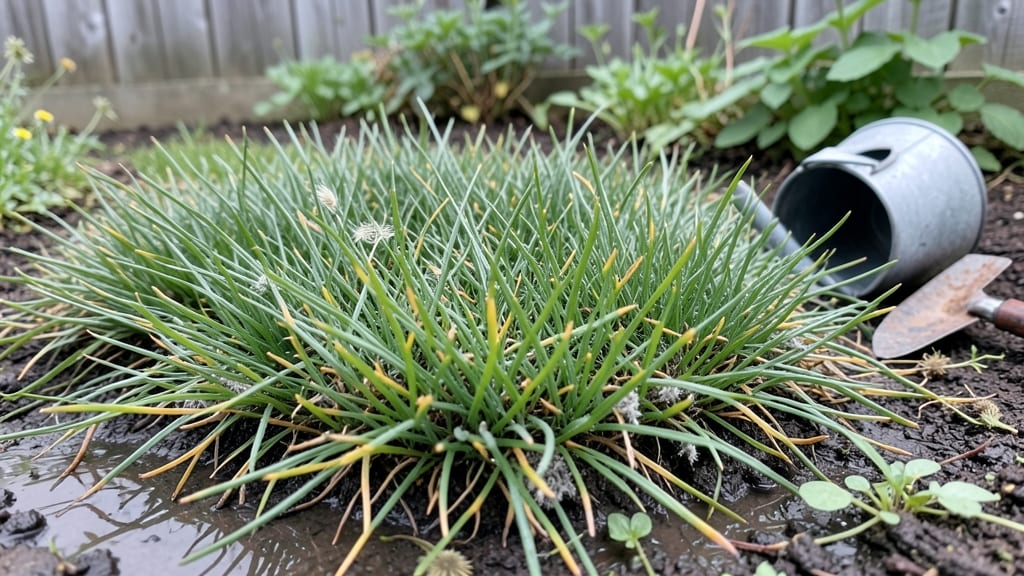
Overwatering grass is a real risk that causes yellowing, fungal infections, and root rot when moisture lingers too long in the soil. Reducing watering frequency and improving soil drainage will help revive struggling lawns.
Too much water creates a suffocating environment for grass roots, cutting off oxygen and inviting fungal diseases like brown patch or dollar spot. 💛 The soil becomes compacted, preventing proper drainage, while essential nutrients wash away.
I’ve seen lawns go from lush green to sad brown patches in just days when watered daily instead of following the 1-inch-per-week rule—even in hot climates. The key is checking soil moisture before watering: if the top 2-3 inches feel damp, hold off until it dries slightly.
Recovery starts with adjusting your watering habits—deep, infrequent watering encourages deeper root growth, while shallow daily sprinkles keep grass weak.
Aerating compacted soil in late summer or early fall helps water penetrate better, and switching to drought-resistant varieties like tall fescue or buffalo grass can future-proof your lawn against overzealous watering. Think of it like training your grass to be more resilient!
💡 In This Article
- How Overwatering Damages Grass Roots and Soil
- Fixing Overwatered Grass: Adjusting Watering Schedules and Soil
How overwatering damages grass roots and soil
When grass receives too much water, the roots suffocate because excess moisture displaces oxygen in the soil pores. Grass roots need oxygen to respire and absorb nutrients—without it, they weaken and die back.
This creates anaerobic conditions where harmful bacteria thrive, producing toxic byproducts like hydrogen sulfide that further damage plant tissues. Think of it like drowning: roots can't "breathe" when submerged in water for prolonged periods.
The damage doesn't stop at the roots. Waterlogged soil becomes compacted as particles press together, reducing pore space by up to 40% in heavy clay soils. This compaction creates a physical barrier that prevents both oxygen and water from reaching deeper layers.
Meanwhile, essential nutrients like nitrogen and potassium leach away through excessive irrigation, leaving grass starved even as the soil appears wet. The visual clue? Blades turn yellow or grayish-green while feeling spongy to the touch.
Fungal pathogens like Rhizoctonia solani (brown patch) and Sclerotinia homoeocarpa (dollar spot) flourish in these soggy conditions. These fungi produce enzymes that break down cell walls, creating circular dead patches that spread rapidly. The key temperature range for fungal outbreaks is 75-85°F—perfect for many lawns in summer.
You'll often see a white, cottony growth on blades in the morning, especially after overnight dew combined with overwatering.
Here's what's happening at the microscopic level: Grass roots normally grow downward to find water and nutrients. But when the soil stays saturated, roots can't extend properly and instead grow outward near the surface, making grass more vulnerable to heat stress.
This shallow root system also means the lawn becomes dependent on frequent watering—a vicious cycle that perpetuates the problem. The texture of overwatered soil changes too: it becomes sticky when wet and forms hard clods when dry, making it nearly impossible for new roots to penetrate.
One surprising consequence is that overwatered grass actually becomes more susceptible to drought later. The shallow root system developed under excess moisture can't access deep water reserves when conditions dry out. This is why many lawns that appear healthy after heavy watering suddenly brown during heatwaves.
The solution? Let the soil dry between waterings to encourage deeper root growth that can reach 6-12 inches below the surface—a root system capable of surviving dry spells.
What most people don't realize is that the damage often starts before you see visible symptoms. Within 24-48 hours of overwatering, grass cells begin losing turgor pressure as they struggle to absorb water against the saturated soil. This cellular stress triggers the yellowing you notice later.
The good news? Grass is remarkably resilient—cutting back on watering and improving drainage can often restore a lawn to full health within 4-6 weeks, provided the roots aren't completely rotted away.