
Pests and Diseases
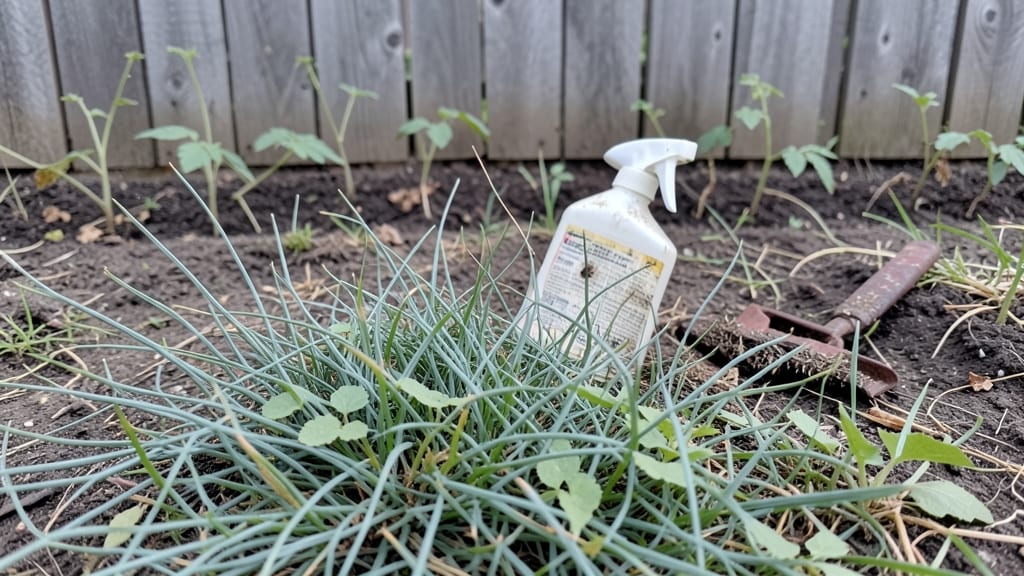
Bleach and grass require a minimum 72-hour waiting period before mowing to prevent burning roots and damaging turf health, though ideal results come from waiting 5-7 days for full breakdown of residual chemicals. Always water the lawn thoroughly after application to dilute bleach effects.
Bleach disrupts grass health by altering soil pH and blocking nutrient absorption, which is why timing matters so much. 🌱 The chlorine in bleach can linger in the soil for days, creating an environment where grass roots struggle to recover.
I’ve seen cases where impatient mowing after just 48 hours led to patchy lawns—so patience pays off when dealing with bleach treatments.
For best results, I recommend testing a small patch of grass first to see how it reacts before treating the entire lawn. This helps you gauge whether your grass can handle the chemical stress or if you need to adjust your approach.
💡 In This Article
- How Bleach Affects Grass Roots and Soil Chemistry
- Safe Bleach Application Techniques for Lawn Care
How bleach affects grass roots and soil chemistry
Bleach—specifically sodium hypochlorite—works by breaking down organic matter through oxidation. When applied to grass, it disrupts the cell membranes of both blades and roots, causing them to lose moisture and nutrients.
The chlorine in bleach reacts with organic compounds in the grass, producing hydrochloric acid that lowers soil pH to 5.0 or lower—far below the ideal range of 6.0-7.5 for healthy turf. This acidic environment inhibits chlorophyll production, turning grass yellow or brown within 24-48 hours.
The damage isn’t just superficial. Chlorine ions penetrate the root zone, where they interfere with the grass’s ability to absorb water and essential nutrients like nitrogen and potassium. Over time, this creates a nutrient-deficient soil environment that even healthy grass struggles to recover from.
The roots become brittle and prone to breakage, making the lawn vulnerable to disease and drought. 🌱 What’s worse, bleach can linger in the soil for up to 10 days, depending on rainfall and soil composition.
Soil microbes—like bacteria and fungi—play a crucial role in decomposing organic matter and recycling nutrients. Bleach disrupts these microbial communities by killing beneficial organisms, which weakens the soil’s natural structure. Without these microbes, the lawn’s ability to break down organic debris slows down, leading to thatch buildup and poor drainage.
This creates a vicious cycle where the soil becomes less fertile, and grass recovery takes even longer.
Here’s the kicker: bleach doesn’t just harm grass—it alters the soil’s long-term health. The residual chlorine can bind to soil particles, forming chlorides that persist for weeks. This means even if the grass appears to recover, the underlying soil chemistry remains compromised.
For example, a 1:10 bleach-to-water mix (a common dilution) can leave enough chlorine in the soil to inhibit microbial activity for 5-7 days, delaying any chance of regrowth.
To mitigate these effects, watering immediately after application helps dilute the bleach and flush out some of the chlorine. However, the real key is patience. Waiting 5-7 days allows most of the chlorine to break down naturally, giving the grass a fighting chance to recover.
Without this buffer, even a light mowing can stress the weakened roots, leading to irreversible damage. 💫
Think of bleach as a chemical time bomb for your lawn. The initial visual damage is just the tip of the iceberg—the real harm happens below the surface, where the roots and soil structure are silently deteriorating.
Understanding this process helps you make smarter decisions about when (and whether) to use bleach on your grass.