
Lawn
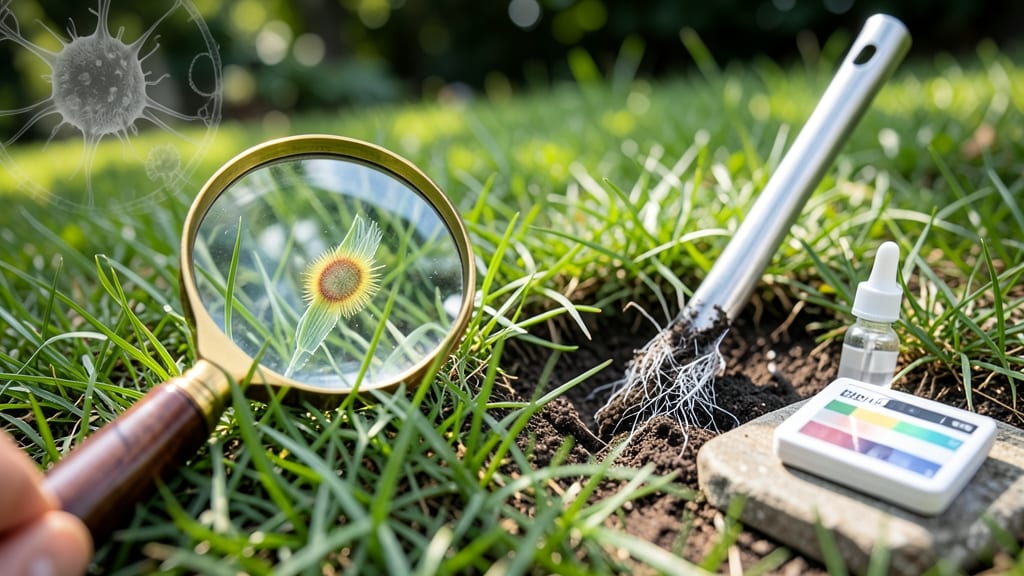
Seeing those unsightly yellow rings in your lawn can be frustrating—especially when you've spent hours keeping it lush. 🌱 The good news? A targeted grub barrier solution can stop the damage in its tracks, saving your grass from becoming a patchwork of brown circles.
I've seen firsthand how quickly this approach works when applied correctly, and the results are nothing short of transformative.
These rings often appear because grubs—larvae of beetles like Japanese beetles or June bugs—munch on grass roots while staying hidden underground. Without intervention, the grass wilts, creating those telltale rings. The fix isn’t just about treating the symptoms; it’s about breaking the grub life cycle before they do more damage.
A simple soil test can confirm if grubs are the culprit, but even without one, the solution is straightforward.
Within just a few weeks of applying the right barrier treatment, you’ll notice new green shoots pushing through the affected areas. The lawn regains its uniformity, and those pesky grubs get kicked out of the picture.
This method works fast, so you won’t have to wait months to see results—just consistency in application and a little patience.
Whether you're dealing with a small patch or larger sections, this approach scales easily. The key is acting quickly once you spot the rings, so your lawn stays healthy and vibrant all season long. Let’s get those grubs out for good!
Root Causes Of Lawn Rings
Yellow rings in your lawn aren’t just an eyesore—they’re often a sign of hidden stress beneath the surface. Understanding the why behind these patches is the first step to restoring a lush, green yard. Below, we break down the most common culprits, backed by science and actionable insights.
Fungal diseases like take-all root rot or fairy rings thrive in moist, nutrient-rich soil and can leave behind telltale yellow or brown rings. These fungi feed on grass roots, disrupting water and nutrient uptake, which causes the grass to weaken and turn yellow.
- How it happens:
- Overwatering or poor drainage creates the perfect fungal buffet.
- Compacted soil traps moisture, encouraging fungal growth.
- Weakened grass (from drought, poor soil, or disease) is more susceptible.
- 🔍 Tell-tale signs:
- Rings with mushrooms or sclerotia (hard fungal structures) at the edges.
- Grass inside the ring may appear stunted or dead, while the outer edges stay green.
- 💡 Pro tip: If you spot mushrooms, do not disturb them—this can spread spores. Instead, improve drainage and apply a fungicide (like propiconazole or trichoderma-based treatments) for stubborn cases.
Grubs—larvae of beetles like the Japanese beetle or June bug—munch on grass roots, leaving behind irregular yellow patches that pull up easily. These pests are most active in late summer to fall, but their damage can linger for months.
- How it happens:
- Adult beetles lay eggs in the soil, which hatch into grubs.
- Grubs feed on roots and organic matter, weakening the grass.
- Compacted or waterlogged soil traps grubs deeper, making them harder to control.
- 🔍 Tell-tale signs:
- Spongy lawn that feels soft when walked on (like a trampoline).
- Increased bird or animal activity (skunks, raccoons, or crows digging for grubs).
- Yellowing in a ring or patch, often with thin, patchy grass.
- 💡 Pro tip: Hand-dig a small section—if you find C-shaped white grubs, it’s a grub problem. Apply a grub control like imidacloprid (Merit) or beneficial nematodes for organic solutions.
Yellow rings can also stem from uneven watering, whether from overwatering (leading to fungal issues) or underwatering (causing drought stress). Even slight variations in soil moisture create stress rings where grass struggles to thrive.
- How it happens:
- Overwatering: Saturates soil, suffocating roots and inviting fungi.
- Underwatering: Causes root shrinkage, making grass vulnerable to heat stress.
- Irrigation malfunctions (like a leaky sprinkler) create wet and dry zones, leading to uneven growth.
- 🔍 Tell-tale signs:
- Rings appear softer or wilting (overwatered) or crunchy and dry (underwatered).
- Sprinkler heads spraying unevenly, creating wet and dry patches.
- Thatch buildup (a spongy layer of dead grass) in overwatered areas.
- 💡 Pro tip: Check your sprinkler system—adjust heads to overlap slightly for even coverage. Water deeply but infrequently (1–1.5 inches per week) to encourage deep root growth.
Heavy foot traffic, machinery, or clay-heavy soil can compact the soil, reducing oxygen and water flow to roots. This creates stress rings where grass struggles to absorb nutrients, turning yellow in compacted zones.
- How it happens:
- Foot traffic (kids playing, pets, frequent walking) compresses soil.
- Clay soil holds water but doesn’t drain well, leading to anaerobic conditions (lack of oxygen).
- Poor aeration prevents roots from spreading, weakening the grass.
- 🔍 Tell-tale signs:
- Hard, dense soil that’s difficult to dig into.
- Water pools in certain areas after rain.
- Grass recovers slowly after mowing or drought.
- 💡 Pro tip: Aerate your lawn in spring or fall using a core aerator to relieve compaction. Mix in sand or compost to improve drainage in clay-heavy soils.
Yellow rings can also signal nutrient imbalances, particularly lack of nitrogen, iron, or potassium. These deficiencies weaken grass, making it susceptible to disease and pests.
- How it happens:
- Nitrogen deficiency (most common) causes pale yellowing (chlorosis).
- Iron deficiency (in alkaline soils) leads to yellowing between veins (interveinal chlorosis).
- Potassium deficiency weakens roots, making grass prone to stress.
- 🔍 Tell-tale signs:
- Uniform yellowing (not just rings) but often worse in high-stress areas.
- Slow growth despite regular watering.
- Soil test results showing low nutrients (get one from a local extension office).
- 💡 Pro tip: Apply a balanced fertilizer (like 16-4-8) in early spring. For iron deficiency, use chelated iron (especially if your soil is alkaline). Over-seed thin areas to boost recovery.
Accidental overspray from weed killers (like 2,4-D) or pet urine (high in nitrogen) can create yellow rings where grass is burned or over-fertilized.
- How it happens:
- Wind drift from herbicide applications.
- Pet urine spots (dogs/cats) act like mini-fertilizer burns.
- Over-application of salt-based de-icers in winter.
- 🔍 Tell-tale signs:
- Sharp, defined yellow or brown rings.
- No fungal growth or pests present.
- History of recent herbicide use or pet activity.
- 💡 Pro tip: If herbicide drift is suspected, rinse the area with water to dilute chemicals. For pet urine spots, dilute with water or over-seed to recover grass quickly.
Yellow rings rarely appear alone—they’re usually a combination of stress factors. The key is identifying the primary cause (fungus, grubs, water, soil, or chemicals) and treating it systematically. Once you address the root issue, your lawn can bounce back with the right care! 🌱✨
Quick Fixes for Dead Lawn Spots
Yellow rings in your lawn aren’t just unsightly—they signal underlying issues that, if ignored, can spread and worsen. But the good news? Most causes have straightforward solutions, from quick fixes to long-term prevention.
Below, we’ve mapped the most common culprits to their best fixes, so you can restore your grass fast and keep it thriving.
If your yellow rings have a mushy, spongy texture or appear in damp areas, fungal ring disease (like fairy ring or brown patch) is likely the culprit. Fungi thrive in moist, shaded conditions, so acting fast is key.
🍳 Step 1: Improve Airflow and Drainage
Fungi love stagnant water and thick thatch. Break up compacted soil with a garden fork or aerator to help roots breathe. If your lawn has low spots where water pools, grade the area slightly to redirect runoff.
👨🍳 Step 2: Apply Fungicide (If Needed)
For stubborn fungal rings, a broad-spectrum fungicide (like propiconazole or chlorothalonil) can help. Follow label instructions carefully—overuse can harm beneficial microbes. Best time to treat: Early morning or evening when fungi are most active.
🥘 Step 3: Adjust Watering Habits
- Water deeply but less frequently (1–1.5 inches per week).
- Avoid overhead sprinkling—use soaker hoses or drip irrigation to keep leaves dry.
- Water in the early morning so foliage has time to dry before evening.
⏰ Step 4: Overseed Bare Spots
Once the fungus is under control, overseed with a disease-resistant grass variety (like tall fescue or Kentucky bluegrass). Apply a starter fertilizer to help new roots establish quickly.
💡 Pro Tip: If the ring persists, test your soil’s pH. Fungi often thrive in acidic soil (pH < 6.0)—amend with lime if needed.
If your yellow rings lift easily (like a carpet) or you spot moles or skunks digging, grubs or other pests are likely munching on your roots.
🔪 Step 1: Identify the Pest
- Grubs: White, C-shaped larvae (check by lifting a small patch of sod).
- Chinch Bugs: Tiny black bugs with white wings (common in dry, sunny spots).
- Sod Webworms: Brown moths with white stripes (look for silken webs in thatch).
🎯 Step 2: Apply the Right Treatment
| Pest | Treatment | Best Time to Apply |
|---|---|---|
| Grubs | Imidacloprid or trichlorfon (granular or liquid) | Late summer/early fall |
| Chinch Bugs | Bifenthrin or carbaryl (spray or granules) | Late afternoon (bugs are active) |
| Sod Webworms | Permethrin or spinosad (spray) | Evening (when worms are feeding) |
✨ Pro Tip: For organic control, encourage birds and beneficial nematodes (like Heterorhabditis bacteriophora)—they eat grubs naturally!
📊 Step 3: Repair the Damage
- Remove dead grass in the affected area.
- Rake in compost or a topdressing mix (sand + compost).
- Overseed and water lightly until new grass fills in.
If your yellow rings appear uniformly pale (not patchy) and your soil test shows low nitrogen, potassium, or iron, your lawn is starving.
🥗 Step 1: Test Your Soil
Use a DIY soil test kit (available at garden centers) or send a sample to your local Cooperative Extension Service.
Key nutrients to check: - Nitrogen (N): For green color. - Potassium (K): For root strength. - Iron (Fe): For chlorophyll (if rings are yellow with green veins).
💪 Step 2: Fertilize Correctly
- For nitrogen deficiency: Apply a quick-release fertilizer (like 24-0-4) or compost tea.
- For potassium deficiency: Use a potassium sulfate or wood ash (sparingly).
- For iron deficiency: Sprinkle chelated iron (like Ironite) on the affected area and water it in.
💡 Pro Tip: Slow-release fertilizers (like organic options with bone meal or kelp) prevent spikes and crashes in nutrient levels.
🍎 Step 3: Improve Soil Health Long-Term
- Add compost (1–2 inches) and topdress annually.
- Avoid heavy foot traffic on weak areas.
- Mow high (3–4 inches) to shade roots and retain moisture.
If your yellow rings appear after drought, heatwaves, or construction, your lawn is suffering from physical stress.
🌡️ Step 1: Rehydrate the Soil
- Deep water the affected area (2–3 inches) over 2–3 days.
- Use a wetting agent (like AquaGro) if water beads up instead of soaking in.
🔥 Step 2: Protect from Heat Stress
- Mulch with straw to retain moisture.
- Avoid mowing until grass recovers (taller grass shades roots).
- Water in the early morning to reduce evaporation.
🏗️ Step 3: Repair Compacted Soil
If the area was trampled or dug up:
- Aerate with a core aerator.
- Mix in sand or compost to improve drainage.
- Overseed and fertilize lightly.
Once your lawn is back in shape, proactive care keeps those ugly rings from returning:
- Mow high (3–4 inches) to strengthen roots and shade soil.
- Water deeply but infrequently (1–1.5 inches per week).
- Test soil every 2–3 years and amend as needed.
- Apply pre-emergent fungicide in spring if your area is prone to disease.
- Encourage beneficial insects (like ladybugs and lacewings) to control pests naturally.
- Avoid over-fertilizing—more isn’t always better!
Final Thought: Most yellow rings are fixable with the right approach—whether it’s fungicide, grub control, or smart fertilization. Start with the most likely cause, act quickly, and your lawn will bounce back faster than you think! 🌱
Frequently asked questions
How can I tell if my yellow rings are caused by grubs?
Look for a spongy lawn that feels soft underfoot (like a trampoline) or check for C-shaped white grubs when you dig up a small patch. If you also notice increased bird or animal activity digging in your yard, grubs are likely the culprit. These pests feed on grass roots, creating the classic yellow rings that pull up easily.
Will fungicide work on all types of yellow rings?
Fungicides only work for fungal-related yellow rings, like fairy rings or take-all root rot. If your rings have mushrooms growing at the edges or appear in damp areas, a fungicide like propiconazole can help. However, if the cause is grubs, uneven watering, or soil compaction, fungicide won’t solve the problem—you’ll need targeted treatments for those specific issues.
How long does it take to see improvement after treating yellow rings?
With the right treatment, you’ll typically see new green growth in 2-4 weeks. Fungal issues may take slightly longer (up to 6 weeks) if the soil needs drainage improvements. For grub damage, recovery depends on how quickly you apply control—overseeding and proper watering can speed up regrowth. Consistency is key, so stick with the treatment plan!
Can I prevent yellow rings from coming back?
Yes! Aerate annually to prevent soil compaction, test soil every 2-3 years to monitor nutrients, and water deeply but infrequently (1–1.5 inches per week). For pest prevention, apply grub control in late summer and encourage beneficial insects like ladybugs. Regular overseeding with disease-resistant grass varieties also helps maintain a healthy lawn.
Is it safe to use chemical treatments around pets and kids?
Many chemical treatments (like fungicides or grub killers) can be harmful if ingested or inhaled. Always follow label instructions and keep pets/kids off treated areas for the recommended time (usually 24-48 hours). For organic alternatives, consider beneficial nematodes or compost tea, which are safer but may require more frequent applications.