
Mower
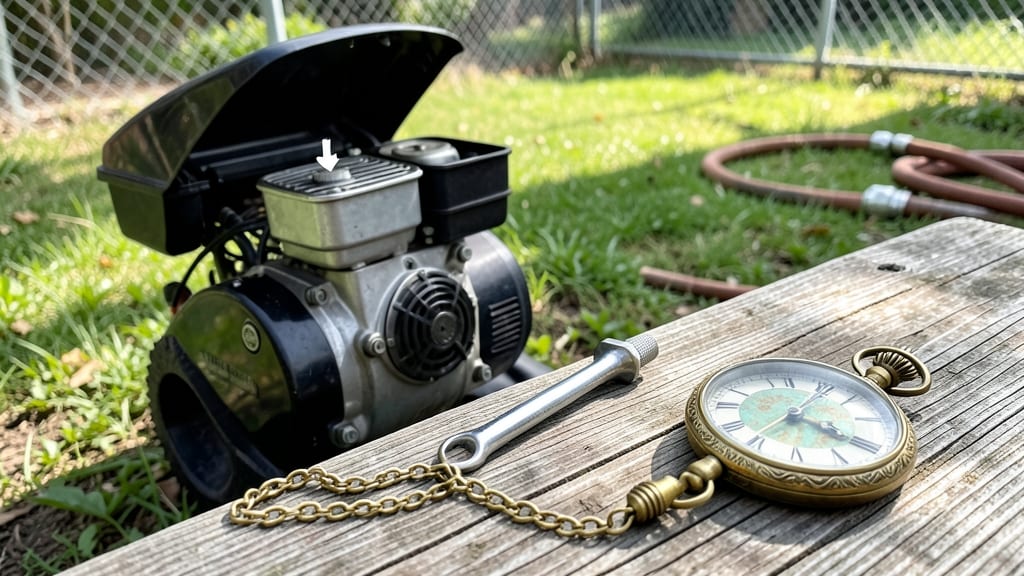
To find the spark plug on a lawn mower, look under the black or white plastic engine cover, usually near the air filter housing or behind the cylinder. Always consult your owner's manual for model-specific details, particularly with 4-cycle engines.
Most lawn mower engines position the spark plug in a consistent spot for easy access, but the exact location depends on whether you have a 2-cycle or 4-cycle engine. 🔧 In 2-cycle models, you'll often find it exposed or under a small cap near the cylinder head, while 4-cycle engines typically hide it behind a larger plastic panel.
I've seen brands like Honda and Briggs & Stratton place theirs differently—sometimes even near the recoil starter assembly—so never assume you know where it is without checking first.
Pro tip: Before removing any covers, make sure the engine is completely cool to avoid burns. The spark plug's position is almost always marked by a small rubber boot or wire connection leading to the ignition coil.
If you're still unsure, trace the spark plug wire backward from the coil—it'll lead you right to it.
💡 In This Article
- Lawn Mower Engine Types and Spark Plug Locations
- Step-by-Step Visual Guide to Finding Your Spark Plug
Lawn mower engine types and spark plug locations
The spark plug's location on your lawn mower depends entirely on whether you're working with a 2-cycle or 4-cycle engine, as these designs dictate the engine architecture.
In 2-cycle engines—common in smaller, older mowers—the spark plug is almost always exposed or hidden under a minimal plastic cover near the cylinder head, often right next to the exhaust port.
You'll frequently see it connected to a short spark plug wire that leads directly to the ignition coil, making it easier to spot even without removing covers. 🔥
In contrast, 4-cycle engines (like those in Honda HRX or Briggs & Stratton 420 series models) house the spark plug behind a larger, more complex plastic panel that covers the entire cylinder area.
This panel often includes the air filter housing, oil cap, and recoil starter assembly all in one unit. For example, on a Briggs & Stratton 420 engine, the spark plug sits behind a white plastic cover that also protects the cylinder—removing it requires unfastening multiple screws and clips.
Kawasaki's FX series engines follow a similar pattern but may position the spark plug slightly closer to the recoil starter for easier access during maintenance.
Brand-specific designs also play a role in accessibility. Take Honda's GCV series engines: they often mount the spark plug on the left side of the cylinder when viewed from the rear, while Kawasaki's FS series places it more centrally.
This variation means what's a 5-minute job on one brand could take 10-15 minutes on another due to different panel designs. Always check your owner's manual for exact locations—some manufacturers even include a small diagram showing the spark plug's position relative to other components.
Another key difference lies in the protective components. 2-cycle engines typically have minimal shielding, while 4-cycle engines often include additional safety covers to protect the spark plug from debris and moisture.
This extra layer of protection means you'll need to remove more parts to access the plug in 4-cycle models, which is why many DIYers prefer working on 2-cycle mowers for quick maintenance tasks. The trade-off? 4-cycle engines generally offer better fuel efficiency and longer service intervals.
Safety is a critical factor in spark plug location too. On most modern engines, the spark plug wire is color-coded (typically white or yellow) to distinguish it from other wires, and the boot connecting to the plug is often made of rubber or silicone for insulation.
This design prevents accidental contact with live components while you're working. However, always disconnect the spark plug wire before removing the plug itself—even if the engine is cool, residual voltage can still cause a shock.
Here's what to look for when identifying your spark plug's location:
- 2-cycle engines: Exposed or under a small cap near the cylinder head (often near the exhaust port)
- 4-cycle engines: Behind a large plastic panel covering the cylinder (may require removing screws)
- Brand-specific landmarks: Check near the recoil starter, air filter housing, or oil cap
- Visual cues: Follow the spark plug wire from the ignition coil—it leads directly to the plug
Pro tip: If your mower isn't starting, the spark plug's location can help diagnose issues. For instance, a fouled plug in a 4-cycle engine often means you'll need to remove more parts to access it, while a 2-cycle engine might reveal the problem immediately upon inspection.
Always work methodically to avoid misplacing small components like the spark plug wire or gasket. ✨