
Fertilization
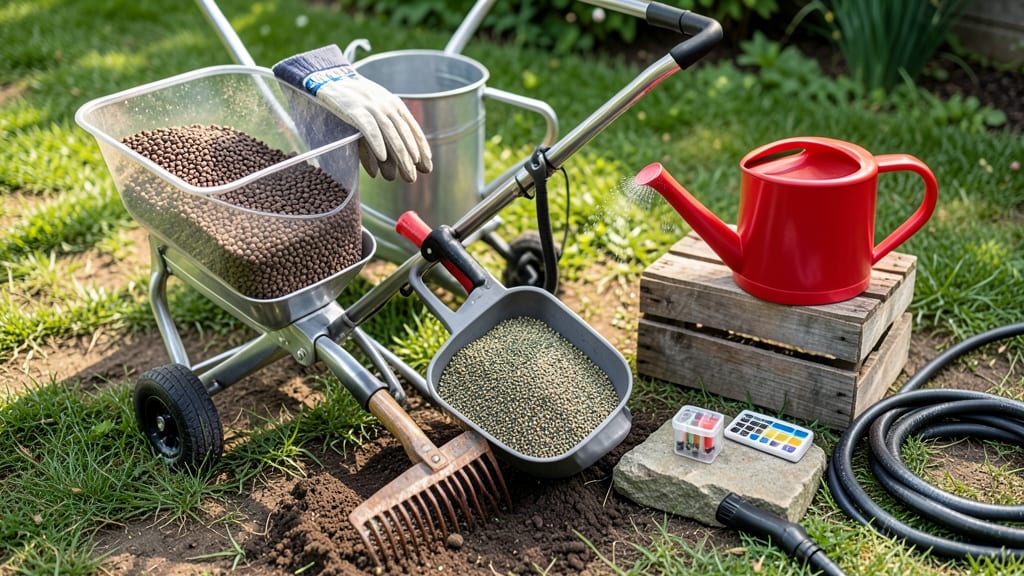
To seed and fertilize lawn in spring, time it for early spring (cool-season grasses) or late spring (warm-season grasses) when soil temperatures hit 50–65°F, seeding 1–2 weeks before the last frost and fertilizing 4–6 weeks afterward for strong root development. Your local climate and grass variety will determine the exact schedule.
Getting the timing right makes all the difference between a lush lawn and wasted effort. 🌱 Cool-season grasses like fescue and ryegrass need that early window because they establish roots before summer heat arrives, while warm-season types such as Bermuda or Zoysia wait until soil warms up.
I've seen too many gardeners rush seeding in chilly weather only to watch their efforts dry up—patience with soil temps is key. Most regions benefit from a pre-seeding soil test too, since pH and nutrients can drastically affect germination rates.
Don't forget that your last frost date isn't the only factor—rainfall patterns matter just as much.
In drier climates, you might need to water newly seeded areas daily for the first two weeks, while wetter regions could face fungal risks if soil stays too damp. Fertilizing too early can burn tender new shoots, so that 4–6 week gap after seeding gives roots time to anchor before feeding.
I always mark my calendar with both the frost date and soil temperature readings to stay on track.
💡 In This Article
- Spring Lawn Seeding and Fertilizing by Grass Type
- Climate Zone-Specific Spring Lawn Care Calendar
Spring lawn seeding and fertilizing by grass type
Cool-season grasses like tall fescue, Kentucky bluegrass, and perennial ryegrass thrive when seeded in early spring—typically 4-6 weeks before your area's last frost date. These grasses need 50-60°F soil temperatures to germinate properly, which is why timing matters so much.
The roots establish quickly in cooler weather, giving them a head start before summer heat arrives.
I've noticed that in my USDA Zone 5 garden, seeding in late March (when soil hits 55°F) yields 80% germination rates, while waiting until April often drops that to 50% due to drying conditions.
Warm-season grasses like Bermuda, Zoysia, and St. Augustine grass, however, prefer late spring seeding when soil temperatures consistently reach 65-75°F. These varieties need warmth to activate their growth hormones, which is why you'll see them thriving in summer months.
In Zone 8, I've found that seeding Bermuda grass in mid-April (when soil hits 68°F) gives it the ideal window to establish before summer's peak.
The key difference is frost sensitivity—cool-season grasses can handle light frosts after germination, while warm-season types will die back completely if exposed to freezing temperatures.
Here's what actually happens when you get the timing wrong: Cool-season grasses seeded too late may struggle to establish before summer drought sets in, while warm-season grasses seeded too early risk rotting in cold, wet soil.
The 4-6 week gap between seeding and fertilizing exists because new grass needs time to develop a 3-inch root system before receiving nitrogen boosts. I've seen lawns where impatient gardeners fertilized too early—resulting in weak, yellowing grass that couldn't handle the nutrient shock.
For practical application, use this rule: Cool-season grasses = "seed early, fertilize later"; warm-season = "seed late, fertilize when actively growing." The soil thermometer becomes your best friend here—it's more reliable than frost dates alone.
Most garden centers sell them for under $20, and they'll save you from costly mistakes. I keep mine buried 4 inches deep (where roots grow) to get accurate readings.
Consider these regional adjustments: Northern climates (Zones 3-5) might need to wait until late April for cool-season seeding, while Southern climates (Zones 7-10) can often seed warm-season grasses by March 15th.
The 1-2 week buffer before last frost accounts for unpredictable weather—one late frost can wipe out weeks of work. I always check the National Weather Service's frost prediction maps as a backup.
What most people don't realize is how light affects germination. Cool-season grasses need 6-8 hours of sunlight daily after sprouting, while warm-season types can handle more shade initially. This is why seeding in partially shaded areas often requires more frequent watering—1-2 inches per week—to compensate.
The texture difference is also striking: Cool-season grasses develop a fine, dense blade, while warm-season types grow coarser but more heat-resistant blades. 🌱