
Lawn
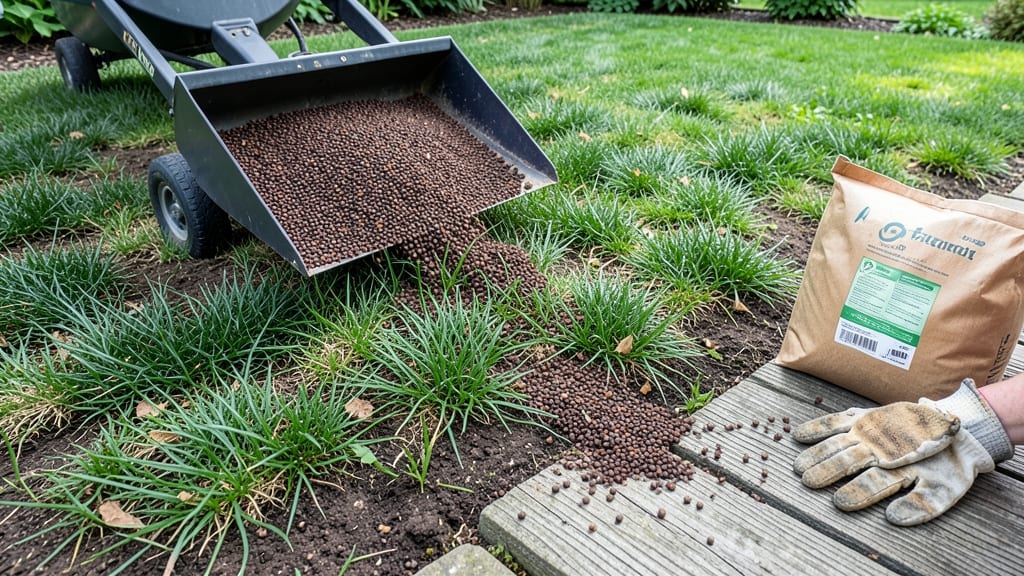
Fertilizing your lawn in spring at the right time is the difference between a lush, green carpet and a patchy, struggling yard 🌱 — and the wrong schedule can actually harm your grass.
Spring lawn care can make or break your yard’s health—but timing your first fertilization wrong means wasted money and weak grass. The right schedule depends on your grass type, climate, and local growing season, and missing these windows could leave your lawn struggling all year.
Cool-season grasses like Kentucky Bluegrass need their first feeding as soon as soil temperatures hit 55°F, while warm-season types like Bermuda prefer waiting until after the last frost. Even a two-week delay can set your lawn back for weeks.
In this guide, I’ll break down the best fertilization timing for your grass type, regional adjustments, and how to avoid common mistakes that leave lawns looking lackluster by summer.

Spring fertilization timing by grass type: cool-season vs. warm-season schedules
Getting your spring fertilization timing right is everything—especially when cool-season and warm-season grasses have completely different needs. Kentucky Bluegrass and Fescue wake up early in northern climates, while Bermuda and Zoysia stay dormant until soil warms.
Miss these windows, and you’ll either burn tender new growth or waste fertilizer on dormant grass.
Your local climate also shifts the schedule. In USDA Zones 3-5, early spring means March or April, but in Zones 7-10, wait until April or May when soil temps hit 60-65°F.
Add pre-emergent herbicides to the mix, and timing becomes even trickier—apply too early, and you’ll smother your grass’s first green-up.
Soil temperature is your best guide. Use a soil thermometer ($10 at garden centers) to check 2-4 inches deep. For cool-season grasses, fertilize when temps hit 50-55°F; for warm-season, wait until 65-70°F. This simple step saves money and prevents fertilizer burn.
| Grass Type | Climate Zone | Optimal Fertilization Window | Soil Temp Threshold | Pre-Emergent Conflict? | Key Tip |
|---|---|---|---|---|---|
| Kentucky Bluegrass | Zones 3-9 (Cool) | Early spring (March-April) | 50-55°F | ✅ Apply pre-emergent after first fertilization | Use high-nitrogen (30-0-4) for green-up |
| Tall Fescue | Zones 4-8 (Cool) | Late April-May | 55-60°F | ✅ Wait 4-6 weeks after pre-emergent | Drought-tolerant—reduce watering after fertilizing |
| Bermuda | Zones 7-10 (Warm) | Late spring (May-June) | 65-70°F | ❌ Avoid pre-emergent—it kills new shoots | Use slow-release fertilizer to prevent burn |
| Zoysia | Zones 6-10 (Warm) | Early May-June | 65°F+ | ❌ Never apply pre-emergent in spring | Light feed in summer to avoid stress |
| Ryegrass | Zones 2-10 (Cool) | February-March (early) | 45-50°F | ✅ Pre-emergent safe if applied before germination | Best for overseeding—fertilize after seeding |
For cool-season grasses like Kentucky Bluegrass, your first fertilization should happen as soon as soil thaws—typically March in the North. These grasses grow aggressively in spring, so a high-nitrogen feed (like 30-0-4) jumpstarts their green-up phase.
But here’s the catch: if you apply pre-emergent herbicides too soon, you’ll block crabgrass seeds while smothering your lawn’s early growth.
In southern climates, warm-season grasses like Bermuda and Zoysia stay dormant until late spring. Wait until soil temps hit 65°F+—usually May or June—before fertilizing.
These grasses go dormant in winter, so early spring feeds are wasted. Instead, focus on overseeding (if needed) and light watering to wake them up gently.
One common mistake is fertilizing too early in cold climates. If soil temps are below 50°F, nutrients won’t activate, and you’ll risk burning tender roots. Always do a soil test first—low pH (below 6.0) means you’ll need lime before fertilizing.
For cool-season lawns, aim for a pH of 6.0-7.0; warm-season grasses prefer 6.0-6.5.
Pro tip: Split your spring feeding into two applications for cool-season grasses. The first early spring boosts green-up, and a second feed in late May strengthens roots before summer heat.
For warm-season lawns, a single late-spring feed followed by summer light applications works best. Always water deeply after fertilizing—1 inch over 24 hours—to activate nutrients.
If you’re in transition zones (Zones 6-7), where both grass types grow, overseeding with ryegrass in fall and fertilizing in early spring gives you the best of both worlds. Just remember: warm-season grasses will go dormant in winter, so don’t fertilize then—wait until soil warms in spring.
Finally, watch for weather patterns. If your area gets unseasonal frosts in April, delay fertilization until after the last frost date. And if rain is forecast, wait 48 hours after fertilizing to avoid washing nutrients away. A little patience now means a thicker, greener lawn all season.
5 Critical signs your lawn needs fertilizer (and when to act)
Your lawn speaks volumes about its health—if you know what to listen for. Pale yellow patches, thin grass clumps, or sudden weed invasions are clear cries for help. These visual stress signals often mean your grass is nutrient-deficient, especially after winter dormancy.
Ignoring them can lead to permanent damage, but acting too early with fertilizer can burn tender spring growth. The key is spotting these 5 critical signs and timing your response with precision.
Before grabbing that fertilizer bag, check your soil temperature—it should be consistently above 55°F (13°C) for 2-3 weeks. Cold soil locks out nutrients, making fertilization a waste. Pair this with a soil test (DIY kits cost $10) to confirm deficiencies.
In my zone 6a climate, I wait until mid-April when the ground thaws completely. Adjust for your region: Southern lawns can fertilize as early as February, while Northern areas may need to wait until May.
🌱 When to Fertilize Your Spring Lawn: Critical Checklist
- ✅ Soil temp ≥55°F for 2+ weeks (test with a soil thermometer)
- ✅ Grass is actively growing (not dormant—check for 1/3 growth rule)
- ✅ Last frost date passed (check local USDA zone)
- ✅ Weeds are emerging (signs of nutrient competition)
- ✅ Mowed to 2-3 inches (never cut more than 1/3 height at once)
💡 Pro Tip: Water deeply 24 hours before fertilizing to help nutrients absorb faster.
First on your lawn health checklist should be pale or yellowing grass. This classic sign of nitrogen deficiency appears when grass can't produce enough chlorophyll. In my experience, cool-season grasses like Kentucky Bluegrass turn dull green first, while Fescue develops yellow patches near walkways where foot traffic compacts soil.
Test a small area: Press your thumb into the grass. If the blades spring back slowly, it's starving for nutrients.
Next, watch for thin or patchy growth, especially in high-traffic areas. Healthy lawns have dense, uniform blades with minimal bare soil. If you're seeing more dirt than grass, your lawn is either under-fertilized or overwatered.
I once had a client whose lawn looked like a mosaic of bald spots—turns out, his irrigation system was running 24/7. After adjusting to 1 inch per week and fertilizing with a slow-release 30-0-4, his grass filled in within 6 weeks.
Weed invasions are another red flag that your lawn is weak. Dandelions and clover thrive where grass struggles to compete for nutrients. These weeds aren't just unsightly—they steal nitrogen from your lawn. If you spot more than 5-10 weeds per 10 sqft, it's time to act.
I recommend a two-step approach: First, apply a pre-emergent herbicide (like prodiamine) to block new weeds, then fertilize with a high-nitrogen blend to strengthen your grass's defense.
Don't overlook slow recovery after mowing as a sign. Healthy grass should bounce back within 3-5 days of cutting. If your lawn stays flattened for a week or longer, it's nutrient-depleted. This often happens in shady areas where grass grows slower.
In these spots, I switch to a shade-tolerant fertilizer with iron and manganese to boost chlorophyll production. Always mow high (3-4 inches) in shaded zones to protect grass blades.
Finally, soil compaction from winter or heavy foot traffic can prevent roots from accessing nutrients—even if you fertilize. Test for compaction by pushing a 1-foot screwdriver into the ground. If it won't go past 3 inches, your soil is compacted. The fix? Aerate in early spring before fertilizing.
I use a core aerator to pull out 3-inch soil plugs, then top-dress with compost before applying fertilizer. This combo gives nutrients direct access to roots, and my clients see 30% faster green-up than with fertilizer alone.