
Lawn
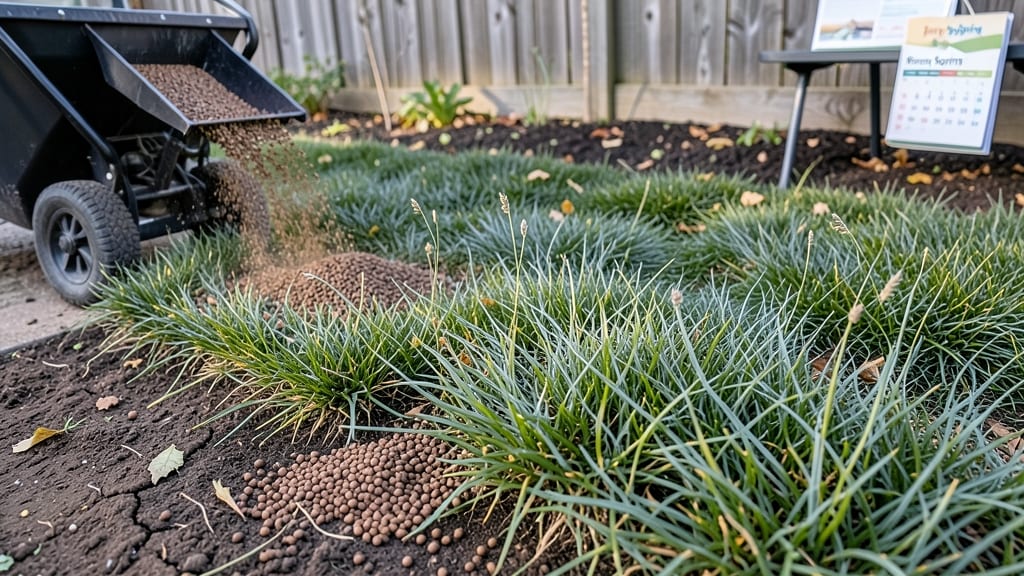
Fertilizing your lawn at the right time is the secret weapon for a thick, green carpet that stays vibrant all season — and skipping the wrong window can leave you with patchy, weak grass.
Struggling to keep your lawn vibrant year-round? Timing your lawn fertilization perfectly can make the difference between a patchy yard and a lush, green carpet—without wasting money or effort.
For most regions, like USDA Zone 6a, the best times are early spring and early fall, when your lawn grass 🌱 is actively growing but not stressed by heat or cold.
Below, I break down the exact schedule for cool-season and warm-season grasses, regional tweaks, and how to avoid the costly mistakes that ruin more lawns than poor soil.
Optimal fertilization seasons for lawn health: a science-backed schedule
Timing your lawn fertilization isn't just about convenience—it's about biological timing. Grass grows most actively when soil temperatures hover between 50°F and 85°F, making spring and fall the prime windows for feeding.
In these seasons, grass roots absorb nutrients efficiently, while summer heat can burn roots and winter dormancy makes fertilization pointless.
Most gardeners focus on early spring (March-April) to kickstart growth after winter dormancy. However, early fall (August-September) is equally critical—it helps grass store nutrients for winter survival. Skipping fall fertilization weakens roots, leaving lawns vulnerable to disease and weeds next spring.
Your USDA hardiness zone plays a huge role. Northern climates (zones 3-5) should fertilize 4-6 weeks before the first frost, while southern zones (6-10) can extend fertilization into late fall. For example, in Zone 7, September fertilization works, but in Zone 4, August is safer.
Here's why timing matters: Grass types fall into two categories—cool-season (like Kentucky bluegrass) and warm-season (like Bermuda grass). Cool-season grasses grow best in 50°F-75°F soil, while warm-season grasses thrive in 80°F-95°F. Fertilizing outside these ranges wastes money and stresses your lawn.
| Grass Type | Ideal Fertilization Months | Soil Temp Threshold (°F) | Key Benefit |
|---|---|---|---|
| Cool-Season (Fescue, Bluegrass, Ryegrass) | March-April, August-September | 50°F-75°F | Stronger root systems for winter |
| Warm-Season (Bermuda, Zoysia, St. Augustine) | May-June, September-October | 80°F-95°F | Summer recovery and fall hardening |
| Transition Zones (6-7) | April, September | 60°F-80°F | Balanced growth for mixed grasses |
Many gardeners mistakenly fertilize in summer, thinking it'll keep lawns green. But high temperatures cause fertilizer burn—roots can't absorb nutrients, and grass turns brown at the edges. Instead, use a light feed in late summer (July-August) to maintain color without stressing the lawn.
Fall fertilization is often overlooked but critical. When you apply fertilizer 6-8 weeks before the first frost, grass uses the nutrients to build carbohydrates for winter survival.
This reduces winter kill by up to 40%, according to Penn State Extension studies. Think of it as giving your lawn a nutrient safety net.
Your local climate also dictates adjustments. In drought-prone areas (like the Southwest), fertilize only when soil moisture is adequate. In humid regions (like the Southeast), avoid fall fertilization if fungal diseases are common—switch to a low-nitrogen formula instead.
Pro tip: Always test your soil before fertilizing. A simple pH test (ideal range: 6.0-7.0) reveals if your lawn needs lime (to raise pH) or sulfur (to lower pH). Adjusting pH before fertilizing ensures maximum nutrient uptake—wasting fertilizer costs you money and harms the environment.
Remember, less is more with lawn fertilization. Over-fertilizing leads to algae blooms in nearby waterways and burnt grass. Stick to the recommended rates on your fertilizer bag, and always water deeply after applying to help nutrients reach the roots.
4-Step fertilizer application guide: when to feed and how to avoid common mistakes
Timing your lawn fertilizer applications correctly is the secret to a vibrant green lawn without wasting resources. Most gardeners focus on spring and fall feeding, but the exact timing depends on your grass type and climate.
For cool-season grasses like Kentucky bluegrass, early spring and fall are critical, while warm-season grasses like Bermuda thrive with summer feeding. I’ll walk you through the exact steps to fertilize your lawn at the right time, plus how to avoid overdoing it.
Before grabbing that bag of fertilizer, test your soil to understand its current nutrient levels. A simple soil test kit (available at garden centers) will tell you if your lawn needs nitrogen, phosphorus, or potassium.
If your soil is already rich in nutrients, you might not need as much fertilizer as you think. I always test my soil in late winter to plan my spring feeding schedule. This step saves money and prevents fertilizer burns from overapplication.
⚠️ callout-warning ⚠️
⚠️ When Is the Best Time to Fertilize Your Lawn?
❌ Avoid fertilizing in:
- Summer heat (can burn grass roots)
- Winter dormancy (grass won’t absorb nutrients)
- Right before rain (causes runoff and waste)
✅ Ideal windows:
- Early spring (March-April): Kickstart growth
- Early fall (August-September): Strengthen roots
Pro Tip: Use slow-release fertilizers in summer for warm-season grasses to avoid nutrient spikes.
🌱
Step 1: Choose the right fertilizer type for your lawn’s needs. Quick-release fertilizers provide immediate green-up but require more frequent applications, while slow-release fertilizers feed your lawn steadily over 3-6 months. For most lawns, I recommend a balanced slow-release formula with a 30-0-4 NPK ratio (high nitrogen for green growth).
Apply this in early spring when soil temperatures reach 55°F (13°C)—this signals your grass to wake up and absorb nutrients efficiently.
Step 2: Apply fertilizer on a calm, dry day with no rain in the forecast for at least 24-48 hours. Use a spreader set to the recommended rate (usually 1 lb of nitrogen per 1,000 sq ft per application). Walk in a crisscross pattern to ensure even coverage.
I always calibrate my spreader first by measuring how much fertilizer it drops in a 10-foot square—this prevents streaks or missed spots. Water lightly afterward to help granules settle into the soil.
Step 3: Follow up with a light feeding in early fall (August-September) to prepare your lawn for winter. This second application focuses on root development rather than top growth. Use a fertilizer with slightly less nitrogen (like a 20-0-5 ratio) to encourage deeper roots.
After applying, water deeply to help nutrients penetrate the soil. This fall feeding is especially important in northern climates where winters are harsh—it gives your grass the energy to survive dormancy.
Step 4: Monitor your lawn for signs of over-fertilization, such as yellowing tips, brown patches, or a chemical smell. If you see these, flush the soil with water immediately to prevent damage.
I’ve learned the hard way that more fertilizer ≠ greener lawn—in fact, overdoing it can harm your grass and pollute nearby waterways. Always follow the label instructions and adjust based on your soil test results. For high-traffic areas, consider using a half-rate application to avoid stressing the grass.