
Lawn
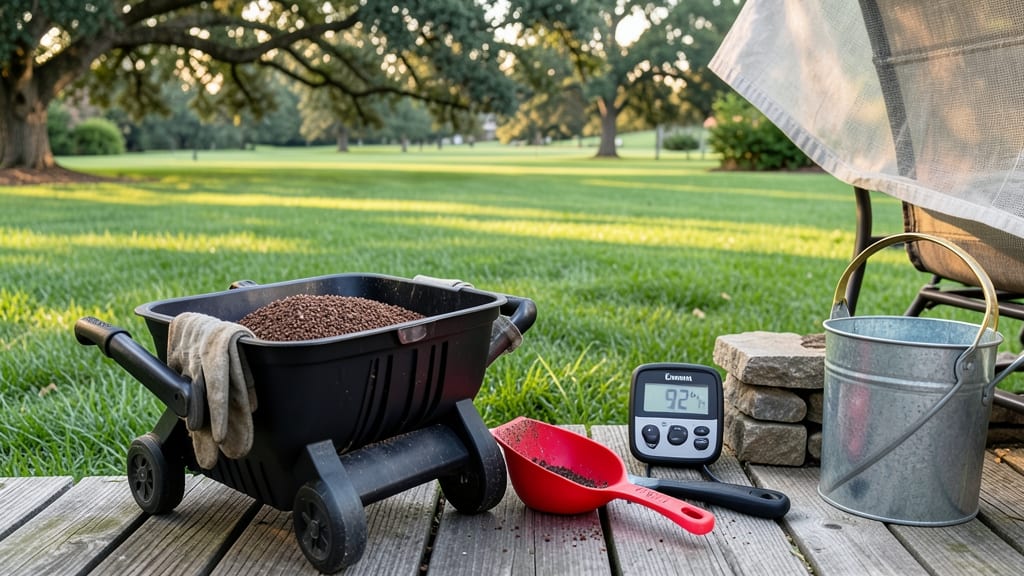
It's too hot to fertilize your lawn when temperatures consistently exceed 85°F (29°C), as this causes root stress, nutrient burn, and wasted fertilizer. Apply fertilizer during cooler periods like early morning or late evening when temperatures stay between 75–85°F (24–29°C) for best results.
High summer temperatures force grass roots to work harder just to stay hydrated, making them far more vulnerable to fertilizer salts. 🔥 When you apply nutrients in extreme heat, the grass can't absorb them efficiently, leading to brown patches and weakened growth.
I've seen this happen most often with Bermuda grass in Southern climates, where midday temps regularly hit 90°F (32°C). For cooler regions, even 80°F (27°C) can be too intense if combined with low humidity.
To work around this, many lawn care experts recommend switching to slow-release fertilizers or liquid feeds during summer months. These options allow nutrients to be absorbed more gradually, reducing stress on the roots.
I also find that watering deeply before and after applying fertilizer helps protect the grass, especially when temperatures hover near the upper limit of the safe range.
💡 In This Article
- How Heat Damages Grass Roots During Fertilization
- Best Fertilizer Timing for Summer Lawn Care
How heat damages grass roots during fertilization
When temperatures climb above 85°F (29°C), grass roots face a double threat: dehydration and nutrient overload. The heat accelerates water evaporation from soil pores, forcing roots to expend energy just to maintain moisture levels.
This physiological stress leaves them with less energy to process fertilizer salts, which then accumulate in the root zone. 🔥 Bermuda grass, for example, has shallow roots that can't handle this double burden—its growth often stalls or turns yellow when exposed to fertilizer in 90°F (32°C) conditions.
The real damage happens at the cellular level. High temperatures disrupt the enzyme activity that regulates nutrient absorption, while also slowing down beneficial soil microbes that break down organic matter.
This creates a vicious cycle: less microbial activity means fewer nutrients become available, but the existing fertilizer salts remain in the soil, further dehydrating the roots. Kentucky Bluegrass, which has deeper roots, can tolerate slightly higher temps (88°F/31°C) but still suffers from reduced nutrient uptake when stressed.
Another critical factor is the soil's moisture content. Dry soil conducts heat more efficiently, raising root-zone temperatures by 5-10°F (3-6°C) above air temperature. This is why even 80°F (27°C) air temps can become dangerous if combined with low humidity—roots experience 90°F (32°C) conditions internally.
The result? Grass blades turn brown at the tips while roots appear mushy when examined, a clear sign of heat-induced stress.
Species-specific vulnerabilities play a huge role here. Cool-season grasses like Fescue and Ryegrass go dormant when temps exceed 85°F (29°C), making them particularly susceptible to fertilizer burn. Warm-season grasses like Zoysia or Centipede can handle slightly higher temps (90°F/32°C) but still require careful monitoring.
The key difference lies in their root structures: warm-season grasses have deeper, more heat-tolerant root systems that can access moisture from lower soil layers.
What most people don't realize is how fertilizer application timing affects this damage. Midday application (10 AM–4 PM) exposes freshly spread fertilizer to peak heat, accelerating salt concentration in the root zone.
Even a 10-30% nitrogen fertilizer can become toxic when combined with 90°F (32°C) temps and dry soil. This is why early morning (before 8 AM) or late evening (after 6 PM) applications work best—they allow 6-8 hours for nutrient absorption before heat stress peaks.
To visualize the impact, imagine your lawn's roots as tiny straws trying to drink from a super-saturated saltwater pool during a heatwave. The grass can't absorb enough water to dilute the fertilizer salts, leading to cellular dehydration.
This explains why you might see brown patches 3-5 days after fertilizing in hot conditions—it's the delayed symptom of root damage that wasn't immediately visible. 💫