
Lawn
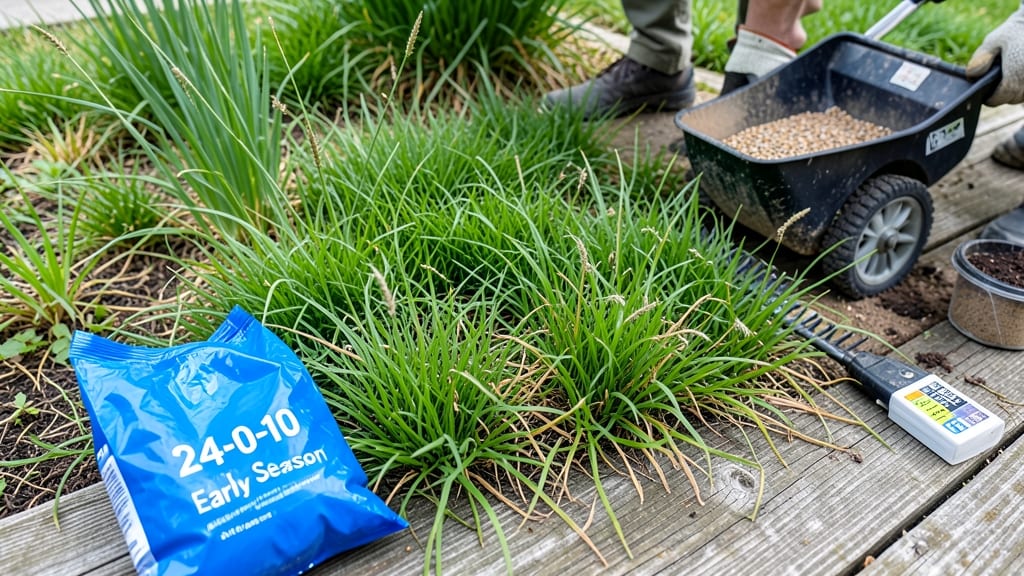
Fertilizing your lawn in spring 🌱 is the key to a thick, vibrant carpet—but get the timing wrong, and you could burn your grass or waste your money.
Most gardeners think "spring" means March, but the real window depends on your grass type and local climate. Cool-season grasses like Kentucky bluegrass need their first feeding as soon as soil temperatures hit 50°F, while warm-season types like Bermuda grass should wait until after the last frost.
In this guide, I’ll break down the exact month-by-month schedule for your region, plus how to tell if your lawn is truly ready for fertilizer—and what to do if it’s not.
Whether you’re dealing with patchy spots or just want to stay ahead of weeds, you’ll leave here with a clear plan to feed your lawn the right way this season.

Spring fertilization timeline by grass type: cool-season vs warm-season
Spring fertilization is your lawn's wake-up call—but the perfect timing depends entirely on whether you have cool-season or warm-season grass. Get it wrong, and you'll either stifle growth or waste fertilizer.
Cool-season grasses like Kentucky bluegrass and fescue need feeding as soon as soil warms, while Bermuda and Zoysia wait until summer heat arrives. Let's break down the exact schedule for each type, plus regional adjustments for early or late springs.
Most gardeners overlook soil temperature when fertilizing—yet it's the #1 factor determining success. Cool-season grasses thrive when soil hits 50-55°F, while warm-season varieties need 65-70°F before applying fertilizer. Use a soil thermometer (just $10) to avoid guessing.
In USDA Zones 5-7, this typically means March-April for cool-season types, while warm-season grasses wait until May-June in most regions.
| Grass Type | Ideal Soil Temp | First Fertilization Window | Fertilizer Type | Regional Adjustment |
|---|---|---|---|---|
| Cool-Season (Kentucky Bluegrass, Fescue, Ryegrass) | 50-55°F | Early March - Mid-April | High-nitrogen (24-0-5) | Northern states: Wait until after last frost (typically late April) |
| Warm-Season (Bermuda, Zoysia, St. Augustine) | 65-70°F | Late May - Early June | Balanced (16-4-8) | Southern states: Start by mid-April when soil warms |
| Transition Zones (6-7) | 55-60°F | Late April - Early May | Slow-release (20-0-5) | Monitor weekly soil temps—fertilize when consistent warmth arrives |
For cool-season grasses, your first application should happen 4-6 weeks before peak growth—typically mid-March in most regions. Use a high-nitrogen fertilizer (look for 24-0-5 ratio) to jumpstart recovery from winter dormancy.
Pro tip: If your lawn shows pale green or thin patches by March, it's already signaling nutrient hunger. In USDA Zone 4, wait until after April 15 to avoid frost damage to new growth.
Warm-season grasses follow a completely different rhythm. Their dormant period extends into spring, so fertilizing too early can burn tender new shoots. Aim for late May or early June when soil temperatures consistently stay above 65°F.
Southern lawns in Zone 8+ can start as early as mid-April, but northern warm-season grasses (like Bermuda) often need to wait until June 1. Always check for green shoots before fertilizing—this confirms active growth.
Pre-emergent herbicides complicate timing for cool-season grasses. If you applied pre-emergent in fall, wait 8-10 weeks before fertilizing (typically mid-April). For warm-season lawns, pre-emergent isn't typically used in spring—focus instead on crabgrass control after your first fertilization.
Remember: Never fertilize within 48 hours of rain or you'll wash away nutrients and risk runoff pollution.
Regional adjustments matter more than most gardeners realize. In Pacific Northwest (Zone 7-8), cool-season grasses can start fertilizing by February 15 if soil warms early. Meanwhile, Deep South lawns (Zone 9+) may need to fertilize Bermuda grass by April 15 to beat summer heat stress.
Use your local cooperative extension service for hyper-local advice—many offer free soil tests that include temperature recommendations.
Post-fertilization care is just as critical as timing. After applying fertilizer, water deeply (1 inch) to activate nutrients, but avoid overwatering which can cause nutrient leaching. For cool-season grasses, follow up with a second application in early May to sustain growth.
Warm-season grasses typically need three feedings: June, July, and August. Always mow before fertilizing—taller grass (3-4 inches) absorbs nutrients more efficiently than short blades.
Watch for these red flags that mean you've fertilized at the wrong time: Brown tips on cool-season grass = applied too early; Yellow patches
5 Critical signs your lawn needs spring fertilizer (and when to act)
Spring is your lawn's chance to bounce back from winter dormancy—but only if it gets the right nutrients. If your grass looks tired, patchy, or weak, it's screaming for fertilizer.
The key is acting at the right time, when soil temperatures are ideal (50°F+) and your grass is actively growing. Ignoring these signs can lead to permanent damage or wasted fertilizer.
Don't guess whether your lawn needs feeding. Look for these 5 unmistakable signs that your grass is starving for nutrients. Each one signals a different type of deficiency, and addressing them early can save you from costly repairs.
The best part? Fixing these issues now sets your lawn up for a thicker, greener season ahead.
- 1.
- 2.
- 3.
- 4.
- 5.
Before you grab that fertilizer bag, prep your lawn for maximum absorption. Start by mowing at 3 inches—never cut more than ⅓ of the blade at once—to avoid stressing the grass. Then, aerate compacted soil (especially if you have heavy foot traffic) to let nutrients reach the roots.
Finally, conduct a soil test to check pH (ideal: 6.0-7.0) and adjust with lime or sulfur if needed.
Timing is everything in spring fertilization. For cool-season grasses (like Kentucky bluegrass or fescue), apply fertilizer when soil temps hit 50°F and days are consistently above freezing—usually late March to early April.
Warm-season grasses (Bermuda, Zoysia) wait until soil temps reach 65°F, typically mid-April to May. Always water deeply after applying to activate nutrients.
Pro tip: Pair your fertilizer with a slow-release formula (like 16-4-8) to feed your lawn steadily over 3-4 months. Avoid quick-release options—they burn roots and wash away in spring rains. And remember: less is more. Over-fertilizing creates thatch buildup and attracts pests like chinch bugs.
Once you've fertilized, monitor your lawn closely. Healthy grass should show new growth in 7-14 days, with deeper green blades in 3-4 weeks. If you see dark green streaks or excessive growth, you've overdone it—rinse the soil immediately to prevent damage.
With the right approach, your lawn will thank you with vibrant color and resilience all season long. 🌿