
Lawn
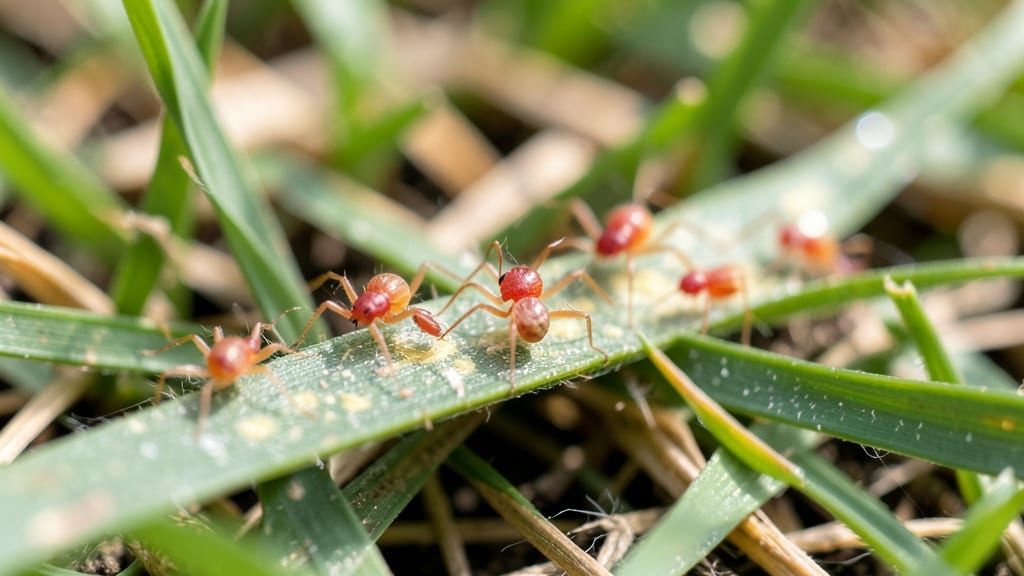
Neem oil spray is your fastest organic weapon against spider mites devouring your lawn. 🌱 I’ve watched these tiny pests turn lush green grass into dusty brown patches—and neem oil stops them in their tracks within 48 hours when applied correctly.
The problem starts when drought or over-fertilization weakens grass, making it a buffet for spider mites. These pests thrive in hot, dry conditions, spinning fine webs between blades. Most sprays miss the undersides of leaves where they hide, but neem oil’s sticky residue smothers them everywhere.
You’ll see results in just two days: no more stippled leaves, no more webbing, and grass that starts recovering its vibrant green. The key is even coverage—spray until leaves glisten, and repeat every 5-7 days until the infestation disappears.
For severe cases, combine neem oil with hose blasts to knock mites off before spraying. If your lawn stays patchy after two treatments, it might need overseeding—but healthy grass is the best long-term defense against these pests.
Root Causes of Tiny Lawn Invaders
Spider mites may seem like a minor nuisance, but their rapid spread across your lawn is rarely accidental. Understanding the why behind their infestation helps you tackle the problem at its source—before they turn your grass into a webbed wasteland. Here’s a breakdown of the key triggers:
Spider mites thrive in hot, dry conditions—think summer afternoons where the sun bakes your lawn like a forgotten pizza. 🍕 When grass struggles to retain moisture, its defenses weaken, making it an easy meal for these microscopic predators.
Why it happens:
- Reduced plant resilience: Drought-stressed grass produces less chlorophyll, weakening its ability to fend off pests. Spider mites detect these chemical changes and flock to vulnerable spots.
- Faster reproduction: Heat accelerates their lifecycle. A single female can lay hundreds of eggs in weeks, turning a few stragglers into a full-blown outbreak.
- Webbing as a survival tactic: In dry air, mites spin silk to trap moisture near their bodies—almost like a tiny, creepy humidifier. 🌬️
Actionable insight: If your lawn feels crispy underfoot, deep watering (1–1.5 inches per week) can deter mites by restoring plant health. Early morning watering is best—it gives grass time to absorb moisture before the heat evaporates it.
Too much of a good thing—like nitrogen-heavy fertilizers—can backfire spectacularly. While lush green grass looks appealing, it’s often a magnet for spider mites because the rapid growth creates tender, nutrient-rich leaves they adore.
Why it happens:
- Soft, sugary sap: Over-fertilized grass produces more phloem sap, a sweet, sticky liquid mites feast on. It’s like leaving out candy for a sugar rush. 🍬
- Disrupted predator-prey balance: Synthetic pesticides (used to "fix" other pests) often kill natural mites’ predators—like ladybugs or lacewings—leaving spider mites unchecked.
- pH swings: Excessive fertilizers alter soil pH, stressing grass and making it more susceptible to infestations.
Actionable insight: Switch to a slow-release, organic fertilizer (like compost or fish emulsion) and test your soil’s pH. Aim for a neutral range (6.0–7.0)—this supports grass health without inviting mites to the party.
Spider mites aren’t the original invaders—they’re often hitchhikers on plants or soil brought in from elsewhere. Without their natural enemies, they multiply unchecked. Think of it like a high school cafeteria where the bullies (mites) run wild because the teachers (predators) called in sick. 🏫
Why it happens:
- Monoculture lawns: Uniform grass patches lack biodiversity, starving out beneficial insects like lacewings, ladybugs, and predatory mites that would otherwise keep populations in check.
- Pesticide overuse: Broad-spectrum chemicals (even "safe" ones) wipe out mites’ predators faster than the mites themselves. It’s like nuking a city to kill a few rats—you’re left with chaos.
- Urban sprawl: Lawns in suburbs or cities often have fewer wildflower borders or clover patches, which attract predator species.
Actionable insight: Plant native wildflowers or ground covers (like clover) around your lawn’s edge to create a predator-friendly buffer. Avoid pesticides, and consider introducing beneficial nematodes (microscopic worms that hunt spider mites).
Your lawn isn’t just a carpet of grass—it’s a delicate ecosystem where wind patterns and soil health play a surprising role in mite outbreaks. Compacted or disturbed soil can turn your yard into a mite highway.
Why it happens:
- Exposed roots and thatch: Heavy foot traffic, mowing, or construction can compact soil, smothering grass roots. Weakened grass becomes an easy target for mites burrowing into the thatch layer (the spongy zone between soil and grass).
- Wind dispersal: Spider mites are lightweight and can hitch rides on breeze for miles. Compacted, dry soil makes them more likely to lift off and colonize new areas. 💨
- Reduced microbial activity: Healthy soil teems with microbes that compete with mites for resources. Compaction suffocates these allies, leaving mites to dominate.
Actionable insight: Aerate your lawn in spring or fall to relieve compaction, and overseed bare patches. A thick, healthy sod is the best defense against windborne invaders.
Not all grass is created equal. Some varieties are naturally more resistant to spider mites because of their waxy leaf coatings, tougher cell walls, or higher water retention. If your lawn is made of delicate breeds, you’re basically serving up an all-you-can-eat buffet. 🍽️
Why it happens:
- Thin cuticles: Grass like Bermuda or Zoysia has thicker leaf surfaces that repel mites, while fine fescue or Kentucky bluegrass can be easily penetrated.
- Slow recovery: Grass types prone to disease or drought (like tall fescue) weaken quickly, giving mites a foothold.
- Mowing height: Cutting grass too short removes protective leaf layers, exposing tender stems to mite attacks.
Actionable insight: Choose drought-tolerant, mite-resistant grass varieties for your climate (e.g., Buffalo grass in hot regions or Fine fescue in cooler areas). Mow at the highest recommended setting (3–4 inches) to strengthen blades.
Quick Fixes for Stubborn Lawn Pests
Spider mites on your lawn aren’t just an eyesore—they can weaken grass, kill plants, and spread quickly if left unchecked. The good news? You don’t need harsh chemicals to tackle them.
Below, we’ve broken down practical, organic solutions tailored to the root cause of your infestation, plus prevention tips to keep your lawn spider-mite-free long-term.
Spider mites thrive in stressed grass—whether from too much water (fungal issues) or drought (weakened roots). Fix the environment before treating the pests.
💧 Fix It: Adjust Your Watering Routine
- For overwatered lawns: Let the top 2–3 inches of soil dry out between waterings.
Use a moisture meter or the "squeeze test" (grab a handful—if water drips, wait). - For drought-stressed lawns: Deep-water 2–3 times per week (early morning) to encourage deep root growth.
Avoid shallow, frequent watering. - Pro tip: 🌡️ Water at the base of grass (not overhead) to reduce humidity, which spider mites love.
🌱 Boost Soil Health Naturally
Spider mites target nutrient-deficient grass. Feed your lawn with:
- Compost or worm castings (sprinkle and rake in).
- Organic fertilizer (low-nitrogen, high-potassium blend for recovery).
- Beneficial microbes (like Bacillus subtilis) to outcompete pests.
If your lawn has a history of synthetic pesticides, spider mites may be rebounding because:
- Chemicals kill natural predators (like ladybugs and lacewings).
- Residues stress plants, making them more vulnerable.
🧼 Cleanse with Organic Solutions
- 🔪 Stop synthetic treatments for at least 4–6 weeks to let ecosystems recover.
- 🌿 Apply neem oil spray (your go-to for organic eradication—see [article link] for DIY recipe).
- 🍂 Mulch with straw or grass clippings to improve soil and block mites from climbing up.
🐞 Reintroduce Natural Predators
- Ladybugs (release 500–1,000 per acre in early morning).
- Predatory mites (Phytoseiulus persimilis)—order online for targeted control.
- Birds & lacewings (install a pest hotel or birdbath to attract them).
If you’re seeing visible webbing, stippled leaves, or yellowing grass, act fast with this 3-step organic combo:
1. 🔥 Knock Them Out with Neem Oil (Best for Fast Results)
- Mix: 1 tbsp neem oil + 1 tsp dish soap (as an emulsifier) + 1 gallon water.
- Spray: Cover all surfaces (top/bottom of leaves, grass blades) in early morning or evening (avoid direct sun).
- Repeat: Every 5–7 days for 3 weeks (neem disrupts their life cycle).
2. 🌡️ Heat Treatment (For Stubborn Cases)
- DIY solarization: Cover infested areas with clear plastic sheeting for 4–6 hours on a sunny day (kills mites with heat).
- Pro tip: ✨ Combine with neem for a 1-2 punch.
3. 🧽 Manual Removal (For Small Patches)
- Vacuum heavily infested areas with a shop vac (empty bag immediately outside your yard).
- Hand-pick webbing from grass blades with tweezers (wear gloves!).
Once you’ve eradicated them, lock in success with these low-maintenance habits:
| Problem | Prevention Fix | How Often |
|---|---|---|
| Dry, cracked soil | Deep water + top-dress with compost | Every 2–3 months |
| Thin grass patches | Overseed with mite-resistant grass (e.g., tall fescue) | Spring/fall |
| Weeds acting as hosts | Hand-pull or smother with cardboard + mulch | As needed |
| Chemical residue | Test soil for toxins; switch to organic lawn care | Year-round |
| Overcrowded grass | Mow high (3–4 inches) to shade soil | Weekly in growing season |
🎯 Bonus: DIY Spider Mite Repellent Spray
Mix in a spray bottle:
- 1 cup water
- 1 tbsp rubbing alcohol (disrupts mite exoskeletons)
- 1 tsp horticultural oil (smothers them)
- Spray on grass and surrounding plants monthly as a deterrent.
Remember: Patience is key—organic solutions take 2–4 weeks to fully work, but they’re safer for pets, kids, and the environment. Once your lawn is healthy, spider mites will have nowhere to hide! 🚫🕷️
Frequently asked questions
How do I know if my lawn has spider mites and not just drought stress?
Look for tiny webs between grass blades (use a magnifying glass) and stippled or yellowing leaves. Spider mites create fine silk webs in dry conditions—unlike drought stress, which causes uniform browning. Shake grass over white paper: tiny moving specks (mites) confirm the problem.
Will neem oil harm my grass if I use it too often?
Neem oil is safe when used correctly, but never apply it more than every 5-7 days. Overuse can stress grass by disrupting beneficial microbes. Always mix with 1 tsp dish soap per gallon to help it stick—pure neem oil may wash off too quickly. Test a small patch first.
Can I use store-bought insecticidal soap on spider mites?
Yes, but it's less effective than neem oil for lawns. Insecticidal soap kills mites on contact but doesn't disrupt their life cycle like neem. For best results, combine it with neem oil and apply in the evening when humidity is higher. Reapply every 3-4 days until mites disappear.
Why do spider mites keep coming back after I treat them?
Mites return when their conditions are still ideal—usually dry, stressed grass or lack of predators. After treatment, deep water your lawn and add compost to improve soil. Introduce natural predators like ladybugs, and avoid synthetic pesticides that kill their enemies.
Is it too late to save my lawn if it's already mostly brown?
Not necessarily! First, overseed bare patches with drought-resistant grass. Then treat for mites with neem oil while aerating the soil to help roots recover. If the damage is severe, consider sod replacement in affected areas. Healthy soil and proper watering will help grass regrow.