
Lawn
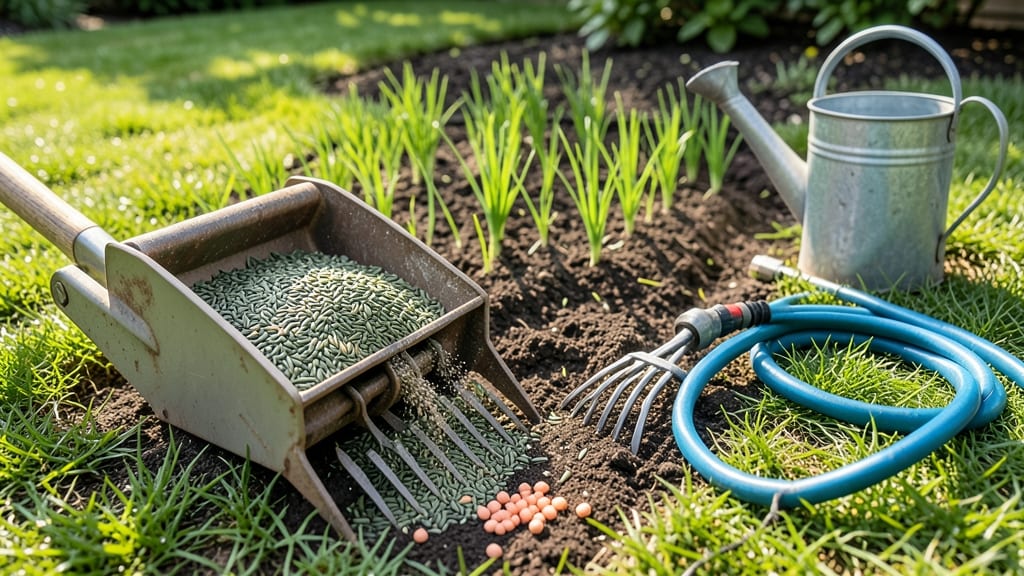
Late fall lawn seeding gives your grass a head start before winter—when soil stays warm enough for roots to establish but weeds stay dormant. 🌱 I learned the hard way that spring seeding leads to weak roots and summer drought stress, but fall planting means a stronger, greener lawn by next spring.
The key is timing: aim for 4-6 weeks before your first hard frost, when daytime temps stay above 50°F but nights dip below 40°F.
Cool-season grasses like fescue and rye thrive in fall because they grow roots in the cool soil while avoiding summer heat stress. You’ll need a broadcast spreader, quality seed mix, and a light layer of compost or starter fertilizer—nothing fancy, just the essentials.
The soil should be loose and free of debris, so a quick rake before seeding makes all the difference. Most people overlook this step, but it’s what separates a patchy lawn from a lush one.
After seeding, keep the soil consistently moist (not soggy) for the first 2-3 weeks—think of it like giving your lawn a drink every morning. Once the grass reaches 2-3 inches tall, you can back off on watering and let nature take over.
By spring, you’ll see thicker growth and fewer bare spots than neighbors who seeded in spring. The best part? Less competition from weeds, so your lawn establishes faster and stays healthier.
This method works best in USDA Zones 3-8, but even in warmer climates, fall seeding beats spring. For southern regions, focus on winter ryegrass—it germinates quickly and handles mild winters.
Whether you’re fixing bare patches or starting fresh, fall is the smartest time to seed. Let’s get your lawn off to the right start!
📚 In This Guide
- What you need
- Instructions
- Tips and common mistakes
- Wrapping up and next steps
What you need
- ● Seed: Choose cool-season grass seed (e.g., fescue, ryegrass, or bluegrass) tailored to your climate. Aim for 5–8 lbs per 1,000 sq ft for new lawns or 3–5 lbs for overseeding.
- ○ Soil Test Kit: Optional but highly recommended—test pH and nutrient levels to adjust soil before seeding.
- ● Lawn Rake: A bendable-tine rake (¼"–½" spacing) to loosen soil and remove debris. 8–12" width works best for most yards.
- ● Broadcast Spreader: For even seed distribution. Manual or drop-type spreaders are ideal for small areas; walk-behind models suit larger lawns.
- ● Topsoil or Compost: ¼" layer to improve seed-to-soil contact. Opt for organic compost or screened topsoil.
- ● Starter Fertilizer: Low-nitrogen blend (10–20% nitrogen) to encourage root growth. Apply ½ lb per 100 sq ft.
- ● Watering Supplies: Garden hose with adjustable nozzle (fine mist setting).
- ● Sprinkler (oscillating or rotary) for larger areas.
- ○ Lawn Roller (Optional): Lightweight (50–100 lbs) to press seed into soil for better germination.
- ● Weather: Wait for 50–60°F daytime temps and 40–50°F nighttime temps. Avoid seeding if frost or rain is forecasted for 48+ hours.
- ● Soil Prep: Mow existing grass short (1–1.5") if overseeding.
- ● Remove thatch (if >½" thick) with a dethatcher.
- ● Aerate compacted soil 2–3 weeks before seeding (use a core aerator).
- ● Timing: Seed 4–6 weeks before first frost in your zone for optimal root establishment.
Step-by-Step instructions for late fall lawn seeding
Fall is the perfect time to plant grass—cooler temps and steady rains give seeds the best chance to root deeply before winter.
🌱 Step 1: Prepare the Soil for Seeding
Start by removing any existing weeds or debris from the area. Use a rake to loosen the top 2-3 inches of soil—this helps seeds make contact with the earth and encourages strong root growth. If your soil is compacted (common in high-traffic lawns), consider renting a core aerator to pull small soil plugs and improve drainage.
Test the soil pH with a simple kit—ideal levels for grass are between 6.0 and 7.0. If your soil is too acidic or alkaline, amend it with lime or sulfur before seeding. I’ve found that fall soil is usually cooler and moister, which makes this the best time to adjust pH without stressing new grass.
💧 Step 2: Spread Grass Seed Evenly
Use a broadcast spreader to distribute the seed evenly across the prepared area. Walk in a crisscross pattern to avoid missing spots or creating thick patches. For a 4,000-square-foot lawn, you’ll typically need about 8-12 pounds of seed, depending on the grass type. Lightly rake the seeds into the soil with a stiff-bristle rake—just enough to cover them with ¼ inch of dirt.
Here’s the thing—don’t bury the seeds too deeply. They need light to germinate, and too much soil will smother them. If you’re seeding in an area with birds, consider covering the seeds with a thin layer of straw mulch to protect them until germination.
☀️ Step 3: Water Gently and Consistently
Keep the soil moist but never soggy—this is critical for germination. Water lightly 2-3 times daily for the first 7-10 days to keep the top ½ inch of soil damp. Once the grass reaches 2-3 inches tall, you can gradually reduce watering to 1-2 times daily. Avoid heavy watering, which can wash away seeds or dislodge them.
You’ll know you’re doing it right when the soil looks like a damp sponge—not dripping, but never dry. Overwatering is just as bad as underwatering, so check the soil with your finger before each watering. If it feels dry at the surface, it’s time to water again.
⏰ Step 4: Monitor and Maintain Through Winter
After germination, let the grass grow to 3-4 inches before mowing—this helps it develop deep roots. Set your mower blade to 3-4 inches to encourage strong root systems. Avoid walking on the new grass until it’s fully established, usually after 4-6 weeks.
Fall-seeded grass will go dormant in winter but stay alive under the snow. In early spring, you’ll see rapid growth as temperatures warm. Keep watering lightly during dry spells, even in winter, to prevent the soil from drying out completely.
✂️ Step 5: Fertilize and Care for Spring Growth
Once the grass is actively growing in spring, apply a slow-release fertilizer to give it a nutrient boost. Follow the package instructions for application rates—typically ½ pound of nitrogen per 1,000 square feet for a new lawn. Water deeply after fertilizing to help the nutrients soak into the soil.
Continue mowing regularly as the grass grows, keeping the height at 3-4 inches for shade and moisture retention. If you notice bare spots or thin areas, overseed them in early fall to fill in gaps and strengthen the lawn.
Tips & tricks for perfect fall lawn seeding
Real talk: Fall seeding is your secret weapon for a lush lawn—here’s how to avoid the most common pitfalls.
Soil Prep is Everything: In Step 1, don’t just loosen the top 2-3 inches—break up any clumps in the soil. Compacted soil can create air pockets that prevent seeds from making proper contact. I’ve seen lawns fail because the soil wasn’t fluffy enough. If you’re dealing with heavy clay soil, mix in some compost to improve drainage and aeration before seeding. This extra step makes all the difference in germination rates.
Seed Coverage Matters: When you’re lightly raking seeds into the soil in Step 2, aim for that ¼-inch coverage consistently. Too little exposure means seeds dry out, too much means they suffocate. Here’s a trick: Sprinkle a handful of seed on the rake first, then distribute it—this helps maintain even coverage. For large areas, consider using a seed spreader attachment on your lawn mower for precision.
Watering Wisdom: Those first 7-10 days of watering 2-3 times daily are non-negotiable, but timing matters too. Water in the early morning so the soil stays moist without encouraging fungal growth from evening dampness. Use a gentle rain setting on your sprinkler to avoid dislodging seeds. I’ve seen seeds wash away completely when people use high-pressure settings—don’t make that mistake!
Winter Protection Strategy: In Step 4, when your grass reaches 3-4 inches, consider adding a thin layer of straw mulch (about ¼ inch) over seeded areas if you’re in a region with harsh winters. This acts like a blanket, protecting seeds from temperature fluctuations and preventing soil erosion. It’s especially helpful if you’re seeding late in the fall when frosts might arrive sooner than expected.
Pro Tips for Seeding A Lawn In Late Fall
- Real talk: Fall seeding is your secret weapon for a lush lawn—here’s how to avoid the most common pitfalls.
- Soil Prep is Everything: In Step 1, don’t just loosen the top 2-3 inches—break up any clumps in the soil. Compacted s...
- Seed Coverage Matters: When you’re lightly raking seeds into the soil in Step 2, aim for that ¼-inch coverage consist...
Frequently asked questions
about seeding a lawn in late fall—because even the best-laid plans need a little extra guidance! Here are answers to the most common questions to help you tackle your project with confidence.What’s the best time to seed a lawn in late fall?
Late fall seeding works best between mid-October and early November in most regions (USDA Zones 5-8). Aim for 4-6 weeks before the first hard frost—this gives grass time to germinate and establish roots before winter dormancy. Check your local frost date for precision!
Can I seed a lawn in late fall if I already have grass?
Late fall is ideal for overseeding existing lawns. Simply mow low, remove debris, and spread seed over bare spots or thin areas. This helps fill gaps and thickens the lawn naturally. Just avoid seeding if your lawn has active fungal issues—wait until spring instead.
What if my soil is too cold or frozen for seeding?
If temperatures dip below 50°F (10°C), germination slows or stops. Test your soil’s readiness with a moisture meter—it should be warm but not hot (60-70°F is perfect). If it’s frozen, wait until soil thaws and warms slightly. A light mulch layer can help insulate seeds if needed.
Do I need to fertilize before or after seeding?
Yes! Use a starter fertilizer (high in phosphorus) right before seeding to boost root growth. After germination, switch to a low-nitrogen winterizer fertilizer to strengthen roots before winter. Avoid high-nitrogen fertilizers—they can burn tender seedlings.
What if weeds pop up after seeding?
Weeds are common but manageable. Use a pre-emergent herbicide in early spring (not fall) to prevent them. For existing weeds, hand-pull or spot-treat with a vinegar-based solution (avoid chemical herbicides near new grass). Mulch lightly with straw to suppress weeds while seeds establish.
Wrapping up and next steps
Seeding your lawn in late fall is a smart, low-stress move that sets the stage for a lush, vibrant spring—without the summer heat or pests. By following the right steps, you’re not just planting grass; you’re investing in long-term resilience and a head start on next year’s beauty. 🌱
Ready to take the next step? Grab your supplies, mark your calendar for those crisp fall days, and watch your lawn transform into the envy of the neighborhood. Your future self (and your lawn) will thank you!