
Lawn
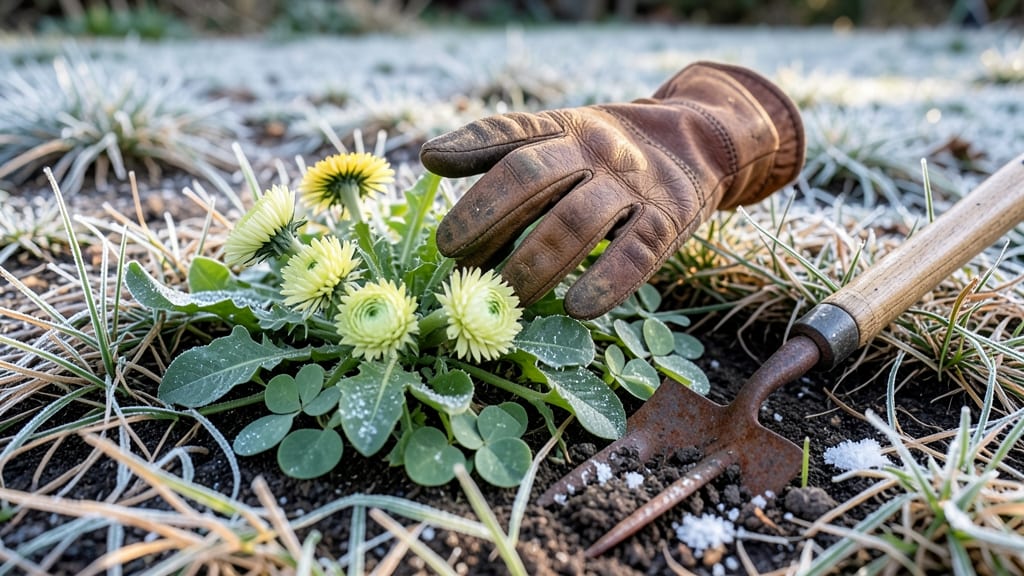
Winter weeds might seem harmless, but they steal nutrients and water from your lawn before spring even arrives. 🌱 I’ve spent years battling creeping charlie and chickweed in my own yard—only to realize the key isn’t fighting them head-on, but outsmarting them while the grass sleeps.
The secret lies in preventive winter prep: overseeding bare spots, applying corn gluten meal as a natural pre-emergent, and mowing high to shade out weeds.
Even dormant weeds like dandelions weaken grass roots if left unchecked, so a quick rake session in late winter clears the competition before growth starts. By spring, your lawn will bounce back thicker and greener than ever, with fewer weeds vying for space. The best part?
These methods work even in cold climates where weeds seem unstoppable. Here’s how to adapt your routine for snowy zones—because winter isn’t a break, it’s preparation season.
The Hidden Triggers Behind Winter Weeds
Winter might seem like a dormant season for your lawn, but weeds don’t follow the rules. 🌱❄️ They thrive in cold weather for specific reasons—some tied to nature’s rhythms, others to human habits.
Understanding these triggers is the first step to outsmarting them before spring arrives. Here’s why winter weeds stage their takeover:
When temperatures drop, most cool-season grasses slow their growth, entering a semi-dormant state. This slowdown isn’t just about sluggishness—it’s a survival mechanism. Grasses reduce photosynthesis, root activity, and nutrient uptake to conserve energy. But here’s the catch: weeds don’t play by the same rules.
Many winter weeds, like henbit, annual bluegrass, and dandelions, are cool-season opportunists. They germinate and grow aggressively when soil temps hover between 35°F and 65°F—a sweet spot that often overlaps with grass dormancy.
Since your lawn isn’t actively competing for space or nutrients, weeds fill the gap like uninvited houseguests crashing a party.
Why it matters: A weakened grass canopy means less shade, fewer roots to absorb water, and reduced competition—all of which give weeds the upper hand. Even worse, some weeds, like chickweed, can grow through snow for sunlight.
Winter watering is a double-edged sword. While some regions need supplemental moisture to prevent soil compaction or frost heave, overwatering can turn your lawn into a weed buffet. Here’s how:
- Excess moisture: Weeds like creeping charlie (ground ivy) and moss thrive in soggy conditions because they don’t need deep roots to survive. Their shallow root systems absorb water quickly, while dormant grass struggles to compete.
- Poor drainage: Compacted or clay-heavy soils trap water near the surface, creating the perfect microclimate for weed seeds to germinate. Even a 1-inch layer of standing water can trigger germination in weeds like smartweed.
- Irrigation timing: Watering in the late afternoon or evening keeps soil damp longer, signaling weeds to sprout. Early morning watering (before 10 AM) lets excess moisture evaporate, reducing weed germination.
Pro tip: 🌡️ If your lawn feels squishy when you walk on it, it’s overwatered. Aim for 1 inch of water per week (including rain) and let the top 1–2 inches of soil dry between waterings.
Frost isn’t just a nuisance—it’s a weed germination accelerator. When soil freezes and thaws repeatedly, it creates tiny cracks and aerates the top layer, making it easier for weed seeds to:
- Surface: Seeds buried just ¼-inch deep (like dandelion seeds) can rise to the surface where light and moisture trigger germination.
- Access nutrients: Frost disrupts fungal networks in the soil, releasing stored nitrogen that weeds soak up faster than grass.
- Evade competition: The physical disturbance from frost heave can uproot young grass seedlings, leaving bare patches where weeds move in.
Science in action: Studies show that annual ryegrass (a common winter weed) germinates 50% more in soils with frequent freeze-thaw cycles compared to stable conditions. If your area experiences multiple freeze-thaw events, expect a weed surge.
Most lawns sit atop a hidden seed bank—a reservoir of dormant weed seeds buried in the soil. These seeds can remain viable for years (some dandelion seeds last 10+ years!) until conditions are just right. Winter provides the perfect wake-up call for several reasons:
| Weed Type | Trigger for Germination | Why Winter Works |
|---|---|---|
| Henbit | Cool soil (50–65°F) + moisture | Seeds lie dormant in summer heat but sprout when temps drop, often before grass wakes up. |
| Chickweed | Disturbed soil + light | Frost and foot traffic expose buried seeds, and its rapid growth lets it outcompete slow grass. |
| Annual Bluegrass | Moisture + mild temps (40–70°F) | Its seeds germinate in fall and winter, giving it a head start over slow-growing turf. |
Key takeaway: If you’ve ever ignored weeds in summer, thinking they’ll “go away,” winter is their revenge season. The seeds you ignored are now using your lawn’s dormancy against it.
Winter weeds often trace their roots to mistakes made in late summer or fall. Here’s how:
- Late mowing: Cutting grass too short before winter weakens roots and leaves bare spots where weeds like clover take hold.
- Skipping overseeding: Thin lawns invite weeds because bare soil = easy entry. Cool-season grasses like fescue need to be seeded in early fall to establish before winter.
- Over-fertilizing in fall: Excess nitrogen encourages annual ryegrass and crabgrass (yes, some crabgrass survives winter in mild climates) to germinate early.
- Ignoring thatch buildup: A thatch layer > ½-inch thick blocks water and air, creating a weed-friendly microclimate at the soil surface.
Actionable fix: 🔥 If your fall lawn care was lackluster, winter is the time to correct it. Focus on light feeding (low nitrogen), core aeration, and targeted weed control before spring.
Quick Fixes for Winter Weeds
Winter may seem like a break for your lawn, but weeds like dandelions, crabgrass, and chickweed thrive in the cold—leaving your yard looking patchy and unkempt. The good news? You can tackle them without harming your grass or waiting for spring.
Below, we’ve mapped out practical, step-by-step solutions based on the most common causes of winter weeds, plus prevention tips to keep them from returning.
Cause: Thin grass patches from over-seeding or poor germination leave gaps where weeds take root.
Fix: ✅ Fill the gaps right – Instead of re-seeding (which can fail in cold soil), use a winter-friendly patch mix with ryegrass or fescue—these germinate in cooler temps. ✅ Top-dress with compost – Spread a ¼-inch layer of compost over bare spots to crowd out weeds naturally. ✅ Use a pre-emergent in early spring – Apply corn gluten meal (a natural weed blocker) before weeds sprout in spring.
💡 Pro Tip: If your soil is too cold for seeds, lay down a temporary weed-blocking fabric until temps rise (just remove it before mowing).
Cause: Piles of leaves, twigs, and thatch create dark, moist conditions—perfect for weeds like chickweed and henbit.
Fix: 🔥 Rake thoroughly – Remove all debris before it mats down. Use a leaf blower for large areas. 👨🍳 Adjust mowing height – Set your mower higher (3–4 inches) to shade out weeds and protect grass roots. ⏰ Aerate compacted soil – Use a manual aerator or spike shoes to let air and water reach grass roots, making them more competitive against weeds.
🌡️ Prevention Hack: Spread straw or pine needles (not leaves!) as mulch—they decompose slowly and don’t suffocate grass.
Cause: Late-season herbicides or salt-based ice melts near driveways can kill grass while leaving weeds unharmed.
Fix: 🔪 Spot-treat weeds with vinegar – Mix 1 gallon white vinegar + 1 oz dish soap in a spray bottle. Target only weeds (avoid grass). 🥗 Boiling water blast – Pour slowly on dandelions and clover (works best on small patches). 🎯 Use corn gluten meal – Sprinkle 20 lbs per 1,000 sq ft in early fall to block weed seeds before they germinate.
✨ Safety First: Test vinegar/boiling water on a small grass patch first—some grasses are sensitive!
Cause: Freezing temps stunt grass growth, giving weeds like creeping charlie and moss an advantage.
Fix: 💪 Apply a winter fertilizer – Use a slow-release, high-nitrogen formula (like 24-0-6) in late fall to strengthen roots. 🥗 Top-dress with sand or compost – A thin layer (¼ inch) improves drainage and crowds out weeds. 🌱 Plant cover crops – Oats or winter rye suppress weeds while protecting soil.
🔥 Emergency Fix: If moss takes over, rake it out and oversow with tall fescue—it outcompetes moss in cold weather.
Cause: Most winter weeds germinate from seeds left in the soil after summer.
Fix (Do This Now!): 📊 Pull weeds by hand – Before they seed! Grab roots (especially dandelions) to prevent regrowth. 🌡️ Mow high & often – Keep grass at 3–4 inches to block sunlight from weed seeds. 🎯 Test your soil – pH imbalances (too acidic/alkaline) make grass weak. Adjust with lime or sulfur as needed. 🔄 Rotate treatments – Alternate between natural (vinegar, corn gluten) and targeted (spot herbicides) to avoid resistance.
Final Reminder: Winter weeds are easier to remove now than after spring germination. Act fast, and your lawn will stay thick and green—weed-free! 🌿❄️
Frequently asked questions
Can winter weeds actually harm my lawn even when the grass is dormant?
While your grass sleeps, winter weeds like chickweed and henbit steal critical nutrients and water from the soil. Their shallow roots compete directly with your grass's root system, weakening it before spring growth begins. Even dormant grass needs those nutrients to bounce back strong—weeds act like uninvited guests crashing the recovery party.
Is it too late to treat winter weeds if snow covers my lawn?
Not at all! Many winter weeds grow through snow for sunlight, so you can still tackle them when there are clear patches. Focus on hand-pulling (especially dandelions) and spot-treating with vinegar or corn gluten meal. Just avoid chemical herbicides—snow melt can carry them into waterways. The key is working when temps are above 40°F so treatments stick.
What's the best natural pre-emergent for winter weeds?
Corn gluten meal is your best bet—it's a natural pre-emergent herbicide that blocks weed seeds from germinating. Apply 20 lbs per 1,000 sq ft in early fall (before soil freezes) to prevent winter weeds. It also adds 2-3% nitrogen to your soil, giving grass a subtle boost. For existing weeds, combine it with mulching (straw or wood chips) to smother them naturally.
Will mowing high in winter really help control weeds?
Yes! Keeping grass at 3-4 inches creates shade that blocks sunlight—something winter weeds crave. Taller grass also develops deeper roots, making it more competitive when spring arrives. Plus, the thick canopy crowds out weeds before they get established. Just avoid mowing when soil is frozen to prevent damage. Pro tip: Mow when grass is dry but not when it's crispy from frost.
Are some winter weeds actually beneficial?
Yes! Clover and dandelions fix nitrogen in the soil, which benefits your lawn. However, they can also spread aggressively. If you want the benefits without the takeover, try oversowing with white clover (it's less invasive) or spot-treat dandelions while allowing a few to bloom for pollinators. The key is balance—don't let them dominate, but don't eradicate them completely if you value biodiversity.