
Lawn
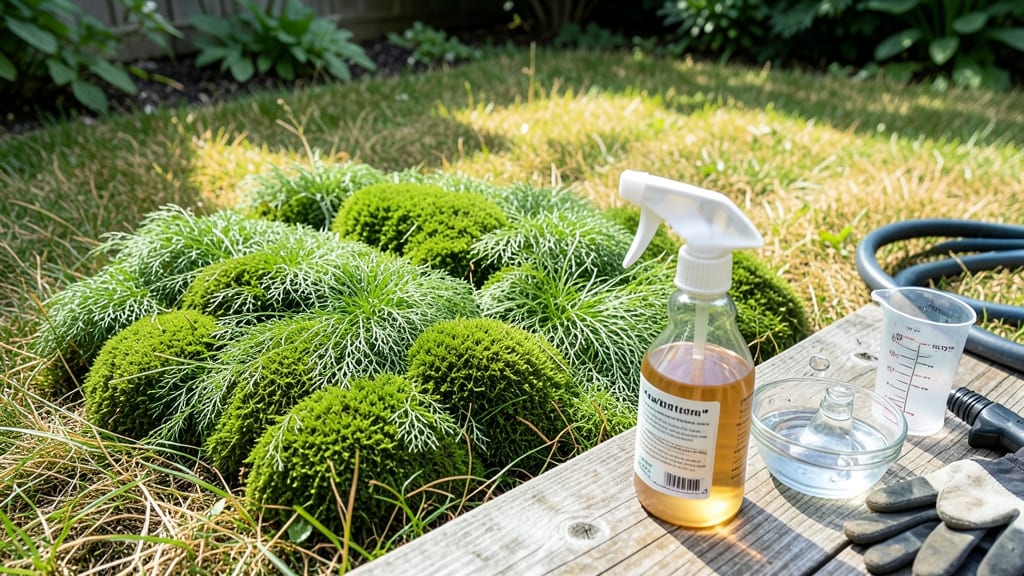
When a homemade lawn moss killer takes over your lawn, this fast-dissolving vinegar-salt mix cuts through it like a knife. 🌱 I’ve used it on my shady yard patches where grass struggles—and it works in hours, not weeks. The secret? A potent blend that disrupts moss without harming soil long-term.
You’ll need white vinegar, salt, dish soap, and water—all things you already have. Mix them in a spray bottle, apply on a cloudy day, and watch the moss dissolve within 24-48 hours. No harsh chemicals, just a simple solution that restores your lawn’s health naturally.
After treatment, overseed bare spots and keep the area dry for a few days. The moss won’t come back if you address the root cause—shade, poor drainage, or compacted soil. With this method, you’ll have a greener lawn in no time, not a mossy carpet.
Works best in spring or fall when temperatures are mild. For stubborn patches, repeat once after a week. No more scrubbing or expensive treatments—just a quick spray and a healthier lawn.
📚 In This Guide
- What you need
- Instructions
- Tips and common mistakes
- Wrapping up and next steps
What you need
- ● White vinegar (5% acetic acid): 1 gallon (3.8 liters) – The star ingredient for killing moss naturally!
- ● Salt (non-iodized): 2 cups – Enhances the solution’s effectiveness.
- ● Dish soap (mild, unscented): 1 tablespoon – Acts as a surfactant to help the solution stick to moss.
- ● Spray bottle or garden sprayer: 1–2 (1–2 gallon capacity) – For even application.
- ○ Gloves (optional but recommended): 1 pair – Protects your hands from salt and vinegar.
- ● Protective eyewear: 1 pair – Safeguards your eyes during mixing and spraying.
- ● Garden hose with nozzle: For rinsing the lawn after treatment (if desired).
- ● Garden rake or broom: To remove dead moss debris post-treatment.
- ● pH test kit: To check your lawn’s pH (ideal range: 6.0–7.0 for vinegar-based treatments).
- ● Plastic sheeting: To cover nearby plants if you’re treating a small area.
Step-by-Step instructions for homemade lawn moss control
Here's my proven method for eliminating moss quickly using common household items.
🌱 Step 1: Gather and Mix Your Fast-Acting Solution
Combine 1 gallon of white vinegar (5% acetic acid) with 2 cups of coarse salt in a large bucket. Vinegar's acidity breaks down moss cells while salt dehydrates the remaining growth. Stir thoroughly until the salt fully dissolves—this ensures even distribution when applied. I like to add 1 tablespoon of liquid dish soap to help the solution cling to moss blades instead of beading up and running off.
Real talk: Don't use colored vinegar or apple cider vinegar—the lower acidity means you'll need double the quantity, and the added ingredients can harm grass. Measure carefully: too little salt leaves moss clinging, while too much risks damaging nearby grass. This ratio works on 400 square feet of mossy lawn.
💧 Step 2: Apply Solution on a Dry, Overcast Day
Choose a day when temperatures are between 50-75°F and no rain is forecasted for 48 hours. Early morning application gives the solution time to work before afternoon sun evaporates it too quickly. Use a hose-end sprayer to distribute the mixture evenly, keeping the nozzle 6-8 inches above the moss. Lightly mist surrounding grass with water first—this creates a protective barrier against potential vinegar burn.
Watch for the solution to darken the moss within 15-30 minutes—that's your confirmation it's working. Avoid walking on treated areas until fully dry, or you'll smear the solution and reduce effectiveness. If you notice grass blades curling or yellowing, rinse immediately with water and reduce future salt concentration by half.
☀️ Step 3: Let It Work and Remove Debris
Wait 24-48 hours before raking—this gives the vinegar-salt combo full time to dissolve moss roots. You'll know it's ready when the moss turns black and crumbly rather than its usual green. Use a stiff-bristled rake to pull up the dead moss, working in small sections to avoid missing any patches. Collect debris in a tarp or bag for disposal—never leave it on the lawn, as it can smother grass.
This is the moment that matters: After removing moss, aerate the soil lightly with a garden fork to improve drainage. Moss thrives in compacted, shady, or overly moist areas—fixing these conditions prevents regrowth. For stubborn moss, repeat the treatment in 7-10 days if any green patches remain.
✂️ Step 4: Restore Grass and Prevent Regrowth
After clearing moss, overseed bare spots with fast-germinating grass seed suited to your climate. Water lightly twice daily for 10 days to encourage germination, then reduce to 1 inch per week once grass reaches 2 inches tall. Apply a light layer of compost (¼ inch) to improve soil health—this helps grass outcompete moss naturally.
Here's the thing—prevention is easier than treatment. Once your lawn is moss-free, improve air circulation by trimming overgrown trees or bushes that cast shade. Mow at 3-4 inches high to discourage moss from returning. If your lawn stays damp, consider installing a French drain or improving slope drainage—moss won't stand a chance with proper water flow.
Tips & tricks for effective homemade moss elimination
These proven strategies will help you tackle moss like a pro—without damaging your lawn or wasting time.
Solution Strength: The 5% acetic acid in white vinegar is crucial—it's the active ingredient that breaks down moss cell walls. If you're using a weaker vinegar (like cleaning vinegar at 4-6%), you'll need to double the quantity to achieve the same results. Stirring until the 2 cups of coarse salt fully dissolves ensures even coverage, which prevents patchy results. I've seen people skip this step and end up with half-treated moss that just comes back stronger.
Temperature Matters: The 50-75°F temperature window in Step 2 isn't arbitrary—it's when the vinegar-salt combo works most effectively. If you're working outside this range, either wait for more favorable conditions or adjust the solution slightly: add an extra ½ cup of salt for cooler temperatures (below 50°F) or reduce by ½ cup for hotter days (above 75°F). Just remember, extreme heat can cause the solution to evaporate too quickly, while cold slows down the chemical reaction.
Visual Confirmation: That 15-30 minute darkening you should see in Step 2 is your green light that the solution is working. The moss should turn a dull gray or brown—this means the vinegar is breaking down the chlorophyll. If you don't see this change, either your solution wasn't applied evenly or you're using a weak vinegar. Pro tip: Test a small area first to confirm the solution's effectiveness before treating the entire lawn.
Prevention Strategy: The aeration step after moss removal in Step 3 is often overlooked, but it's what keeps moss from coming back. Use a garden fork to poke holes every 3-4 inches—this improves drainage and air circulation, two things moss absolutely hates. For stubborn moss-prone areas, consider spreading a thin layer of sand (about ¼ inch) after aerating to further improve drainage. This single step can save you from repeating the entire process next year.
Pro Tips for Lawn Moss Killer Homemade
- These proven strategies will help you tackle moss like a pro—without damaging your lawn or wasting time.
- Solution Strength: The 5% acetic acid in white vinegar is crucial—it's the active ingredient that breaks down moss ce...
- Temperature Matters: The 50-75°F temperature window in Step 2 isn't arbitrary—it's when the vinegar-salt combo works ...
Frequently asked questions
Got questions about tackling moss in your lawn with a DIY solution?
We’ve got answers! Here are some of the most common concerns—and how to handle them like a pro.
How quickly will a homemade moss killer work?
A vinegar-salt solution typically starts showing results in 3–7 days, with full moss elimination in 2–4 weeks, depending on weather and moss thickness. For faster action, reapply every 5–7 days until the moss turns brown and crumbles. Patience is key—moss doesn’t disappear overnight!
Will this solution harm my grass or plants?
Yes, it can! Vinegar and salt are non-selective, meaning they’ll kill all vegetation they touch. Apply the solution only to mossy areas and avoid overspray. For safety, spot-test in an inconspicuous area first. If you have desirable grass, consider a targeted approach (like a brush or spray shield).
What’s the best time of year to treat moss?
The ideal window is late summer to early fall (August–October), when moss is active but grass is dormant. Avoid treating in freezing temps or during droughts—moss thrives in moist, shady conditions, so aim for humid, overcast days for best results.
Can I use this on shaded lawns or under trees?
Shaded areas are perfect for moss because they lack sunlight. Just ensure the solution stays directly on the moss—avoid dripping onto tree bark or roots. For extra protection, apply a thin layer of sand or compost afterward to help grass recover faster.
What if the moss keeps coming back?
Moss loves compacted, acidic, or poorly drained soil. After killing the moss, aerate your lawn, overseed with shade-tolerant grass, and top-dress with lime (to raise pH) or sand (to improve drainage). Repeat treatments may be needed if conditions (like shade or moisture) don’t change.
Are there gentler alternatives to vinegar and salt?
If you’re worried about harsh chemicals, try these milder options:
- Iron sulfate: Safe for grass, turns moss orange-brown without burning.
- Corn gluten meal: A natural pre-emergent that also feeds soil (apply in early spring).
- Baking soda solution: Mix 1 cup baking soda with 1 gallon of water—less potent but safer for edible gardens.
For large areas, a commercial moss killer with iron (like Scotts Moss & Algae Control) is a balanced middle ground.
Wrapping up and next steps
Kicking moss out of your lawn doesn’t have to mean breaking the bank or using harsh chemicals! With just a few simple ingredients—like vinegar, salt, and dish soap—you’ve got a powerful, eco-friendly moss killer that works fast and safely.
This homemade solution is budget-friendly, easy to make, and perfect for restoring your lawn’s health without harming the environment.
Now that you’re armed with the know-how, roll up your sleeves and give your lawn the fresh start it deserves! Ready to tackle that moss? Start with a small patch first to test the solution, then expand as you see results. Happy gardening! 🌱✨