
Lawn
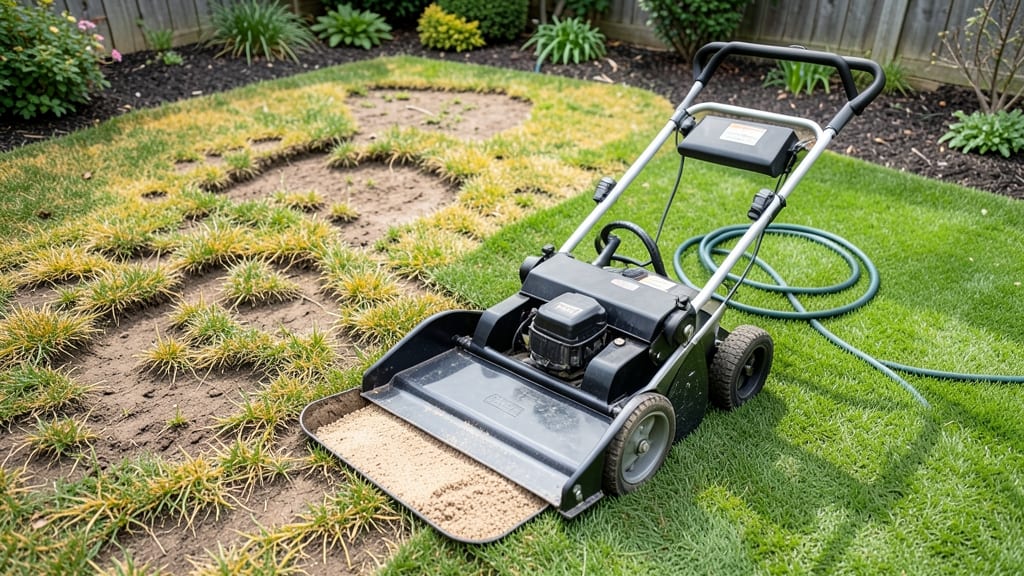
Selecting the right lawn levelling tool starts with matching it to your yard's size and terrain, where hand rakes work best for small, patchy areas, walk-behind rollers handle mid-sized lawns, and heavy-duty plates tackle large, uneven sections. Pay attention to materials like aluminum for lightweight use or steel for durability, and prioritize portability if you have multiple problem spots.
Your yard’s specific challenges determine which tool will give you the smoothest results. 🌱 A hand rake lets you work in tight spots or fix minor dips, but it’s labor-intensive for bigger jobs.
Walk-behind rollers are perfect for mid-sized lawns—their weight helps compress soil evenly, while heavy-duty plates distribute pressure across large areas, making them ideal for severe unevenness.
I always recommend testing a small section first to see how the tool affects drainage and compaction, as some methods can actually worsen water pooling if not used correctly.
Beyond the tool itself, consider how often you’ll use it—lightweight aluminum models are easier to maneuver but may not hold up to frequent heavy-duty work, while steel tools last longer but add bulk. If you’re dealing with slopes or hard-to-reach areas, look for extendable handles or adjustable designs.
For example, a roller with a removable handle lets you switch between pushing and pulling depending on the terrain. The right choice depends on balancing upfront cost, long-term durability, and how much physical effort you’re willing to put in.
💡 In This Article
- How Different Lawn Levelling Tools Work for Uneven Grass
- Top Features to Compare Before Buying a Lawn Levelling Tool
How different lawn levelling tools work for uneven grass
Hand rakes with sturdy tines—typically made from steel or reinforced aluminum—work by physically lifting and redistributing soil. When you drag the rake across low spots, the tines catch dirt and pull it upward, filling depressions while pushing excess soil toward higher areas.
This method creates immediate visual improvement but requires significant physical effort, especially on slopes where gravity can undo your work. The key is to rake in overlapping passes at a 45-degree angle to prevent creating new low spots from soil compaction.
Walk-behind rollers function through controlled pressure and vibration. These tools—often weighing 100-300 pounds—use their weight to compress soil while their rotating drums smooth out uneven surfaces. The vibration helps break up compacted soil layers, allowing water and roots to penetrate more easily.
However, overuse can create hardpan (a dense, impermeable soil layer) if the roller is too heavy for your soil type. For clay-heavy yards, a lighter roller with adjustable weight settings works best to avoid excessive compaction.
Heavy-duty levelling plates operate by distributing weight evenly across large areas. These rectangular plates—typically measuring 24x48 inches—are dragged over uneven sections, using their own weight (500-1,000 pounds) to push down high spots while filling low areas.
The secret to their effectiveness lies in the gradual, overlapping passes: each stroke should overlap the previous by about 12 inches to ensure consistent results. Unlike rollers, plates don't vibrate, making them safer for delicate grass but requiring more manual effort on steep slopes.
Here's what happens beneath the surface: rakes primarily address surface-level unevenness, while rollers and plates influence soil compaction and drainage patterns. Over-compaction from rollers can reduce aeration, while plates may leave temporary ruts if dragged too quickly.
To test which method works best for your yard, focus on how water behaves after levelling—ideal tools should create a smooth, even surface that allows water to drain uniformly rather than pooling in new low spots.
Consider this real-world example: a 1,000-square-foot lawn with moderate unevenness might take 30-45 minutes with a rake but only 15 minutes with a walk-behind roller. The trade-off? Rollers typically cost $150-$300 while high-quality rakes run $20-$50.
For large properties over 5,000 square feet, renting a plate (around $75/day) often proves more cost-effective than repeated rake work.
For long-term lawn health, combine levelling with proper soil preparation. After using any tool, top-dress with a ¼-inch layer of compost to improve soil structure and prevent future settling.
This step is especially critical after plate work, where the soil may temporarily appear uneven before settling into its new, more stable configuration.