
Mower
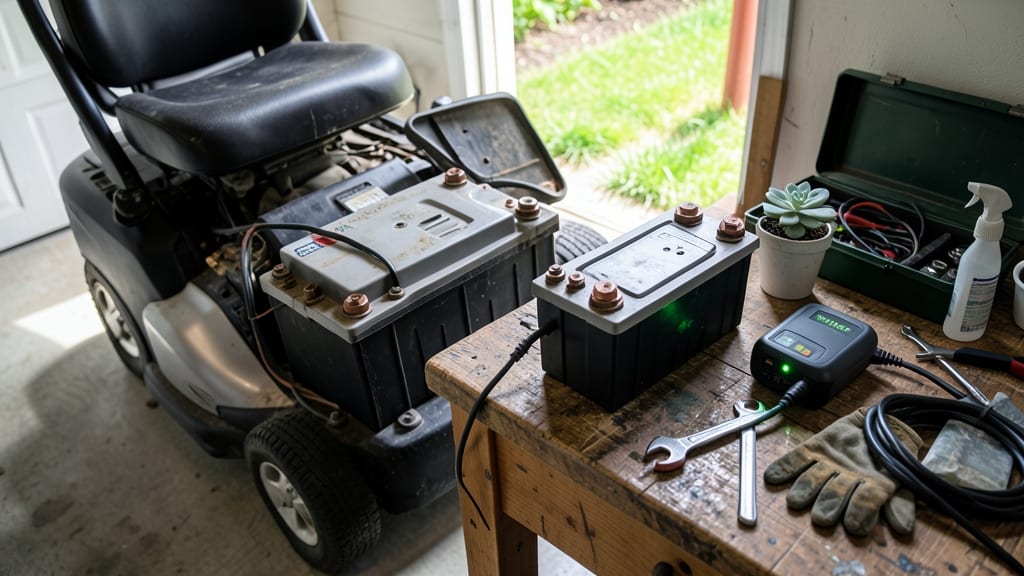
How long a lawn mower battery lasts depends on its type—lead-acid batteries run 1 to 2 hours, lithium-ion last 2 to 4 hours, and AGM batteries offer 1.5 to 3 hours per charge. Your mower's runtime also varies based on grass conditions, blade resistance, and terrain challenges.
A lawn mower's battery life isn't just about the type—it's about how you use it. 🔥 For example, mowing thick, wet grass or tackling steep slopes can cut runtime by 30% or more. I've seen lithium-ion batteries handle these tough conditions better because they deliver consistent power even when cold.
The key is matching your battery type to your yard's demands—lead-acid might suffice for small, flat lawns, while lithium-ion becomes a game-changer for larger properties or hilly landscapes.
What's interesting is how maintenance plays into this. A well-maintained battery can last significantly longer—sometimes up to 20% more runtime—just by keeping terminals clean and storing it properly.
I always recommend checking your battery's charge level before winter storage; letting it sit at 50% or below can shorten its overall lifespan by up to 50%.
💡 In This Article
- Lawn Mower Battery Lifespans by Type: Lead-Acid vs Lithium-Ion vs AGM
- Maximizing Lawn Mower Battery Life: Charging, Storage, and Maintenance Tips
Lawn mower battery lifespans by type: lead-acid vs lithium-ion vs AGM
Lawn mower batteries differ dramatically in runtime because their chemistry directly impacts how efficiently they deliver power. Lead-acid batteries, the oldest and most common type, provide 1 to 2 hours of runtime due to their lower energy density and higher internal resistance.
This means they struggle with cold starts and heavy loads—like mowing thick, wet grass—which can reduce runtime by up to 40% compared to ideal conditions. The reason? Lead-acid batteries rely on sulfuric acid, which thickens in cold temperatures, making it harder for electrons to flow.
Lithium-ion batteries, on the other hand, offer 2 to 4 hours of runtime because their lightweight design and high energy density allow them to deliver consistent power even under demanding conditions. They handle cold starts effortlessly and maintain efficiency in hilly terrain or thick grass, where lead-acid batteries might struggle.
The key difference lies in their voltage output: most lithium-ion mower batteries operate at 36V, while traditional lead-acid systems use 12V. This higher voltage translates to more power per amp-hour, meaning you get longer mowing sessions without draining the battery.
AGM (Absorbent Glass Mat) batteries strike a balance, offering 1.5 to 3 hours of runtime with the added benefit of being maintenance-free and resistant to vibration. They use a fiberglass mat to absorb the electrolyte, which prevents spills and allows them to recharge faster than lead-acid batteries.
However, AGM batteries still fall short of lithium-ion in extreme conditions—like mowing early morning dew or tackling steep slopes—where their runtime can drop closer to the lower end of the spectrum.
Here’s how these differences play out in real-world scenarios: A 12V lead-acid battery might power a small, self-propelled mower for about 1 hour on a flat, dry lawn, but the same mower with a 36V lithium-ion battery could run for nearly 3 hours under the same conditions.
The terrain makes a huge difference too—mowing a hilly yard with a lead-acid battery could cut runtime by nearly 50%, while a lithium-ion battery would only see a 20% reduction.
What most people don’t realize is how blade resistance affects battery life. A dull blade forces the mower engine to work harder, draining the battery faster—sometimes by up to 30%. Sharp blades reduce this strain, helping all battery types maintain their advertised runtime.
For example, a lithium-ion battery might last 4 hours with a sharp blade but only 2.5 hours if the blade is dull. This is why regular blade maintenance is just as critical as choosing the right battery type.
Another factor is how batteries handle partial discharges. Lead-acid batteries degrade faster when frequently drained to 50% or below, while lithium-ion and AGM batteries can handle deeper discharges without as much damage.
This makes lithium-ion the best choice for larger yards or frequent mowing sessions, where you might not always have time to recharge between uses. 🔥