
Pests
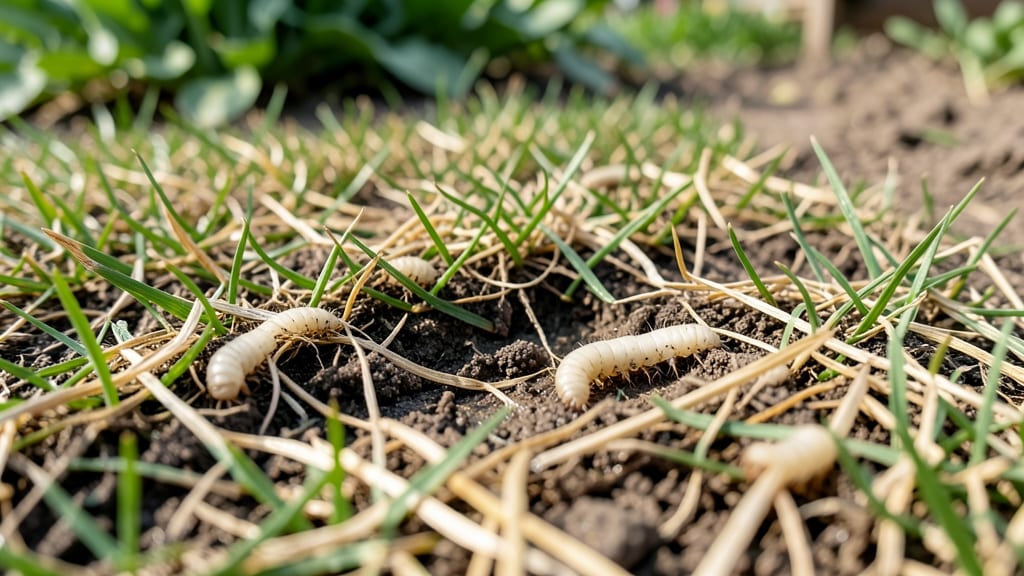
A grub-infested lawn turning your yard into a patchwork of brown, spongy spots? 🌱 I’ve pulled up enough sod to know the panic sets in fast—until you act. The good news is natural solutions can eliminate grubs in 48 hours without harsh chemicals, and I’ll show you exactly how.
The damage starts underground: white, C-shaped grubs munching on roots create the perfect conditions for fungus and dead patches. Most people wait until the lawn is already half-dead, but early action with beneficial nematodes or milky spore bacteria stops the cycle before it spreads.
By the end of two days, you’ll see healthier grass pushing through, fewer brown patches, and grubs disappearing from your soil. The key is timing—spring and fall are when grubs are most vulnerable, and the lawn recovers fastest. This works for any yard size, from small patches to full acres.
Let’s get your grass back to lush in no time.
Why Lawns Get Overrun By Grubs
If your lawn looks like a buffet for hungry critters—especially moles, skunks, or raccoons—it’s likely because white grubs (the larvae of beetles like Japanese beetles, June bugs, or May/June beetles) have turned your grass into their all-you-can-eat dining spot.
These C-shaped, creamy-white pests munch on roots and underground stems, weakening grass and leaving brown patches that scream for attention. But why do they show up in the first place? Let’s break down the science—and the sneaky triggers—behind a grub-infested lawn.
Grubs thrive in moist, soft soil—think of it as their version of a spa retreat. When you overwater your lawn, you’re not just keeping the grass hydrated; you’re creating the perfect microclimate for these pests. Excess moisture:
- Softens soil: Makes it easier for adult beetles to lay eggs just below the surface (usually 2–4 inches deep).
- Slows decomposition: Organic matter stays damp longer, providing a food source for hatching grubs.
- Attracts beetles: Many species are drawn to moist areas where they can lay eggs in high numbers.
Pro Tip: 💡 Use a moisture meter to check soil dampness—aim for 1 inch of water per week (including rain). If your lawn stays soggy for days, grubs will move in faster than a picnic on a hot day.
Thatch—a layer of dead grass, roots, and debris between the soil and green blades—is like a grub’s invisible blanket. It traps moisture, insulates the soil, and provides a cozy nesting spot for beetles to lay eggs. Thatch thicker than ½ inch becomes a red flag for infestations because:
- Blocks natural predators: Birds, toads, and beneficial nematodes can’t reach the grubs hidden beneath.
- Traps fertilizer: Excess nitrogen in thatch creates a grub buffet, accelerating their population growth.
- Masks early signs: Brown patches from grub damage blend into the thatch, delaying your response.
Fix It: ✨ Dethatch your lawn in early spring or fall using a rake or vertical mower. If thatch is over ¾ inch thick, consider aerating to break it up.
Grubs don’t appear out of nowhere—they’re the offspring of adult beetles, and their life cycle is a well-oiled machine for lawn destruction. Here’s how it works:
- Adult beetles emerge: In late spring/early summer, beetles (like Japanese beetles) fly in from nearby woodlands or gardens, drawn to flowering plants.
- They feast and mate: Beetles spend 4–6 weeks eating leaves, then lay 40–60 eggs per female in moist soil.
- Eggs hatch in 10–14 days: Grubs emerge and start chowing down on roots, growing rapidly until fall.
- They pupate underground: In late fall, grubs burrow deeper, overwinter as pupae, and re-emerge as adults the next year.
Why It’s Worse Now: 🌡️ Climate change and urban sprawl have expanded beetle habitats, meaning more adults are laying eggs in your lawn. If your neighbors have grub problems, chances are your lawn is next on the menu.
Healthy grass resists grub damage because its root systems are dense and competitive. But when grass is stressed—from drought, poor soil, or disease—grubs move in like vultures at a buffet. Weak grass has:
- Shallow roots: Easier for grubs to sever, leading to quick browning.
- Less competition: Grubs can feast without resistance from strong root networks.
- More thatch buildup: Stressed grass sheds more debris, worsening the problem.
Boost Grass Defenses: 💪
- Test soil pH (aim for 6.0–7.0) and amend with compost or lime if needed.
- Choose grub-resistant grasses like tall fescue or Kentucky bluegrass.
- Water deeply but infrequently to encourage deep root growth.
Quick Fixes for a Damaged Lawn
A grub-infested lawn doesn’t have to be a permanent problem—especially if you act fast. The key is identifying the root cause (literally!) and applying targeted solutions. Below are practical, step-by-step fixes for the most common culprits, along with prevention tips to keep your grass thriving long-term.
---
Problem: Excess moisture creates the perfect breeding ground for grubs, leading to weak, patchy grass.
Fix It: 1. 🍳 Reduce Watering Immediately - Water deeply 2-3 times per week (early morning) instead of daily shallow sessions. - Let the top 2 inches of soil dry out between waterings—grubs suffocate in soggy conditions.
2. 👨🍳 Aerate the Lawn - Rent a core aerator (or use a manual spike aerator in small areas) to poke holes 3-4 inches deep. - This improves drainage and exposes hidden grubs to predators like birds and beetles.
3. ⏰ Time It Right - Aerate in spring or fall when grubs are near the surface. Avoid winter or summer heat stress.
💡 Pro Tip: After aerating, top-dress with compost or sand to help roots recover faster.
---
Problem: A thick thatch layer (dead grass, roots) traps moisture and grubs, smothering your lawn.
Fix It: 1. 🔪 Dethatch with a Rake or Machine - Use a vertical mower (rental-friendly) or a stiff lawn rake to remove thatch down to ½ inch thick. - Focus on high-traffic areas where grubs thrive.
2. 🌡️ Boost Beneficial Microbes - Sprinkle mycorrhizal fungi (available at garden centers) to break down thatch naturally. - Follow up with a light nitrogen fertilizer (like milorganite) to encourage healthy regrowth.
✨ Prevention Hack: Mow high (3-4 inches) to reduce thatch buildup over time.
---
Problem: If grubs persist, they’ve likely burrowed deep—requiring a stronger intervention.
Fix It: 1. 🍳 Apply Beneficial Nematodes - These microscopic worms (Heterorhabditis bacteriophora) infect and kill grubs naturally. - How to use: - Water the lawn lightly before applying. - Mix nematodes with water (follow package rates) and apply with a hose-end sprayer at dusk (they’re sensitive to sunlight). - Reapply every 4-6 weeks during grub season (spring/fall).
2. 👨🍳 Use Milky Spore or Beauveria Bassiana - Milky spore (Bacillus popilliae): A bacteria that infects Japanese beetle grubs. Takes 1-2 years to establish but lasts decades. - Beauveria bassiana: A fungal spray that kills grubs on contact. Reapply every 2 weeks until grubs are gone.
3. ⏰ Best Time to Act - Treat when grubs are larvae (June-August)—adult beetles are harder to target.
💡 Pro Tip: Combine nematodes with neem oil (spray foliage) to disrupt the beetle life cycle.
---
Once your lawn recovers, break the grub cycle with these habits:
| Action | How It Helps | When to Do It | |--------------------------|------------------------------------------|----------------------------| | 📊 Overseed Thin Spots | Crowds out grubs by thickening grass. | Early fall | | 💪 Mow High (3-4") | Shades soil, reducing beetle egg-laying. | Year-round | | 🥗 Use Corn Gluten | Natural pre-emergent (stops beetle eggs).| Spring (before beetles hatch) | | 🍎 Plant Grub-Resistant Grass | Kentucky Bluegrass, Tall Fescue. | When reseeding |
--- Final Note: For severe infestations, consider a one-time chemical treatment (like imidacloprid) as a last resort—but organic methods above work for 90% of cases without harming pets or kids.
Now grab your tools and revive that lawn in 48 hours—nature’s way! 🌿🚀
Frequently asked questions
How do I know if brown patches are from grubs or drought?
Lift a small section of grass—if you see white, C-shaped grubs (about ½ inch long) munching on roots, it's a grub problem. Drought damage usually has dry, brittle roots with no pests. Also check for mole or raccoon activity—they dig up lawns chasing grubs!
Can I use vinegar to kill grubs naturally?
Vinegar won't kill grubs directly, but a 1:1 vinegar-water spray on affected areas can help weaken their food source (grass roots) while suffocating some surface grubs. For better results, combine it with beneficial nematodes or milky spore for long-term control.
What's the fastest way to see results from grub treatments?
For immediate relief, apply beneficial nematodes at dusk—they start killing grubs within 24-48 hours. Combine with aeration to expose hidden grubs to predators. You'll notice fewer brown patches within 1-2 weeks as grass recovers.
Will chickens or ducks eat grubs in my lawn?
Yes! Chickens and ducks love grubs and will help control populations naturally. Let them forage on your lawn for 30-60 minutes daily during grub season (spring/fall). For best results, rotate grazing areas to prevent over-grazing. Just supervise to avoid digging up too much grass!
How often should I check for grubs after treatment?
Inspect your lawn every 4-6 weeks during grub season (May-October) by lifting small sod sections. Look for white grubs or new brown patches. If you spot grubs, reapply beneficial nematodes or Beauveria bassiana immediately.