
Lawn
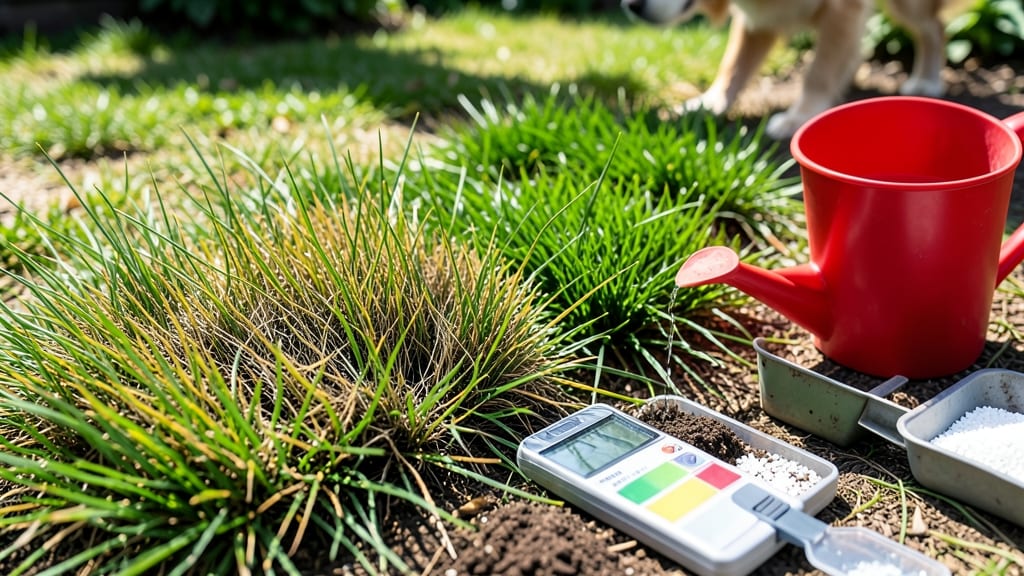
Dog pee turns lawns into yellow patches unless you act fast. 🌱 I’ve seen firsthand how concentrated urine burns grass roots, leaving behind dead spots that ruin an otherwise lush yard—but there’s a way to turn that problem into a solution.
The issue isn’t dog pee itself—it’s the nitrogen overload when urine sits too long. Diluting spots with water or training your pup to pee in one area (like a mulched patch) prevents damage. Even better? The nitrogen in diluted urine can fertilize grass—if you manage it right.
You’ll learn how to revive yellowed patches with simple over-seeding and watering tricks. Within weeks, your lawn can bounce back stronger than ever, even with a playful pup running through it. This works for any grass type, from cool-season fescue to warm-season Bermuda. Let’s fix those brown spots for good!
The Science Behind Dog Pee Damage
Understanding why dog urine can turn your lawn into a patchwork of yellow isn’t just about blame—it’s about chemistry. When dogs pee, their urine contains high concentrations of nitrogen, phosphates, and ammonia, which are essential nutrients for grass.
But too much of a good thing can burn your lawn. Here’s why it happens, broken down into the key culprits:
---
Dog urine is 4x more concentrated in nitrogen than human urine, thanks to a dog’s high-protein diet. When it hits the grass, the nitrogen rapidly converts into ammonia (NH₃), a corrosive compound that:
- ✅ Breaks down cell membranes in grass blades, causing them to dry out and turn brown.
- ✅ Disrupts the soil’s pH balance, making it harder for roots to absorb water and nutrients.
- ✅ Creates a "salt burn" effect, similar to how road salt damages plants in winter.
Actionable insight: The longer urine sits on the grass, the worse the damage. If you notice yellow patches directly where your dog pees, nitrogen burn is likely the culprit. Dilution is key—rain or watering within 24 hours can help neutralize the ammonia.
---
Ammonia isn’t just harmful—it’s alkaline, meaning it raises the soil’s pH. Most grasses thrive in a slightly acidic range (6.0–7.0). When ammonia spikes the pH above 7.5:
- ✅ Micronutrients like iron and manganese become "locked" in the soil, starving the grass.
- ✅ Fungal growth (like brown patch disease) gets a foothold in stressed grass.
- ✅ Roots struggle to uptake water, leading to wilting even if the soil is moist.
Actionable insight: Test your soil’s pH if you see slow, creeping yellowing beyond just pee spots. A simple DIY pH test kit (or a lab test) can confirm if alkalinity is the issue. If needed, amend with sulfur or peat moss to lower pH gradually.
---
Not all dog pee is equal—small, frequent urinations (like a Chihuahua’s) are less damaging than large, concentrated deposits (like a Labrador’s). Here’s why:
| Factor | Impact on Lawn |
|---|---|
| Diet (raw vs. kibble) | Raw-fed dogs produce 20% more dilute urine due to higher water content in prey. Kibble-eaters? Their urine is thicker and more acidic. |
| Hydration levels | Dehydrated dogs = higher urea concentration, which breaks down into ammonia faster. Always ensure fresh water access! |
| Grass type | Fine fescue and Kentucky bluegrass are more sensitive to urine than tougher varieties like Bermuda or zoysia. |
Actionable insight: If your dog’s diet is the issue, consider adding more water-rich foods (like cooked veggies or wet kibble) to dilute their urine. For high-risk breeds, train them to pee in one designated area and water it down immediately.
---
Sun and heat amplify urine damage by:
- ✅ Speeding up ammonia evaporation, leaving behind a salt crust that blocks soil pores.
- ✅ Increasing grass transpiration, so the plant loses more moisture in already-stressed areas.
- ✅ Encouraging bacterial growth in warm, pee-soaked soil, which can further weaken roots.
Actionable insight: If your lawn is hot and dry, water deeply 2–3 times a week (not just surface sprinkles) to flush out salts. Early morning or late evening watering minimizes evaporation.
---
Here’s the hard truth: Dog urine is not a balanced fertilizer. While it provides nitrogen, it lacks:
- ❌ Phosphorus (critical for root development).
- ❌ Potassium (helps grass resist disease and drought).
- ❌ Micronutrients like zinc or magnesium.
Without these, your lawn gets a short-term nitrogen high followed by a crash. Over time, this leads to:
- Weaker roots.
- Increased susceptibility to pests.
- Dependence on urine for survival (not sustainable!).
Actionable insight: If you want to use urine as a supplement, dilute it 1:10 with water and apply it to compost piles or garden beds—never directly to lawns.
Fixing Yellow Grass from Dog Pee
Dog pee isn’t just a nuisance—it can turn your lawn into a patchwork of brown and yellow if left unchecked. The good news? With the right approach, you can restore your grass while keeping your pup happy and healthy.
Below are targeted solutions for the most common causes of dog urine damage, plus prevention tips to keep your lawn lush long-term.
---
Problem: Frequent, small pees (especially from male dogs) create high ammonia levels that burn grass roots.
Fix It: - Dilute the damage 💦: Train your dog to pee in one spot (like a gravel or mulch area) or use a pee pad in high-traffic zones. If that’s not an option, rinse the area immediately with water after your dog goes. - Water deeply but less often 🌧️: Instead of light, frequent watering, give your lawn 1–1.5 inches of water 2–3 times per week (deep soak). This helps grass recover faster and flushes out ammonia. - Aerate the soil 🪴: Compacted soil worsens urine damage. Rent an aerator or spike the lawn with a garden fork to improve drainage and root health.
Prevent It: ✅ Encourage longer pees in one spot (less concentrated urine). ✅ Water your lawn 30 minutes after your dog goes to dilute the pee naturally.
---
Problem: Dog urine is high in nitrogen, which can over-fertilize grass, leading to weak, yellow patches.
Fix It: - Balance the soil 🌱: Test your soil’s pH and nutrients (a simple DIY kit from a garden store works). If nitrogen levels are off the charts, apply a slow-release, balanced fertilizer (like 10-10-10) in early spring or fall. - Use organic matter 🍂: Spread a thin layer of compost or peat moss over affected areas to dilute nitrogen and improve soil structure. - Overseed bare spots 🌾: If grass is thinning, sprinkle new grass seed (choose a dog-friendly variety like Kentucky Bluegrass or Fescue) and lightly rake it in.
Prevent It: ✅ Limit high-nitrogen fertilizers—stick to organic options like alfalfa meal or fish emulsion. ✅ Mow high (3–4 inches) to strengthen grass roots and reduce burn risk.
---
Problem: Dogs trampling the same spots compacts soil, smothering grass roots and preventing recovery.
Fix It: - Reduce foot traffic 🚶♂️: Designate a dog walkway (use stepping stones or mulch) to protect high-use areas. - Top-dress with sand or compost 🏗️: Mix coarse sand or compost into compacted soil to improve aeration. Do this in early spring or fall. - Use a lawn roller (lightly!) 🎈: A manual roller can help break up compacted areas—but don’t overdo it, or you’ll damage roots.
Prevent It: ✅ Rotate walking paths to distribute wear evenly. ✅ Keep your dog’s nails trimmed to reduce digging and soil compaction.
---
Problem: Stagnant urine can create a moist, ammonia-rich environment perfect for fungi (like brown patch disease) or bacteria.
Fix It: - Improve drainage 🚰: If your lawn stays soggy, add gypsum (calcium sulfate) to break up clay soil or install French drains in low spots. - Apply a fungicide (if needed) 🍄: If you spot dark, circular patches (a sign of fungal infection), use a natural fungicide like neem oil or baking soda spray (1 tbsp baking soda + 1 gallon water). - Rake out dead grass 🪓: Remove any matted or discolored patches to prevent spread.
Prevent It: ✅ Avoid watering at night—keep grass dry to deter fungal growth. ✅ Mow regularly to improve airflow and reduce moisture buildup.
--- If your lawn already has yellow patches, try these fast fixes: - DIY urine neutralizer 🧪: Mix 1 part white vinegar + 3 parts water in a spray bottle and lightly mist affected areas (vinegar balances pH). - Grass-friendly urine absorbers 🧴: Sprinkle baking soda or wood ash (sparingly!) to neutralize ammonia—test a small area first to avoid over-drying. - Overseed + protect 🌱: After treating, sprinkle new grass seed and cover with a light straw mulch to hold moisture while roots regrow.
--- - Train your dog 🐕: Use a consistent command (like “Go potty!”) to encourage peeing in one spot. - Monitor urine color 👀: Pale yellow pee = hydrated dog + less concentrated urine.
If it’s dark amber, your pup needs more water! - Choose resilient grass 🌿: Tall fescue or Bermuda grass handle dog urine better than thin bluegrass.
--- By tackling the root cause (literally!) and adjusting your lawn care routine, you can reverse yellowing grass and even turn dog pee into a natural fertilizer—when used correctly. 🚀 The key is balance: hydrate your dog, aerate your soil, and give your grass the right nutrients to bounce back stronger.
Frequently asked questions
Why does my dog's pee turn grass yellow?
Dog urine contains high concentrations of nitrogen and ammonia that burn grass blades when concentrated. The ammonia raises soil pH, disrupting nutrient absorption and causing yellowing within 24 hours of peeing. Diluting with water immediately helps prevent damage.
Can I use dog pee as fertilizer for my lawn?
Only if properly diluted (1:10 ratio with water) and applied sparingly. Pure dog urine is too strong and will burn grass. For best results, use it on compost piles or garden beds instead—never directly on lawns where grass is delicate.
How do I fix yellow patches from dog pee?
Rinse affected areas with water, then overseed with dog-friendly grass seed (like tall fescue). Apply a thin layer of compost to restore soil health. For stubborn spots, use a vinegar-water mix (1:3 ratio) to neutralize ammonia.
Will my lawn recover from dog urine damage?
Yes! With proper care, grass can regrow in 2-4 weeks. Focus on deep watering (1-1.5 inches per week), aerating compacted soil, and avoiding high-nitrogen fertilizers. Choose resilient grass types like Bermuda or zoysia for better recovery.
What's the best way to train my dog to avoid peeing on the lawn?
Designate a pee zone (like a gravel area) and use a consistent command ("Go potty!"). Reward your dog with treats when they use the designated spot. For puppies, take them out every 2 hours and praise them for going in the right place.