
Fertilization
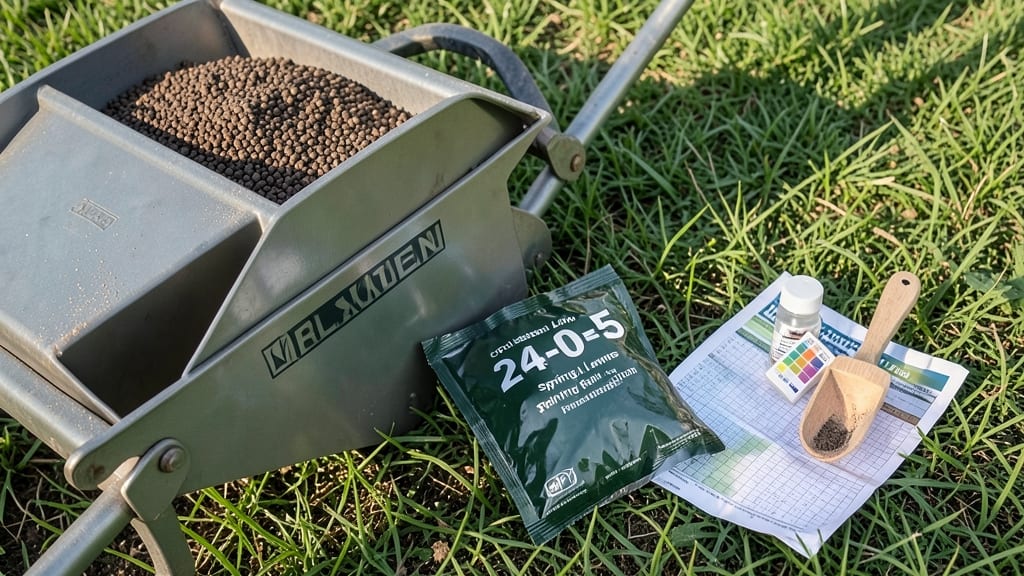
Should you fertilize your Minnesota lawn in early spring or late fall—or both? The answer depends on your grass type, soil health, and the unpredictable frost dates that make timing everything in USDA zones 3b-5a.
Minnesota’s short growing season and sharp temperature swings mean one wrong move can leave your lawn yellowing, stressed, or even burned. Too early, and the fertilizer washes away before roots can use it.
Too late, and you’re feeding grass that’s already slowing down for winter. But nail the schedule, and you’ll see deeper roots, fewer weeds, and that rich green your neighbors will ask about.
Cool-season grasses like Kentucky bluegrass and fescue thrive with two key feedings: a hearty dose in early spring (after the last frost) and a lighter one in fall (before the first frost).
We’ll break down the exact weeks to aim for, how to adjust for southern vs. northern Minnesota, and what to watch for—like soil temperature and rainfall—that can throw off even the best-laid plans.
Ready to skip the guesswork? You’ll learn how to read your lawn’s signals, choose the right fertilizer, and time your applications so your grass stays lush without wasting a penny—or inviting pests into the bargain.
Minnesota’s ideal fertilization timeline for cool-season grasses (spring & fall focus)
Cool-season grasses like fescue, Kentucky bluegrass, and ryegrass dominate Minnesota lawns because they thrive in our short growing seasons and cool temperatures. But timing your fertilization schedule is everything—apply too early, and you’ll waste nutrients; too late, and your grass won’t recover before winter.
The secret? Soil temperature and frost dates are your best guides.
Minnesota’s climate varies dramatically from southern regions (like the Twin Cities) to northern zones (near the Canadian border). In the south, last frost typically arrives by mid-April, while northern areas may wait until late May.
Similarly, first frost hits southern lawns by mid-October, but northern yards can see frost as early as September. These differences mean your fertilization window shifts by 4-6 weeks depending on where you live.
Here’s the golden rule: Fertilize when your grass is actively growing but not stressed. For cool-season grasses, that means early spring (as soon as soil warms to 50°F) and early fall (6-8 weeks before first frost).
This schedule ensures your lawn builds deep roots before winter dormancy and wakes up strong in spring.
In early spring, your lawn’s goal is to recover from winter stress and outcompete weeds. Apply a high-nitrogen fertilizer (like 24-0-5) as soon as soil reaches 50°F. This triggers rapid root growth and leaf expansion. For southern MN, this is usually mid-April, while northern areas should wait until late May. Pro tip: Use a slow-release formula to avoid burn risk from sudden nutrient spikes.
Summer fertilization is a gray area. Cool-season grasses go dormant in heat, so heavy feeding can stress them out. Instead, opt for a light feed in July (if needed) with a low-nitrogen blend (like 10-0-10).
Water deeply afterward to flush nutrients into roots. Avoid fertilizing after June 15, as this encourages weak late-summer growth that won’t survive winter.
Fall is your second critical window. The goal here is to str
How to choose the right fertilizer type and application method for Minnesota lawns
Minnesota’s cool-season grasses like Kentucky bluegrass and fescue thrive with the right fertilizer timing and type. Choosing between slow-release and quick-release options—and organic vs. synthetic—can make or break your lawn’s health.
The wrong choice might lead to burned grass, wasted money, or weak growth, especially in our variable climate.
First, consider your lawn’s current condition. If your grass looks thin or patchy, a high-nitrogen fertilizer in spring will help it recover. For established lawns, a balanced slow-release option works best to avoid nutrient spikes.
Minnesota’s acidic soil (pH 5.0–6.5) also plays a role—lime may be needed before fertilizing to improve nutrient uptake.
Fertilizer Type & Application Guide for Minnesota Lawns
- ✅ Pros: Steady nutrient flow, fewer applications, less burn risk
- ✅ Best for: Established lawns (spring/fall)
- ✅ Cost: Higher upfront, lower long-term
- ✅ Pros: Fast green-up, good for thin lawns
- ❌ Cons: Higher burn risk, needs frequent reapplication
- ✅ Best for: Spring green-up (short-term boost)
- ✅ Pros: Improves soil health, slow nutrient release
- ❌ Cons: Slower results, may attract pests
- ✅ Best for: Long-term soil building (fall applications)
- ✅ Pros: Precise nutrient ratios, fast results
- ❌ Cons: Can harm soil microbes, runoff risk
- ✅ Best for: Quick fixes (early spring)
- ✅ Best for: Large lawns, even coverage
- ✅ Tip: Calibrate for 1 lb per 100 sqft
- ✅ Best for: Quick absorption, drought stress
- ❌ Cons: Higher cost, frequent applications
For weed control, Minnesota gardeners often turn to pre-emergent herbicides in early spring (March–April) to stop crabgrass before it germinates.
Apply it 4–6 weeks before your last frost date, but avoid synthetic fertilizers with herbicides—stick to separate applications. Post-emergent herbicides are better for existing weeds like dandelions, but use them sparingly to avoid harming your grass.
When applying fertilizer, early morning is ideal to prevent evening moisture from causing fungal issues. Water lightly after application to help nutrients absorb, but avoid overwatering, which can leach nutrients away.
In southern Minnesota, you might fertilize once in late April and again in September, while northern regions should wait until May and August due to later frost dates.
Top-dressing with compost or sand after fertilizing can further boost your lawn’s health. This method is especially useful for thin or compacted soil, common in Minnesota’s clay-heavy areas. Pair it with core aeration in fall to let nutrients penetrate deeper, giving your grass a stronger start for winter.
Remember: Less is more with Minnesota lawns. Over-fertilizing leads to burnt grass, water pollution, and wasted money. Stick to the 4-6-8 rule—no more than 0.5 lb of nitrogen per 100 sqft per application—and always follow label instructions.
With the right approach, your lawn will stay green, resilient, and pest-free all season. 🌱