
Pests
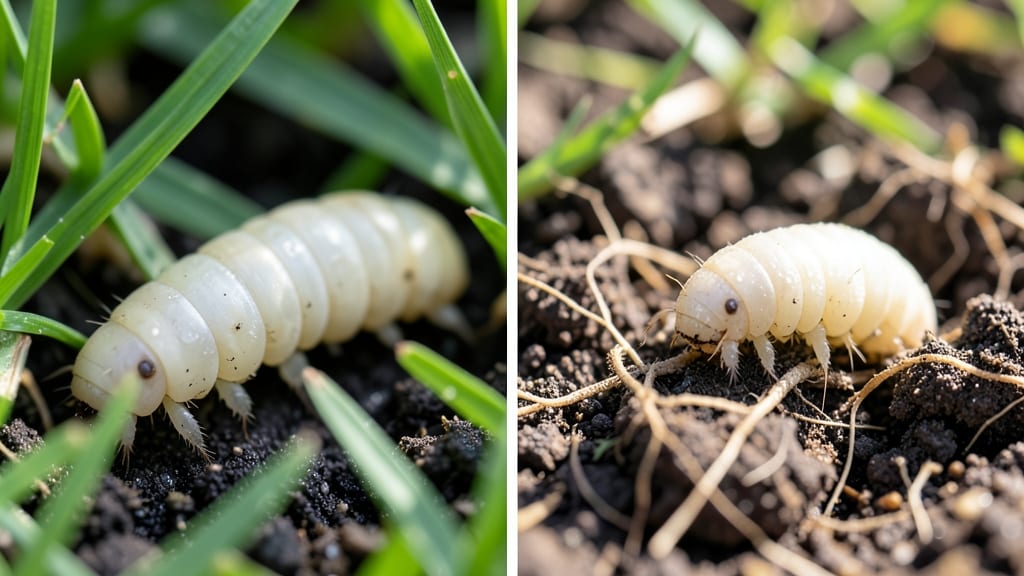
Grubs turn your lush lawn into a patchwork of dead grass overnight. 🌱 I’ve seen healthy green carpets transform into brown, spongy messes—all because these white, C-shaped larvae chew through roots like tiny lawnmowers.
The damage isn’t just cosmetic; it’s structural, leaving grass vulnerable to pulling up like weeds when you walk on it.
These beetle larvae thrive underground, feeding on roots and crowns, which weakens the grass until entire sections die back. You’ll spot signs like thin patches, moles digging up your lawn (they’re hunting grubs!), or grass that lifts easily—like a carpet with no foundation.
The worst part? By the time you notice the damage, the grubs are already halfway done their destruction.
But here’s the good news: you can recover your lawn in 48 hours without retilling or harsh chemicals. The key is acting fast with targeted treatments—like beneficial nematodes or milky spore—that starve out the grubs while keeping your soil (and the good bugs) alive.
No more guessing games; just science-backed fixes that work.
We’ll cover the exact steps to identify infestations, choose the right treatment, and prevent future outbreaks—so your lawn stays green, strong, and grub-free. Trust me, once you’ve seen a grub-free recovery, you’ll never ignore those early warning signs again.
Root Causes Of Grub Damage
Grubs—those sneaky, worm-like larvae of beetles—can turn your lush lawn into a patchy, brown eyesore faster than you can say "spring cleanup." But why does this happen? The answer lies in their biology, your lawn’s health, and a few environmental factors working in their favor.
Let’s break down the real reasons your lawn becomes a grub buffet and how these pests exploit it.
Grubs are the larvae of beetles like Japanese beetles, June bugs, or European chafer beetles, and their primary job is to decompose organic matter in the soil. In small numbers, they’re harmless—even beneficial! But when their population explodes, they become lawn predators instead of soil helpers.
Here’s how it happens:
- Beetles lay eggs in late summer/early fall (their peak season).
- Eggs hatch into grubs, which feast on grass roots, organic debris, and even living turf.
- Healthy lawns can recover from light damage, but weak or stressed grass becomes an all-you-can-eat buffet.
💡 Pro Tip: If you notice crows, skunks, or raccoons digging up your lawn (like they’re searching for worms), grubs are likely the culprit—and your lawn is already under siege.
Grubs target stressed or thin lawns because weak grass roots are easier to chew through. Here’s what makes your lawn a grub magnet:
| Cause | Why Grubs Love It | How to Fix It |
|---|---|---|
| Overwatering | Soggy soil = softer roots = easier grub snacks. | Water deeply but 2-3 times per week (early morning). |
| Poor Drainage | Waterlogged areas create grub hotspots where beetles lay eggs. | Aerate compacted soil or install French drains if needed. |
| Thin or Patchy Grass | Bare spots = exposed soil = perfect egg-laying real estate for beetles. | Overseed thin areas in fall (grubs are most active then). |
| Excess Thatch | Thick thatch (dead grass layer) traps moisture and heat, speeding up grub growth. | Dethatch in early fall to disrupt their habitat. |
| Fertilizer Imbalance | Too much nitrogen = soft, fast-growing grass = grub heaven. | Use a balanced fertilizer (16-4-8 or 12-12-12) and avoid overfeeding. |
🔥 Warning: If your lawn has large, irregular brown patches that lift easily (like a carpet), grubs are likely severing roots at the soil line.
Grubs don’t just appear—they time their attacks based on temperature, moisture, and season. Here’s their game plan:
- Late Summer to Early Fall (Peak Egg-Laying Season)
- Beetles emerge when soil temps hit 60–75°F (15–24°C).
- They lay eggs in warm, moist soil, which hatch in 7–14 days.
- Solution: Apply grub control in August (before eggs hatch) to stop them early.
- Cool, Wet Springs
- Grubs survive winter in the soil and resume feeding in spring.
- Frequent rain keeps soil soft, making roots easy targets.
- Solution: Aerate in spring to improve root strength before grub activity peaks.
- Drought Followed by Heavy Rain
- Grubs thrive in fluctuating moisture—dry spells weaken grass, then rain softens the soil for easy digging.
- Solution: Water consistently (1–1.5 inches per week) to avoid stressing your lawn.
Sometimes, well-meaning lawn care accidentally creates the perfect grub paradise. Here’s how:
- Leaving Grass Clippings Too Long
- Thick clippings smother grass and create moist, shaded microclimates grubs love.
- Fix: Mow regularly and remove clippings if your lawn is grub-prone.
- Using Broadleaf Herbicides Without Caution
- Some herbicides weaken grass, making it vulnerable to grub attacks.
- Fix: If treating weeds, avoid pre-emergent herbicides in fall (grubs are hatching!).
- Ignoring Soil pH & Nutrients
- Acidic or nutrient-poor soil stresses grass, making it easier for grubs to take over.
- Fix: Test soil pH and amend with lime (if too acidic) or compost (if too alkaline).
Grubs don’t just eat your lawn—they destroy it in stages:
- Early Damage (Light Feeding)
- Grubs clip roots, causing small, scattered brown spots (often missed until it’s worse).
- Moderate Damage (Root Severing)
- More grubs = larger patches that lift easily when pulled (like a rug).
- Severe Damage (Total Root Loss)
- Heavy infestations kill grass entirely, leaving bare soil—perfect for weeds and beetle egg-laying.
🌡️ Temperature Check: If you pull up a patch of grass and see white, C-shaped grubs in the soil, you’ve got a full-blown infestation.
Not all lawns suffer from grubs. Resilient lawns have: ✅ Deep, healthy root systems (from proper mowing, aeration, and fertilization). ✅ Diverse grass types (fine fescue, Kentucky bluegrass, and ryegrass recover faster). ✅ Natural predators (birds, toads, and beneficial nematodes keep grub numbers in check).
Your lawn’s vulnerability often comes down to:
- Lack of preventative care (no grub control in high-risk seasons).
- Over-reliance on quick fixes (like retilling, which disturbs soil and spreads grubs deeper).
- Ignoring early warning signs (small brown spots = grub alert, not just drought stress).
Quick Fixes for Grub Damage
Grubs may be tiny, but their impact on your lawn can feel massive—especially when you’re staring at patches of brown, spongy turf that won’t bounce back. The good news? You don’t need to dig up your entire lawn or wait weeks for recovery.
Below, we’ll map out practical, fast-acting solutions tailored to the root cause of your grub problem, plus prevention tips to keep your lawn lush long-term.
Before diving into fixes, assess how bad the grub invasion is. Grab a shovel and flip over a small patch of sod (about 12" x 12").
Look for: - Mild infestation: Fewer than 5–10 grubs per square foot. - Moderate infestation: 10–20 grubs per square foot (lawn may pull up easily). - Severe infestation: 20+ grubs per square foot (spongy, dead patches).
Pro Tip: 💡 If you’re unsure, check for birds or raccoons digging—they’re often the first to spot a grub buffet!
🔥 Mild to moderate infestation: natural & chemical control
For smaller problems, skip the heavy machinery and try these targeted fixes:
| Method | How to Do It | Time to See Results | Cost |
|---|---|---|---|
| Nematodes | Apply beneficial nematodes (like Heterorhabditis bacteriophora) to your lawn. Water lightly after application. | 3–7 days | $20–$50 (per 5,000 sq ft) |
| Milky Spore Powder | Sprinkle milky spore (a natural bacteria) over affected areas. Best for prevention and treatment. | 2–4 weeks (but lasts years!) | $30–$60 (per 5 lbs) |
| Imidacloprid Granules | Scatter grub-specific granules (e.g., Bayer Advanced Grub Killer) and water in. Follow label rates. | 24–48 hours | $20–$40 (per 10,000 sq ft) |
| Neem Oil Spray | Mix neem oil with water and spray on lawn (best for early-stage grubs). | 3–5 days | $10–$20 (DIY) |
Pro Tip: 🌡️ Timing matters! Apply treatments in late summer or early fall when grubs are young and most vulnerable.
👨🍳 Severe infestation: heavy duty recovery
If your lawn looks like a poker game’s felt, you’ll need a two-pronged attack: 1. Kill the Grubs Fast:
- Use chlorantraniliprole (like Scotts GrubEx) or trichlorfon (Dylox) for immediate knockdown.
- Follow up with milky spore to prevent future outbreaks.
- Revive the Turf: - Overseed bare spots with tall fescue or ryegrass (they recover faster than Bermuda or St. Augustine). - Water lightly but frequently (2–3x daily) to encourage root growth. - Avoid heavy foot traffic for 2 weeks to let roots establish.
Pro Tip: ✨ Aerate first! If the soil is compacted, rent a core aerator ($50–$100/day) to help seeds and water reach the roots.
You don’t need to tear up your lawn to fix grub damage. Try these no-dig tricks:
- 🔪 Topdress with Compost: Spread a thin layer (¼") of compost over seeded areas to retain moisture and add nutrients.
Use a rake to gently work it in. - ⏰ Use a Lawn Roller (Lightly!): Roll the repaired areas once to ensure seed-to-soil contact (don’t overdo it—this isn’t a construction site!). - 💧 Deep Watering Trick: Water deeply (1–1.5") every 2–3 days for the first 2 weeks.
Use a soaker hose to avoid washing away seeds.
Pro Tip: 🎯 Mow high (3–4") while recovering—taller grass shades out weeds and holds moisture better.
Grubs don’t just show up—they’re invited by weak lawns. Lock them out with these long-term strategies:
✅ Improve Drainage:
- Test your soil’s permeability (stick a screwdriver in—if it goes in <3", drain poorly).
- Add sand or compost to heavy clay soils to break up compaction.
✅ Strengthen Your Grass:
- Fertilize in early fall with a low-nitrogen, high-phosphorus blend (e.g., 5-10-10) to boost root growth.
- Aerate annually to starve grubs of their favorite snack (thatch).
✅ Grub-Resistant Grass Types:
- Tall fescue and ryegrass are grub-resistant.
- Avoid Bermuda or Zoysia—they’re grub magnets!
✅ Natural Predators:
- Encourage birds, toads, and beneficial nematodes by keeping a diverse lawn ecosystem (avoid over-fertilizing).
Pro Tip: 🔥 Grub-proof your lawn in 1 year by combining milky spore + nematodes + proper mowing—it’s like a grub vaccine!
Final Note: Most lawns recover fully in 3–4 weeks with these steps—no retilling required! The key is acting fast and preventing recurrence. Now grab your gloves and get to work—your lawn’s comeback starts today!
Frequently asked questions
How can I tell if my lawn damage is from grubs vs. drought or disease?
Grub damage has distinct signs that differ from drought or disease. Look for spongy, lifting turf that pulls up like a carpet—this means roots are severed. Drought causes uniform browning, while disease often shows yellowing or dark spots. The smell test helps too: grub damage smells earthy (not musty like fungus). Dig up a small patch—if you see white, C-shaped larvae, those are your culprits!
Can I use coffee grounds to repel grubs naturally?
Coffee grounds alone won’t kill grubs, but they can help indirectly by improving soil health. The caffeine in grounds may deter some beetles from laying eggs, but it’s no substitute for proven treatments like beneficial nematodes or milky spore. For best results, mix used grounds into compost and spread it thinly over your lawn—just don’t expect instant grub control!
Will my lawn recover on its own if I just water and wait?
Maybe, but not quickly. If grubs are active, your lawn will keep weakening. Watering helps existing grass survive, but new growth won’t establish until the grubs are gone. For true recovery, combine watering with a targeted treatment (like nematodes) and overseeding. Without intervention, you risk permanent thinning—especially in high-traffic areas.
Are there any chemical-free ways to kill grubs in 48 hours?
No method guarantees 100% grub elimination in 48 hours without chemicals, but chlorantraniliprole-based products (like Scotts GrubEx) come closest—working in 24–48 hours. For near-instant results, try trichlorfon (Dylox), which kills grubs on contact. If you’re chemical-free, beneficial nematodes take 3–7 days to work but are safer for pets/kids long-term.
Why do I keep getting grubs even after treating my lawn?
Repeated infestations usually mean one of three things:
- You’re treating after eggs hatch (grubs are already feeding),
- Your lawn is stressed (thin, overwatered, or compacted), or
- You’re missing preventative steps. The fix? Apply milky spore in August (before eggs hatch), improve drainage, and aerate annually to disrupt grub habitats. Think of it like a grub-proof shield—consistency is key!