
Lawn
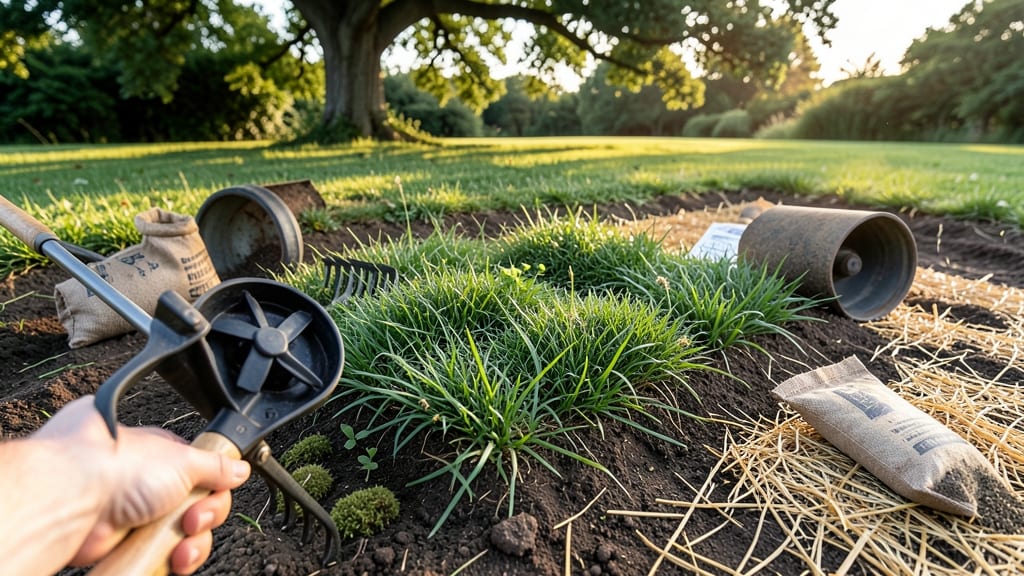
Fall lawn planting gives you a head start on next year’s lush green carpet—when cool weather and frequent rain create perfect growing conditions. 🌱 I’ve planted fall lawns in both dry climates and humid zones, and the difference is night-and-day compared to spring starts.
The key is timing: aim for 4-6 weeks before your first hard frost, when soil stays warm enough for germination but air cools down to slow weed competition.
Start with a soil test—most lawns need 2-3 pounds of nitrogen per 1,000 sq ft after planting, plus phosphorus for strong roots. Choose cool-season grasses like Kentucky bluegrass or fescue for northern regions, or Bermuda grass varieties for southern zones.
My biggest mistake? Skipping soil prep—tilling and leveling saves you headaches later when seeds settle unevenly or water pools in low spots.
In just 4 weeks, you’ll see blades thicken and fill in gaps, outpacing spring plantings by months. The secret’s in consistent moisture—keep soil damp (not soggy) for the first two weeks, then taper off.
Weeds struggle in fall’s shorter days, so you’ll spend less time pulling them later. For southern hemisphere gardeners, flip the timeline: plant in late winter to early spring when your local growing season peaks.
Pro tip: Mark your calendar for late fall fertilization—30 days after planting—to give roots a boost before winter dormancy. Avoid common pitfalls like overseeding too thickly (use 5-8 lbs per 1,000 sq ft) or planting when frost is forecast.
With these steps, your lawn will wake up greener and stronger than ever next spring.
📚 In This Guide
- What you need
- Instructions
- Tips and common mistakes
- Wrapping up and next steps
What you need
- ● Seed: Cool-season grass seed (e.g., Kentucky Bluegrass, Tall Fescue, or Perennial Ryegrass). Quantity: 4–8 lbs per 1,000 sq ft (check seed bag for exact coverage).
- ● Soil: Topsoil or compost (2–4 inches deep, depending on soil quality). Quantity: ~1 cubic yard per 100 sq ft.
- ● Lawn Rake: Bow rake or stiff-bristle dethatcher (for leveling and removing debris).
- ● Spreaders: Broadcast spreader (for even seed distribution).
- ○ Drop spreader (optional but helpful for precision).
- ● Watering Tools: Garden hose with adjustable nozzle (for gentle watering).
- ● Sprinkler (soaker hose or oscillating type for large areas).
- ● Fertilizer: Starter fertilizer (high in phosphorus, e.g., 10-20-10 ratio). Quantity: Follow label instructions (typically 1 lb per 100 sq ft).
- ○ Soil Test Kit: Optional but recommended (to check pH and nutrient levels before planting).
- ● Erosion Control: Straw or netting (to protect seeds from wind/rain until germination).
- ● Soil Amendments: Compost or peat moss (to improve drainage and fertility).
- ● Lawn Roller: Lightweight roller (for firming soil post-seeding).
- ● Weed Barrier: Landscape fabric (if overseeding an existing lawn to block weeds).
- ● Gloves & Knee Pads: Comfort essentials for long hours of work! 😉
Step-by-Step instructions for planting a fall lawn
Fall planting gives cool-season grasses the perfect head start—here’s how to do it right.
🌱 Step 1: Prepare the Soil for Optimal Growth
Start by removing all existing vegetation, debris, and rocks from the area. Use a sod cutter or shovel to dig up grass clumps, then rake the soil smooth. The goal is a clean, level surface with no obstacles blocking root growth. Test your soil’s pH—cool-season grasses thrive in a range of 6.0 to 7.0. If your soil is too acidic or alkaline, amend it with lime or sulfur before proceeding.
Loosen the top 4 to 6 inches of soil with a rototiller or garden fork to improve aeration and drainage. Break up any compacted layers, as dense soil restricts root development. Smooth the surface with a rake, ensuring there are no deep holes or mounds that could create uneven growth. This prep step is critical—skipping it leads to patchy, weak lawns.
💧 Step 2: Spread Seed Evenly for Uniform Coverage
Choose a cool-season grass seed suited to your climate, such as tall fescue, Kentucky bluegrass, or perennial ryegrass. Divide the seed into two equal portions—this makes spreading easier and ensures full coverage. Use a broadcast spreader or walk-behind spreader for large areas, moving in opposite directions (like a crosshatch pattern) to avoid missed spots.
Apply the first half of the seed, then the second half, to prevent overlapping. Lightly rake the area with a stiff-bristled rake to work the seed into the top ¼ inch of soil without burying it too deeply. This ensures good soil contact for germination while allowing sunlight to reach the seeds. Water gently afterward to settle the seed into the soil.
☀️ Step 3: Water Consistently for Germination and Establishment
Keep the soil evenly moist for the first 2 to 3 weeks—this is the most critical phase for seed germination. Water lightly twice daily (morning and evening) to prevent the soil from drying out, but avoid oversaturating it. You’ll know you’re doing it right when the top ½ inch of soil feels damp but not soggy. Overwatering can suffocate seeds, while underwatering causes them to dry out and fail to sprout.
Once the grass reaches 2 inches in height, reduce watering to 1 to 1.5 inches per week, including rainfall. This encourages deep root growth. Avoid walking on the new lawn until the grass is fully established—typically after 6 to 8 weeks. Patience here pays off with a thick, resilient lawn.
✂️ Step 4: Maintain and Fertilize for Long-Term Health
After 6 to 8 weeks, when the grass is 3 to 4 inches tall, mow it for the first time. Set your mower blade to 3 inches to avoid scalping the grass, which stresses young plants. Leave grass clippings on the lawn—they return nutrients to the soil and act as a natural mulch. Fertilize with a slow-release, cool-season lawn fertilizer containing nitrogen, phosphorus, and potassium (look for a ratio like 24-0-10 or similar).
Apply fertilizer according to package instructions, typically in early fall and again in late fall or early spring. Avoid heavy foot traffic on the lawn for at least 3 months to allow roots to strengthen. Over time, your lawn will develop a deep, healthy root system, making it drought-resistant and resilient against weeds.
Tips & tricks for perfect fall lawn planting
Here's what nobody tells you about getting that lush fall lawn—these insights will help you avoid common pitfalls and set your grass up for long-term success.
Soil Prep is Non-Negotiable: In Step 1, when loosening the top 4 to 6 inches of soil, don't just scratch the surface—aim for a crumbly texture like cake batter. I learned this the hard way after planting with compacted soil that led to uneven growth. Rent a rototiller if needed, but if you're doing this manually, use a garden fork to break up compaction in 2-inch chunks. This aeration step is what transforms "hopeful" lawns into "showpiece" lawns.
Seed Placement Precision: During Step 2, that ¼-inch depth for seed placement is critical—too deep and seeds won't sprout, too shallow and they'll dry out. Use a rake with fine tines to create a textured surface that cradles seeds without burying them. For large areas, walk in a grid pattern while spreading to ensure no overlaps or missed spots. I've seen lawns with bald patches where seed was clumped—this technique prevents that.
Watering Science: The twice-daily watering in Step 3 isn't just about keeping soil moist—it's about creating the right environment. Water in the morning so soil has all day to dry slightly, then again in the evening to prevent evaporation. Use a rain gauge or tuna can to measure your watering—you're aiming for that ½-inch dampness, not guesswork. I've seen seeds fail because people watered heavily once a day instead of lightly twice.
Fertilizer Timing Matters: When you apply that slow-release fertilizer in Step 4, think of it as a long-term investment. The first application in early fall gives roots a growth boost before winter, while the spring application jumpstarts new growth. Never apply fertilizer to dry soil—always water first to help nutrients penetrate. I've seen lawns burn from fertilizer applied when soil was dry, which defeats the whole purpose.
Pro Tips for Planting A Lawn In The Fall
- Here's what nobody tells you about getting that lush fall lawn—these insights will help you avoid common pitfalls and set your grass up for long-term success.
- Soil Prep is Non-Negotiable: In Step 1, when loosening the top 4 to 6 inches of soil, don't just scratch the surface—aim for a crumbly texture like cake batter.
- Seed Placement Precision: During Step 2, that ¼-inch depth for seed placement is critical—too deep and seeds won't sprout, too shallow and they'll dry out.
Frequently asked questions
Got questions about planting a lawn in the fall?
You’re not alone! Here are answers to the most common concerns to help you get started with confidence.
What’s the best time to plant a lawn in the fall?
For cool-season grasses (like fescue, ryegrass, or bluegrass), aim for late summer to early fall—typically 4–6 weeks before your first hard frost (usually September–October in most U.S. regions). This gives grass time to establish roots before winter. Check your local frost dates for precision!
Can I plant grass seed in the fall if I already have a lawn?
Fall is ideal for overseeding to fill bare spots or thicken thin areas. Just mow low, rake debris, and loosen soil before seeding. Water lightly daily to keep soil moist until germination (about 10–21 days). Pro tip: Use a slit seeder for deeper seed placement!
What if my soil isn’t perfect for grass?
Don’t stress—fall is forgiving! Test your soil first (kits are cheap at garden centers). If it’s too acidic (pH < 6.0), add lime; if it’s clay-heavy, mix in compost or sand. For poor drainage, till in organic matter (like peat moss) to improve aeration. Grass is resilient—just give it a fighting chance!
How often should I water new grass in the fall?
Keep soil consistently moist (like a damp sponge) for the first 2–3 weeks. Water lightly 2x daily (early morning + evening) to avoid runoff. Once grass is 3–4 inches tall, reduce to 1 inch per week (including rain). Never water at night—wet grass invites disease!
What if weeds pop up after planting?
Weeds are normal early on, but don’t panic! Hand-pull them before they seed. For stubborn weeds, use a pre-emergent herbicide after seeding (follow label timing). Focus on grass density—thick turf crowds out weeds naturally. Patience pays off!
Can I use fall-planted grass for sports or pets right away?
Not yet! Wait until the grass is fully established (roots 4–6 inches deep, usually by late fall/early spring). Until then, avoid heavy foot traffic. For pets, use a dog-friendly grass mix (like tall fescue) and train them to avoid freshly seeded areas. A little patience = a lusher lawn!
Wrapping up and next steps
Fall is the perfect time to plant a lush, resilient lawn—cool-season grasses thrive when temperatures drop, giving you a head start on a vibrant spring. By following these steps, you’ll enjoy faster germination, fewer weeds, and a stronger root system in just four weeks. 🌱
Ready to transform your yard? Grab your tools, mark your calendar, and start planting this weekend! For extra guidance, check out our lawn care calendar to stay on track through the seasons.