
Lawn
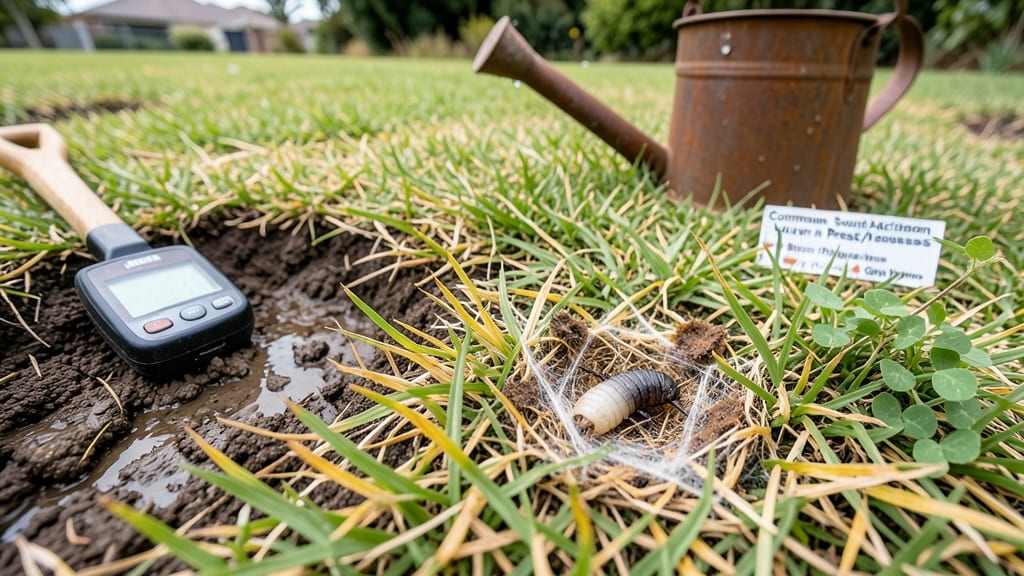
South Africa's lawn problems—scorching summers and erratic rains—turn even the hardiest lawns into battlegrounds. 🌞 I've seen firsthand how drought stress, fungal patch outbreaks, and soil compaction can turn vibrant green into patchy brown in weeks—unless you adapt your approach.
The real challenge isn't just watering more (that's a recipe for fungal disasters), but choosing the right grass types for your region. Coastal areas thrive with buffalo grass, while Highveld lawns need tougher varieties like kikuyu or couch grass. The secret weapon? Deep, infrequent watering that encourages deep root growth.
By the end of summer, you'll have a lawn that stays green through heatwaves and needs less water than store-bought mixes promise. The key is matching your grass to your climate and watering smarter, not harder.
This works for both established lawns and new seedings—just adjust the timing based on your local rainfall patterns. Let's get that grass fighting back!
Root Causes Of Lawn Struggles
South Africa’s unique climate—marked by intense heat, erratic rainfall, and soil challenges—creates a perfect storm for lawn problems. Understanding these root causes helps you tackle issues before they spiral out of control. Let’s break down the science behind why your grass might be fighting for survival.
South Africa’s summer sun (often exceeding 30°C/86°F) can fry grass roots faster than you think. Here’s why:
- Photosynthesis Overload: Grass blades absorb too much sunlight, leading to oxidative stress—a cellular breakdown caused by excess energy. Think of it like a plant getting sunburned, but internally. - Water Loss Acceleration: High temperatures increase transpiration (water evaporation through leaves) by up to 50%.
If roots can’t keep up, the grass wilts or turns brown and crispy (a condition called heat scorch). - Soil Microbe Disruption: Beneficial bacteria and fungi in the soil die off when temperatures exceed 40°C/104°F, weakening the grass’s ability to absorb nutrients.
💡 Pro Tip: Early morning watering (before 8 AM) reduces evaporation loss, while mulching (straw or wood chips) keeps soil cooler.
With water restrictions in many regions and unpredictable rains, drought is the #1 lawn killer in South Africa. Here’s the science:
- Root Shallowing: When topsoil dries out quickly, grass roots stay near the surface instead of growing deep. This makes them vulnerable to heat and foot traffic. - Nutrient Lockout: Dry soil binds nutrients like nitrogen and phosphorus, making them unavailable to grass.
Even if you fertilize, the plant can’t access it. - Fungal Invaders: Drought-stressed grass becomes a buffet for pathogens like Fusarium and Rhizoctonia, causing brown patch or melting out diseases.
✨ Actionable Fix: Deep watering 2-3 times per week (1-2 inches per session) encourages roots to grow deeper. Use drip irrigation to minimize waste.
South Africa’s soils are often sandy, clay-heavy, or compacted, creating a hostile environment for grass. Key issues:
| Soil Problem | Why It Hurts Grass | Solution |
|---|---|---|
| Clay Soil | Poor drainage → root rot from waterlogging | Add gypsum or compost to loosen. |
| Sandy Soil | Nutrients wash away → weak, yellow grass | Mix in organic matter (leaf mold). |
| Compacted Soil | Blocks oxygen → shallow roots, pests | Aerate in spring/fall. |
| High pH (Alkaline) | Locks out iron and manganese → chlorosis | Test soil; add sulfur if needed. |
🔥 Quick Test: Squeeze a handful of soil—if it forms a tight ball, it’s too clay-heavy. If it falls apart, it’s too sandy.
South Africa’s warm, humid summers supercharge pests and diseases. Common culprits:
- Grubs (White Grubs):
- Larvae of beetles munch on roots, causing patches of dead grass that pull up easily.
- Peak season: Late summer/early autumn.
- Chinch Bugs:
- Pierce grass stems to suck sap, leading to stunted, yellow patches.
- Thrive in dry, sunny conditions.
- Fungal Diseases (e.g., Brown Patch):
- Thrives in 25-32°C (77-90°F) with high humidity.
- Causes circular brown spots with a smoky ring at the edge.
🎯 Prevention: Apply neem oil (natural repellent) or beneficial nematodes to combat grubs. Water in the morning to reduce humidity for fungi.
Even the hardiest grass struggles with bad lawn habits. Common mistakes:
- Cutting Too Short:
- Grass blades lose surface area for photosynthesis → weakens fast.
- Rule of thumb: Never remove more than ⅓ of the blade height at once.
- Dull Mower Blades:
- Tears grass instead of clean cuts → invites disease.
- Sharp blades = healthier recovery.
- Over-Fertilizing:
- Excess nitrogen burns roots and attracts pests.
- Test soil first—South African grass often needs less fertilizer than Northern Hemisphere lawns.
👨🍳 Maintenance Hack: Mow high (5-7.5 cm / 2-3 inches) in summer to shade roots and retain moisture.
Not all grass is equal—some varieties wilt in South Africa’s heat. Common mismatches:
- Cool-Season Grasses (e.g., Kentucky Bluegrass):
- Loves 15-25°C (59-77°F)—struggles in SA’s 30°C+ summers.
- Result: Brown, crispy patches by December.
- Tropical Grasses (e.g., Cynodon dactylon – Bermuda):
- Thrives in heat but goes dormant in winter if not cold-hardy.
- Solution: Choose drought-tolerant natives like Kikuyu (Pennisetum clandestinum) or Buffalo Grass (Stenotaphrum secundatum).
🌡️ Climate Matchmaker:
| Grass Type | Best For | Avoid If... |
|---|---|---|
| Kikuyu | Warm, humid areas (e.g., KwaZulu) | You want low maintenance. |
| Bermuda | High-traffic, sunny spots | Water restrictions are severe. |
| Tifton 44 | Drought-prone regions | Soil is heavy clay. |
Your lawn’s struggles boil down to climate, soil, and care choices. By addressing heat stress, water habits, soil health, and grass selection, you can turn a struggling lawn into a South Africa-proof green oasis. 🚀 Next up: How to Fix It—stay tuned!
How to Fix Your Struggling Lawn
South Africa’s scorching sun and unpredictable droughts can turn even the hardiest lawns into a patchy, brown eyesore—but don’t give up! With the right fixes, your grass can bounce back stronger than ever.
Below, we break down practical solutions for common lawn problems, tailored to South Africa’s climate. Each fix includes prevention tips to keep your lawn lush long-term.
Cause: Intense heat, water restrictions, or overwatering (which weakens roots).
How to Revive It: ✅ 💧 Deep Watering (Not Frequent Shallow Soaks)
- Water deeply 2–3 times per week (early morning or evening) instead of daily light sprinkles. Aim for 25–50mm per session—let the water soak 15–20cm deep.
- Pro Tip: 🌡️ Use a tuna can or rain gauge to measure—eyeballing leads to over/under-watering!
✅ 🌱 Adjust Mowing Height
- Raise your mower blade to 5–7cm (higher than usual) to shade soil and retain moisture.
- Never remove more than ⅓ of the grass blade at once—this stresses the plant.
✅ 🍃 Overseed Bare Spots
- Choose drought-resistant grasses like Kikuyu (for wear tolerance) or Tall Fescue (for shade).
- Sprinkle seed lightly over bare patches, then cover with straw (not mulch) to protect from wind. Keep soil moist for 4–6 weeks.
Prevention: 💡 Mulch your lawn clippings—they return moisture and nutrients to the soil. 🔥 Avoid walking on dry grass—it compacts soil and blocks water absorption.
Cause: Weak grass invites weeds like crabgrass, clover, or oxalis—they thrive where turf struggles.
How to Remove Them: 🔪 🌿 Manual Removal (Best for Small Areas)
- Pull weeds by the root (use a weed torch for stubborn patches—just be cautious in fire-prone areas!).
- Timing: Pull when soil is moist (after watering) for easier extraction.
💊 🌱 Pre-Emergent Herbicides (For Prevention)
- Apply before weeds sprout (late summer/early autumn) with corn gluten meal (natural) or pendimethalin (chemical).
- Avoid post-emergent sprays in drought—they can kill your grass too.
Prevention: ✨ Strengthen your grass—fertilize with slow-release, drought-tolerant formulas (e.g., 3:1:4 NPK ratio). 🎯 Improve soil with compost or gypsum (helps sandy soils retain water).
Cause: Humidity + heat + poor airflow = fungal feasts. Common in shady or overwatered lawns.
How to Treat It: 🍄 ⏰ Early Detection is Key
- Brown Patch? Circular dead spots? Reduce watering immediately and rake out infected areas.
- Rust? Orange-yellow spores? Apply fungicide (e.g., propiconazole) and thin out thick grass for airflow.
🌿 🔄 Improve Lawn Health
- Aerate compacted soil (use a core aerator in spring/autumn).
- Fertilize lightly with low-nitrogen, high-potassium (e.g., 0-0-50) to boost resistance.
Prevention: 💡 Water in the morning (avoids evening dampness that fuels fungi). 🔥 Mow high (5–7cm) to prevent stress from heat.
Cause: Dead grass, roots, and debris pile up between soil and grass—>1cm thick = problem.
How to Fix It: 🪓 🔄 Dethatch Properly
- Rent a vertical mower or rake (manual method) to remove thatch.
- Do this in spring or autumn—never in drought!
🌱 🍃 Overseed After
- Thin thatch leaves bare spots—reseeds these areas with drought-resistant grass.
Prevention: ✨ Top-dress with compost (thin layer) to encourage microbial breakdown. 🎯 Avoid heavy fertilizers—they worsen thatch buildup.
Cause: Heavy foot traffic, machinery, or clay-heavy soils (common in SA).
How to Loosen It: 🪨 🔨 Aerate Deeply
- Core aeration (spring/autumn) pulls 200+ plugs per m²—rent a machine or hire a pro.
- DIY hack: Use a garden fork to poke holes in small areas.
💧 🌧️ Improve Drainage
- Mix sand or perlite into compacted soil (for sandy soils, add organic matter like compost).
- For clay soil: Apply gypsum (calcium sulfate) to break up particles.
Prevention: 💡 Limit foot traffic on wet lawns—wait until soil is dry to touch. 🔥 Use stepping stones on high-traffic paths.
Final Pro Tip: 🌿 Test your soil (pH, nutrients) every 2 years—South Africa’s varied climates mean local adjustments are key! Use a DIY soil test kit (R30–R50) or send a sample to a lab for precision.
Frequently asked questions about South African lawn care
What’s the best grass type for South Africa’s coastal regions?
For coastal areas like Cape Town or Durban, Buffalo Grass (Stenotaphrum secundatum) or Kikuyu (Pennisetum clandestinum) are excellent choices. They handle humidity, salt spray, and occasional drought better than most varieties. Avoid Kentucky Bluegrass—it struggles in SA’s heat and needs constant water.
How do I tell if my lawn has brown patch disease?
Look for circular brown patches (often 10–30cm wide) with a dark ring at the edge—this is classic brown patch. Check in early morning when dew is present. If the grass pulls up easily (roots are white and mushy), it’s likely fungal. Reduce watering immediately and rake out infected areas.
Can I use household vinegar to kill weeds in my lawn?
Yes, but with caution! A 1:1 vinegar-water mix (5% acetic acid) works for spot treatment on weeds like oxalis. Apply on a dry day and avoid windy conditions—it can also harm your grass. For large areas, use a targeted spray bottle and test a small patch first. Never use full-strength vinegar.
Why does my lawn look fine but pull up easily in patches?
This is almost always grub damage—white grubs (beetle larvae) are munching on your roots! Dig up a small patch: if you see C-shaped white larvae, treat with beneficial nematodes or neem oil. Grubs thrive in moist, warm soil, so water deeply but less frequently to disrupt their cycle.
What’s the best time of year to overseed a South African lawn?
For most regions, late autumn (April–May) is ideal—cooler temps and higher humidity help seeds germinate. In subtropical areas (e.g., KwaZulu-Natal), overseed in early spring (September). Always water lightly twice daily for the first 2 weeks to keep soil moist but not soggy.