
Lawn
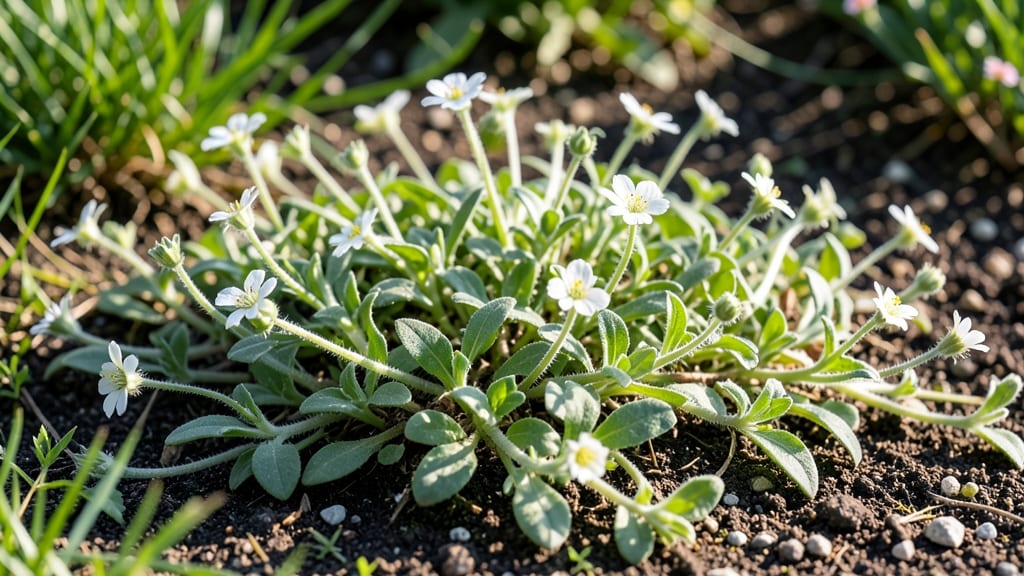
The identification of lawn chickweed starts with that tiny, glossy green invader creeping across your lawn—distinctive oval leaves and delicate stems that sprawl like a carpet. 🌱 I've spent too many weekends pulling this stuff by hand, only to realize it's not always the villain it seems.
Chickweed thrives in cool weather, forming dense mats that can smother grass or become a lush ground cover in shady spots.
The key to telling it apart from clover or creeping Charlie is its tiny white flowers that appear in early spring, along with its slightly sticky stems when crushed.
Unlike broadleaf weeds, chickweed doesn't have deep roots—just a shallow network that makes it easy to pull (if you catch it early). I've learned to spot it by its opposite leaf arrangement and how it forms neat rosettes before spreading.
Here's the plot twist: chickweed isn't always bad. In vegetable gardens, it acts as a living mulch, suppressing weeds and retaining moisture. But in lawns? It competes with grass for sunlight and water, leaving thin patches that look like drought damage.
The good news is that it dies back in summer heat, giving you a natural window to restore your turf.
For confirmation, grab a magnifying glass and check for those egg-shaped leaves with smooth edges and the telltale five-petal flowers on thin stems. If it matches, you're dealing with chickweed—whether you want to eradicate it or let it be your lawn's unexpected ground cover.
The choice is yours, but timing matters most in early spring before it spreads unchecked.
Root Causes Of Its Spread
Chickweed thrives in lawns not by accident but due to a mix of environmental and human-influenced factors. Understanding these causes helps you target prevention and control strategies effectively. Below, we break down the key reasons why this resilient weed takes over lawns—and how to address them.
Chickweed favors compacted, nutrient-poor, or overly moist soil, which is often a byproduct of heavy foot traffic, construction, or improper lawn care. Here’s why:
- 🔬 Compacted Soil: Chickweed roots struggle in dense soil, but its shallow, fibrous roots exploit surface cracks created by compaction. This allows it to germinate and spread rapidly where grass struggles.
- 💧 Excess Moisture: It thrives in shady, damp areas where water pools or drainage is poor. Overwatering lawns (especially in fall/winter) creates the perfect breeding ground.
- 🌿 Low Nutrients: Chickweed outcompetes weak grass in soils lacking nitrogen, phosphorus, or organic matter. A soil test can reveal deficiencies—addressing them with compost or slow-release fertilizer starves out chickweed.
Actionable Fix: Aerate compacted lawns annually, improve drainage with sand or organic matter, and test soil pH (ideal: 6.0–7.0).
Chickweed is a cool-season weed, meaning it peaks in fall, winter, and early spring—when temperatures dip below 75°F (24°C). Here’s how climate plays a role:
- 🌡️ Temperature Triggers: Germination spikes when soil temps drop to 50–65°F (10–18°C). Freeze-thaw cycles in winter expose bare soil, giving seeds a chance to sprout.
- ☔ Rainfall Patterns: Chickweed seeds require moisture to germinate but can survive drought once established. Overcast, rainy seasons (common in Pacific Northwest or Northeast regions) accelerate its spread.
- ❄️ Snow Cover: In colder climates, snow acts as insulation, protecting chickweed from frost while grass dorms. It re-emerges early when snow melts, outpacing slow-growing turf.
Actionable Fix: Mow higher in fall/winter (3–4 inches) to shade soil and reduce moisture retention. Use a pre-emergent herbicide in early fall to block seed germination.
Chickweed exploits weaknesses in your lawn care routine. Common oversights include:
| Issue | Why Chickweed Wins | Solution |
|---|---|---|
| ⏳ Infrequent Mowing | Tall grass blocks sunlight, but chickweed’s prostrate growth habit lets it spread at ground level. | Mow weekly in growing seasons; never remove >1/3 of grass blade height. |
| 💰 Skipping Fertilizer | Grass starved for nutrients thins out, leaving gaps for chickweed to fill. | Apply slow-release fertilizer in early fall (high nitrogen) and spring. |
| 🚫 Ignoring Thatch Buildup | Thatch (dead grass layer) traps moisture and seeds, creating a chickweed nursery. | Dethatch lawns in spring or fall if layer exceeds ½ inch. |
| 🌿 Delayed Weed Control | Chickweed reproduces via both seeds and stem cuttings—hand-pulling too late spreads fragments. | Pull weeds before flowering (spring/fall) or use vinegar spray (50% acetic acid) for organic control. |
Pro Tip: 💡 Chickweed hates competition. Overseed bare patches with perennial ryegrass or fine fescue in early fall to crowd it out.
Chickweed isn’t just a solo invader—it benefits from lawn ecosystems that favor its survival:
- 🐜 Pest Activity: Grubs, chinch bugs, or fungal diseases weaken grass roots, creating entry points for chickweed. A declining lawn signals an opportunity for weeds.
- 🌿 Wildflower Confusion: Some homeowners mistake chickweed for clover or wildflowers and avoid treating it, allowing it to dominate. Chickweed lacks clover’s trifoliate leaves and grows in dense mats.
- 🌍 Microclimate Zones: Shady edges (under trees, fences) or high-traffic areas (near walkways) become chickweed hotspots due to soil disturbance.
Actionable Fix: 🔥 Restore lawn health with beneficial nematodes (for grubs) and mycorrhizal fungi to boost grass root systems.
Quick Fixes for Stubborn Lawn Weeds
If you’ve spotted Stellaria media (lawn chickweed) creeping into your yard, don’t panic—this persistent weed responds well to targeted action. Below, we’ve mapped common causes to practical solutions, from manual removal to long-term prevention. Let’s tackle it step by step!
Lawn chickweed thrives where grass struggles to compete—whether due to poor soil, foot traffic, or sparse seeding. A weak lawn is an open invitation for weeds to take over.
🔥 How to Fix It
- 👨🍳 Improve Soil Health First
- Test your soil’s pH and nutrients. Chickweed favors compacted or nutrient-poor soil.
- Amend with compost or a balanced fertilizer (10-10-10) to strengthen grass roots.
- Pro tip: Aerate in fall or spring to break up compacted soil—chickweed hates loose, oxygen-rich dirt! ⏰ Best time: Early morning or late afternoon to avoid stressing grass.
- 🌱 Reseed Bare Spots
- Fill thin areas with dense, competitive grass seeds (e.g., tall fescue or perennial ryegrass).
- Water lightly daily for 2–3 weeks to encourage germination.
- Prevention hack: Use a pre-emergent herbicide (like corn gluten meal) in early spring to block weed seeds before they sprout. ✨
Chickweed loves damp conditions—it’s often a sign of overwatering, heavy clay soil, or poor drainage. If your lawn stays soggy, this weed will spread like wildfire.
🍳 How to Fix It
- 🔪 Fix Drainage Issues
- If water pools after rain, consider renching (trenching) or installing a French drain in problem areas.
- For clay soil, mix in sand or gypsum to improve drainage over time.
- Quick fix: Water deeply 2–3 times per week (early morning) instead of daily light sprinkles. Let the top inch of soil dry between waterings.
- 🌡️ Reduce Humidity Hotspots
- Trim back overhanging trees/shrubs to improve airflow.
- Avoid mulching too thickly near the lawn—keep it 2–3 inches deep to prevent moisture buildup.
Chickweed spreads rapidly in lawns with no ground cover. If clover, moss, or other weeds are already present, chickweed will hijack the space.
🔪 How to Fix It
- 💡 Outcompete with Dense Grass
- Overseed with a shade-tolerant grass mix if your lawn gets little sunlight.
- For sunny areas, choose Kentucky bluegrass or fine fescue—these grasses crowd out chickweed effectively.
- Prevention tip: Mow high (3–4 inches) to shade out weed seeds and retain moisture. 🎯
- 🌱 Introduce Clover (Strategically!)
- While chickweed is a weed, white clover is a beneficial ground cover that outcompetes it.
- Mix clover seeds (10–20%) with grass seed for a low-maintenance, weed-resistant lawn.
Skipping mowing, mowing too short, or using dull blades creates stress—perfect conditions for chickweed to move in.
⏰ How to Fix It
- 🔥 Adjust Your Mowing Routine
- Mow regularly (weekly in growing season) but never remove more than ⅓ of the blade at once.
- Sharpen mower blades monthly to avoid tearing grass, which invites disease and weeds.
- Pro move: Bag clippings if chickweed is widespread to remove seeds before they spread. 🔪
- 🌡️ Time Your Maintenance
- Fall is critical: Fertilize in early fall to boost root growth before winter.
- Spring cleanup: Dethatch and aerate to remove chickweed roots and improve grass health.
Once you’ve cleared chickweed, keep it from returning with these low-effort habits:
- ✅ Mow high (3–4 inches) to shade out weed seeds.
- ✅ Water deeply but infrequently—chickweed hates dry spells.
- ✅ Test soil yearly and amend as needed (aim for pH 6.0–7.0).
- ✅ Use pre-emergent herbicides in early spring (follow label rates!).
- ✅ Encourage beneficial insects (like ladybugs) that eat chickweed seeds.
With consistent care, your lawn will become a chickweed-free zone in just a season. The key? Act fast—pull or treat small patches before they spread, and focus on grass health as your best defense. 💪
Frequently asked questions
How can I tell if those tiny green plants in my lawn are actually chickweed?
Look for egg-shaped leaves arranged in opposite pairs along the stem and delicate white flowers with five petals. Chickweed also forms dense mats close to the ground, unlike grass which grows upright. Crush a stem—if it feels slightly sticky, that's another telltale sign!
Is chickweed harmful to my lawn grass?
Yes, it can be! Chickweed spreads rapidly, smothering grass by blocking sunlight and competing for nutrients. In shady areas, it may even take over completely. However, it's not toxic to grass—it's just aggressive. The real damage comes from the thin, weak patches it leaves behind.
What's the best time of year to remove chickweed from my lawn?
Target it in early spring (March-April) or fall (September-October) when it's actively growing but before it flowers. This prevents seed spread. Summer heat naturally reduces chickweed populations, but don't wait too long—it can become established quickly in cooler months.
Can I use vinegar to kill chickweed without harming my grass?
Yes, but with caution! A 20% vinegar solution (1 part vinegar to 4 parts water) works best on small patches. Apply on a dry, sunny day to minimize grass damage. For larger areas, spot-treat only the chickweed and avoid spraying when grass is stressed. The acetic acid burns chickweed but may also harm desirable plants if overused.
Why does chickweed keep coming back even after I pull it?
Chickweed reproduces both by seeds and stem fragments! Even small pieces left in the soil can regrow. Pull weeds before they flower (when stems are still green), and remove all root fragments. For prevention, improve lawn density by overseeding thin areas—healthy grass crowds out chickweed naturally.