
Lawn
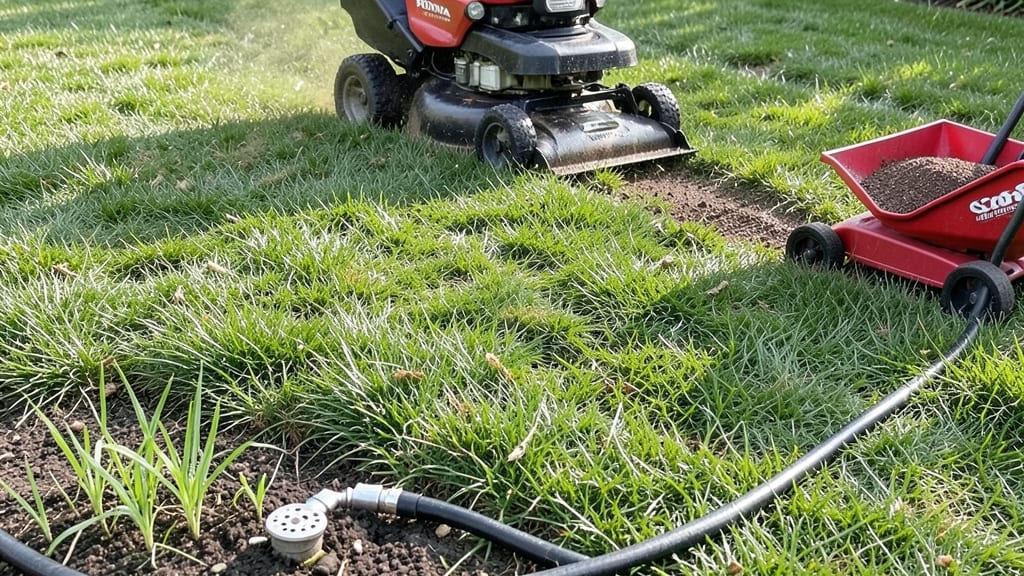
Your dream of a grass turf lawn starts with the right prep—not just throwing down sod and hoping for the best.
I’ve installed lawns in everything from full sun to partial shade, and the difference between a patchy mess and a lush carpet comes down to soil prep, grass type, and the first few weeks of care. The payoff? A lawn that stops looking like a science experiment after two months.
First, test your soil—most lawns fail because they’re planted in hardpan or clay that drains like a sieve. Amend with compost or topsoil to create a loose, crumbly base where roots can spread.
Then choose your grass: cool-season types like Kentucky bluegrass thrive in northern climates, while Bermuda grass dominates southern heat. Water deeply twice a week for the first month to encourage deep root growth—this is where most beginners go wrong.
By summer’s end, you’ll have a lawn that’s dense enough to walk on without leaving footprints, and it’ll stay green through droughts if you mow high (3–4 inches) and fertilize twice a year.
The secret? Consistency. Skipping watering or mowing too short invites weeds and stress. Even in shade, the right mix of fescue or creeping red fescue will outperform thin grass.
For problem spots, overseed bare patches in fall with a mix of fine fescue and perennial ryegrass—they germinate fast and tolerate foot traffic. And here’s the pro move: aerate once a year to keep roots breathing.
That’s how you go from “meh” lawn to the envy of the neighborhood without spending a fortune.
📚 In This Guide
- What you need
- Instructions
- Tips and common mistakes
- Wrapping up and next steps
What you need
- ● Grass turf rolls: Calculate 10–15% extra than your lawn’s square footage to account for waste. Choose between Kentucky Bluegrass, Bermuda, or Fescue based on climate.
- ○ Soil amendment (optional but recommended): Compost (2–3 inches) for nutrient-rich soil.
- ● Topsoil (3–4 inches) for a smooth base.
- ● Organic fertilizer: Slow-release 10-10-10 (20–30 lbs per 1,000 sq ft) to kickstart growth.
- ● Mulch or straw: 1 bale per 500 sq ft to retain moisture.
- ○ Landscape fabric: 1 roll (100 sq ft) to block weeds (optional but helpful).
- ● Shovel & spade (for digging and edging).
- ● Rake (leaf & bow rake) for leveling soil.
- ● Lawn roller (100–150 lbs) to press turf into place.
- ● String line & stakes for marking straight edges.
- ● Knee pads & gloves (because comfort matters!).
- ● Hose with sprinkler for watering.
- ● Clear the area: Remove rocks, debris, and weeds.
- ○ Test soil pH (optional): Aim for 6.0–7.0 (use a kit or lab test).
- ● Check weather: Install turf on a cool, overcast day (avoid extreme heat).
Step-by-Step guide to installing grass turf for instant lawn beauty
Skip the months of waiting for seed growth—this method delivers a vibrant lawn in days.
🪴 Step 1: Prepare the Soil for Perfect Turf Adhesion
Start by removing all existing vegetation, rocks, and debris from your yard. I use a sharp shovel to dig up weeds and a rake to level the soil surface. The goal is a smooth, even base where the turf will lie flat.
Test your soil's drainage by digging a 6-inch hole and filling it with water. If it drains within 2 hours, your soil is ready. If not, amend with 2 inches of coarse sand mixed into the top 6 inches of soil. Compact the soil lightly with a lawn roller to create a firm foundation—this prevents the turf from sinking or shifting after installation.
For a 4,000 sq ft lawn, you'll need about 200 lbs of topsoil if amending, spread evenly with a shovel or broadcast spreader. Water the prepared soil 24 hours before laying turf to ensure it's moist but not soggy. You'll know it's ready when a handful of soil holds together without crumbling.
🌱 Step 2: Measure and Order the Right Amount of Turf
Measure your lawn's square footage by multiplying length by width. For example, a 50 ft x 80 ft yard equals 4,000 sq ft. Turf is typically sold in 500 sq ft rolls, so you'd need 8 rolls for this area. Order 5-10% extra to account for cuts and waste—nothing ruins a project like running out mid-installation.
Choose turf with a mix of grass types suited to your climate. Cool-season grasses like Kentucky bluegrass or tall fescue work well in northern regions, while Bermuda or Zoysia thrive in southern heat. Ask your supplier for a disease-resistant variety to avoid future headaches.
Deliver turf the day before installation and store it in a shaded, flat area. Keep rolls upright if possible, but never stack more than 3 rolls high. Water the turf lightly before laying if it feels dry—this prevents it from shrinking after installation.
☀️ Step 3: Lay the Turf in a Staggered Pattern
Begin laying turf along the longest, straightest edge of your yard to minimize visible seams. Unroll the first piece and press it firmly into the soil, starting at one corner and working toward the center. Stagger the seams by 6-12 inches in the next row, like brickwork, to prevent weak spots where sunlight can penetrate.
Use a sharp utility knife to trim turf around edges, driveways, or trees. Measure twice and cut once—over-trimming leaves bare soil, while under-trimming creates gaps. Press trimmed edges firmly into the soil to ensure they root properly.
Walk over the entire lawn to settle the turf and eliminate air pockets. This also helps the edges conform to the soil. If you notice low spots, lift the turf slightly and add a thin layer of soil beneath before pressing down again. Avoid stepping on the same area repeatedly—this can compress the soil and suffocate roots.
💧 Step 4: Water Immediately and Maintain Proper Moisture
Water the lawn immediately after installation with ¼ to ½ inch of water. Use a sprinkler with gentle settings to avoid dislodging the turf. The goal is to saturate the soil 2-3 inches deep so roots establish contact. You'll know it's enough when water pools slightly but drains within 30 minutes.
Water twice daily for the first 2 weeks: once in the early morning and once in the late afternoon. This keeps the turf moist without promoting fungal growth. After 2 weeks, reduce to once daily for 4-6 weeks until the roots grow 3-4 inches deep. You'll see this when pulling up a small section—roots should resist coming out easily.
Avoid heavy foot traffic for 2-3 weeks to prevent shifting. If you must walk on it, distribute your weight evenly and avoid concentrated pressure on any single spot. Mowing isn't necessary for the first 7-10 days, but once the grass reaches 3-4 inches tall, trim it to 2-3 inches with a sharp mower blade set high.
✂️ Step 5: Fertilize and Maintain for Long-Term Health
Apply a slow-release, starter fertilizer 2 weeks after installation. Look for a high-nitrogen blend (like 20-5-10) to encourage root growth. Spread it evenly with a broadcast spreader and water lightly afterward to activate the granules. Avoid over-fertilizing—the grass should stay green, not burn.
Mow regularly once established, keeping the blade at 2-3 inches for most grasses. This encourages deeper roots and a denser lawn. Sharpen mower blades every 10 hours of use to prevent tearing grass, which invites disease. Aerate the lawn once a year in spring or fall to relieve soil compaction and improve water absorption.
Watch for brown patches or thin spots in the first few weeks—these often signal poor root contact rather than dead turf. Lift the edge of the patch and press it back into the soil if needed. With proper care, your turf will knit together into a uniform, lush lawn within 6-8 weeks, without the months-long wait of seeding.
Tips & tricks for perfect grass turf installation
Here's what I learned after installing turf on three different yards—these tricks save time and prevent costly mistakes.
Soil Test Tip: The 2-hour drainage test in Step 1 is critical, but don't rely solely on timing. After filling the 6-inch hole, press the soil firmly with your hand—if water beads up on the surface, you need more sand. I once skipped this and ended up with turf that shifted after just one watering. Pro tip: Mix the 2 inches of coarse sand thoroughly into the top 6 inches of soil using a garden fork to prevent pockets where water could collect.
Turf Ordering Strategy: When calculating your 5-10% extra rolls, round up to the nearest whole number—there's nothing worse than running out halfway through. For example, if you need 8.5 rolls, order 9. Also, check with your supplier about "seconds" or discounted rolls that might be perfect for edges and tricky spots. I saved $120 on a 3,000 sq ft yard by using seconds for the perimeter.
Laying Pattern Secret: The staggered seams in Step 3 aren't just about looks—they create a natural drainage system. When you stagger by 6-12 inches, water will flow between the rows rather than pooling in one spot. For large yards, work in 20-foot sections to maintain consistent moisture levels while you lay the turf. I learned this the hard way when a 50-foot section dried out before I finished watering.
Watering Watch: That ¼ to ½ inch of water in Step 4 is tricky to judge. A simple way to measure: Place a straight-sided container (like a tuna can) on your lawn and run the sprinkler until it's filled to ¼ inch. This ensures even coverage. For the first two weeks, set a timer for your morning and afternoon watering sessions—overwatering can suffocate roots just as much as underwatering.
Pro Tips for Grass Turf Lawn
- Here's what I learned after installing turf on three different yards—these tricks save time and prevent costly mistakes.
- Soil Test Tip: The 2-hour drainage test in Step 1 is critical, but don't rely solely on timing.
- Turf Ordering Strategy: When calculating your 5-10% extra rolls, round up to the nearest whole number—there's nothing worse than running out halfway through.
Frequently asked questions
Got questions about transforming your yard with grass turf lawn? You’re not alone! Here are some of the most common queries—and their straightforward answers—to help you get started with confidence.
How long does it take for grass turf to establish?
With grass turf lawn, you’ll see immediate results! Unlike seeding, which can take 4–6 weeks to germinate, turf grass establishes within 2–3 weeks. Just water it deeply 2–3 times daily for the first week, then taper off to 1–2 times daily. Pro tip: Lightly rake the edges to ensure full contact with the soil for faster rooting.
How often should I water a new grass turf lawn?
Consistency is key! For the first 2 weeks, water your grass turf lawn 2–3 times daily (early morning, late afternoon, and evening) for 10–15 minutes per session. After that, aim for 1–1.5 inches per week, adjusting for rain. Overwatering can suffocate roots, so always check soil moisture—if the top inch is dry, it’s time to water.
Can I install grass turf myself, or should I hire a pro?
DIY is totally doable! If your yard is level, compacted, and weed-free, you can lay grass turf lawn yourself with basic tools (spade, rake, utility knife). However, for slopes, large areas, or tricky terrain, hiring a pro ensures a flawless, long-lasting finish. Pro tip: Watch a few YouTube tutorials first to visualize the process.
What’s the difference between grass turf and sod?
Grass turf
and sod are essentially the same—they’re pre-grown grass rolls ready to install. The main difference is in the thickness and preparation:
- Turf: Often thinner (¼–½ inch), lighter, and easier to transport. Best for DIYers or small projects.
- Sod: Thicker (½–¾ inch), heavier, and more durable. Ideal for high-traffic areas or professional installations.
Why is my grass turf turning brown after installation?
Brown patches can happen due to stress, dehydration, or poor soil contact. First, check if the edges are fully buried—lift a corner to see if roots are exposed. If the soil is dry, water deeply. Avoid heavy foot traffic for 2–3 weeks to let roots establish. If brown spots persist, test your soil pH (6.0–7.0 is ideal) or consider a light fertilizer after 4 weeks.
Is grass turf more expensive than seeding?
Upfront, yes—but it’s a smart long-term investment. Grass turf lawn costs $0.50–$1.50 per sq. ft., while seeding runs $0.10–$0.30 per sq. ft.. However, turf eliminates the 4–6 week wait and weed competition, saving you time, water, and potential re-seeding costs. Think of it as instant gratification with fewer headaches!
Wrapping up and next steps
Transforming your yard into a vibrant grass turf lawn doesn’t have to be a slow, frustrating process—it’s all about choosing the right materials and taking the right steps. Whether you’re tackling a small patch or a full backyard, synthetic turf offers instant gratification with low maintenance and high durability.
Plus, you’ll save time, water, and headaches along the way!
Ready to dive in? Start small—pick a section of your lawn, gather your supplies, and get rolling! ⚡ With the right prep and installation, you’ll be stepping onto that lush, green surface in no time.